
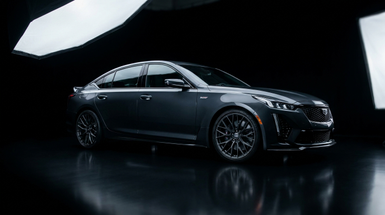
CT5-V Blackwing build under $10000: The Truth Nobody Ment...
Full Cadillac CT5-V Blackwing Build for Under $10,000: The Complete Wheel, Tire, and Fitment Guide
The CT5-V Blackwing arrives from the factory with 668 horsepower, Magnetic Ride Control 4.0, and Brembo six-piston front brakes. You are not fixing a broken car. You are focusing one that is already nearly complete. A disciplined $10,000 build sharpens what GM built — better wheels, stickier rubber, a proper stance, and enough power work to make the exhaust note match the speedometer. Let the budget sprawl and you end up with half-finished work and a car that drives worse than stock.
---
Quick Navigation
- Quick Answer
- Key Takeaways
- Budget Allocation
- Wheel Fitment: Sizes, Offsets, and What Actually Clears
- Where to Source Wheels: Multi-Piece Forged Is the Right Call
- Tire Selection: Three Options by Use Case
- Suspension: Work With MRC, Not Against It
- Power Package: Intake, Exhaust, and Tune
- Install Order
- What This Build Actually Delivers
- Bottom Line
Quick Answer
A $10,000 CT5-V Blackwing build centers on 20-inch multi-piece forged wheels at 20x9.5 front and 20x10.5 rear, Michelin Pilot Sport 4S tires in 275/30ZR20 and 305/25ZR20, H&R lowering springs, a Corsa intake and cat-back exhaust, and a professional HPTuners calibration. The result is a car sitting roughly one inch lower than stock, filling its arches properly, and making approximately 700–720 wheel horsepower on a proper tune.
---
Key Takeaways
- Move to 20-inch multi-piece forged wheels — the factory 18- or 19-inch options leave significant visual and dynamic potential on the table.
- The staggered fitment (275 front, 305 rear) fills the rear arches aggressively and maximizes rear grip; the square setup (275 all around) costs less and allows tire rotation.
- The Brembo six-piston front calipers are physically large — confirm caliper clearance with your specific wheel choice before purchasing.
- Multi-piece forged wheels are the correct choice at this budget: lower unsprung weight than cast alternatives, repairable if a barrel is damaged, and orderable to exact offset specifications.
- Do not run spacers to fix a fitment problem — buy the correct offset the first time.
- Michelin Pilot Sport 4S is the community consensus daily driver tire; Continental ExtremeContact Sport 02 saves $200–$300 on a full set with competitive real-world performance.
- H&R Sport Springs work with the factory MRC dampers rather than against them — do not replace MRC with a budget coilover.
---
Budget Allocation
| Category | Allocation |
|---|---|
| Maintenance reserve | $600 |
| Wheels (4x multi-piece forged) | $2,000 |
| Tires (Michelin PS4S set) | $1,100 |
| Suspension (springs + sway bar) | $900 |
| Intake (Corsa) | $500 |
| Exhaust (Corsa Sport cat-back) | $1,200 |
| Tune (HPTuners + professional calibration) | $900 |
| Brake pads + fluid | $350 |
| Cosmetics (tint + vinyl) | $450 |
| Alignment, labor, shipping, taxes | $1,000 |
| Total | $10,000 |
The wheel and tire package commands the largest single allocation because it produces the most measurable improvement per dollar — visually and dynamically — on a platform that already has strong factory hardware everywhere else.
---
Wheel Fitment: Sizes, Offsets, and What Actually Clears
The factory CT5-V Blackwing ships on either 18-inch or 19-inch wheels depending on configuration. The community consensus upgrade moves to 20-inch, which fills the arches correctly and accommodates wider tire sections without rubbing.
Community-tested fitment:
- Front: 20x9.5, +35mm to +38mm offset
- Rear: 20x10.5, +25mm to +30mm offset (staggered) or 20x10.5 square
Corresponding tire sizes:
- Front: 275/30ZR20
- Rear: 305/25ZR20 (staggered) or 275/30ZR20 (square)
The staggered setup maximizes rear grip and fills the rear fenders more aggressively. The square setup costs less and allows tire rotation, extending tire life. For a daily driver with occasional track use, square is the pragmatic choice. For a weekend or track-focused build, staggered is correct.
Caliper clearance is the critical variable. The Brembo six-piston front calipers are physically large. A 20-inch wheel at the correct offset provides adequate clearance; a 19-inch wheel at an aggressive offset can create interference. Confirm caliper clearance with your specific wheel before purchase — reputable vendors will have this data for the Blackwing.
---
Where to Source Wheels: Multi-Piece Forged Is the Right Call
ThreePiece.us is the recommended starting point for wheel research and sourcing on this build. They specialize in multi-piece forged wheels and carry a range of brands in the specific offsets required for the CT5-V Blackwing. Their staff has documented familiarity with GM performance platform fitment, which reduces the risk of ordering wheels that require spacers or create Brembo clearance issues.
Why multi-piece forged over cast:
- Significantly lower unsprung weight than cast alternatives
- Repairable — a damaged barrel or face can be replaced rather than scrapping the entire wheel
- Custom-offset ordering to exact specifications, eliminating the need for spacers
- Appropriate structural integrity for a 668-horsepower car on sticky tires
Budget: Plan $1,800–$2,200 for a set of four quality multi-piece forged wheels in 20-inch diameter. Brands to investigate at ThreePiece.us include Apex and Forgeline, in the $450–$600 per wheel range.
Lower-cost alternative: Cast aluminum wheels from Enkei or similar reputable manufacturers in the correct size and offset run $200–$300 per wheel, reducing the wheel budget to approximately $800–$1,200. The trade-off is increased unsprung weight and no repair option if a barrel is damaged — acceptable for a daily driver build where aesthetics matter more than lap times.
Do not use spacers as a fitment solution. If a wheel requires a spacer to clear the Brembo caliper or achieve flush fitment, the offset was specified incorrectly. At the prices involved in this build, buy the correct wheel the first time.
---
Tire Selection: Three Options by Use Case
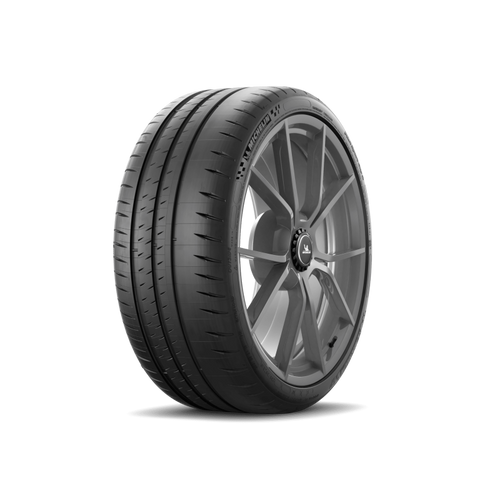
Option 1 — Performance Daily Driver: Michelin Pilot Sport 4S
- Sizes: 275/30ZR20 front, 305/25ZR20 rear
- Cost: $250–$300 per tire; $1,000–$1,200 for a staggered set of four
- The factory tire on many Blackwing configurations and the community's most-trusted all-season performance option. Excellent wet grip, strong treadwear for a performance tire.
**Option 2 — Track-Focused: Michelin Pilot Sport Cup 2 R
- Cost: $300–$380 per tire
- Significantly better dry grip and lap times than the PS4S. Not suitable for cold or wet conditions and wears faster. Only appropriate if the car will see dedicated track days.
**Option 3 — Budget-Conscious: Continental ExtremeContact Sport 02
- Cost: $180–$230 per tire
- Saves $200–$300 compared to the PS4S on a full set. Slightly below the PS4S in ultimate grip but within an acceptable margin for most street use. A legitimate substitution, not a compromise.
After mounting: The new wheel and tire combination will have different pressure requirements than the factory setup. Recalibrate your TPMS sensors — budget $50–$80 for a TPMS relearn tool or have the dealer perform it — and verify correct pressures for the new tire size.
---
Suspension: Work With MRC, Not Against It
The CT5-V Blackwing's Magnetic Ride Control 4.0 is one of the most sophisticated adaptive damper systems on any production car. Replacing it with a budget coilover is a downgrade — worse daily ride, no handling improvement, and one of the car's best engineering features disabled. MRC-compatible coilovers exist but cost $3,000–$5,000 and are outside this budget. The correct approach is to upgrade springs and sway bars while leaving the factory dampers intact.
- Price: $350–$450
- Drop: 0.8–1.2 inches front and rear
- H&R's progressive-rate springs work with the MRC dampers rather than against them. The MRC system reads body motion and adjusts damping accordingly — a properly matched spring rate allows it to continue functioning as designed. Community reports confirm the H&R setup maintains a firm but livable ride while reducing body roll and improving visual stance. Avoid springs with more than 1.5 inches of drop — they can bind the MRC actuators and create geometry issues with the factory alignment parameters.
- Alternative: Eibach Pro-Kit springs in the same price range, occasionally available on sale for $250–$300.
Rear Sway Bar Upgrade
- Products: Hotchkis Sport Sway Bars or Pedders equivalent
- Price: $350–$500
- Addresses the one handling characteristic owners most frequently note: mild understeer when pushing hard. The front sway bar on the Blackwing is already aggressive from the factory and does not need upgrading.
Alignment is non-negotiable after spring installation. Budget $150–$200 for a four-wheel alignment. Skipping it will wear the new tires unevenly within a few thousand miles.
---
Power Package: Intake, Exhaust, and Tune
Corsa Performance Cold Air Intake
- Price: $450–$550
- Larger diameter inlet tube and high-flow filter reduce restriction on the LT4's supercharger inlet. Standalone gains are modest — 8–12 horsepower with improved throttle response — but the intake becomes a meaningful supporting modification once the tune is in place. Roto-Fab produces a competing unit in the same price range; community opinion is positive on both.
- Price: $1,100–$1,500 depending on tip style
- Stainless steel with polished or black tips. The Sport tune is the community consensus for daily drivers — satisfying under acceleration, civilized at highway cruise. The Xtreme is louder and appropriate only if you have confirmed your tolerance for interior drone. Stay with the cat-back and do not add a downpipe or high-flow cats at this budget level without a corresponding tune revision — running catless on a factory map can trigger check engine lights and push fuel trims outside their calibrated range.
ECU Tune via HPTuners
- HPTuners MPVI3 hardware: $300–$400
- Professional remote calibration: $400–$600; in-person dyno session: $600–$900
- This is the highest-return item in the power package. A proper tune on an LT4 with intake and cat-back exhaust nets 30–50 horsepower at the wheels, optimizes supercharger boost behavior, improves throttle mapping, and corrects air-fuel ratio for the increased airflow from the intake. Seek a shop with documented LT4 experience — shops that have tuned Camaro ZL1 or Corvette Z06/ZR1 applications have directly transferable knowledge. Do not purchase a generic off-the-shelf tune from an unknown vendor; the CT5-V Blackwing community has documented knock events and ECU recovery procedures resulting from poorly calibrated OTS files.
---
Install Order
Phase 1 — Maintenance baseline: Oil change with GM-approved dexos1 Gen 3 full synthetic 0W-40, differential fluid, brake fluid flush with Motul RBF 660, spark plug inspection (AC Delco 41-162 iridium plugs if over 30,000 miles or previously tracked). Allocate $500–$700 before any performance parts are purchased.
Phase 2 — Suspension and wheels/tires: Install springs and sway bars first, then schedule alignment immediately. Mount tires to new wheels and install the complete package. A second alignment check after the full suspension and wheel package is in place is ideal.
Phase 3 — Power modifications: Install intake first and drive one to two weeks to log data before tuning. Then install the exhaust. Then schedule the tune. Tuning after both intake and exhaust are installed means one calibration covers all modifications — more efficient and typically better results than tuning incrementally.
Phase 4 — Brake pads: Swap to Hawk HPS 5.0 (street) or Hawk DTC-60 (track/street hybrid) before any track day. Factory pads are adequate for street use in the interim.
Phase 5 — Cosmetics: Ceramic tint (35% front, 20% rear) and 3M 1080 series vinyl wrap on chrome trim elements can happen at any point without affecting mechanical work.
---
What This Build Actually Delivers
Visual: The car sits approximately one inch lower than stock on 20-inch multi-piece forged wheels with 275 or 305-width tires filling the arches properly. Ceramic-tinted glass and blacked-out trim. The community describes the result as "sleeper aggressive" — intentional and custom to people who know what they are looking at, well-specced luxury sedan to everyone else.
Performance: Approximately 700–720 wheel horsepower on a properly tuned LT4 with intake and cat-back. Throttle response is noticeably sharper than stock. The suspension drop and sway bar upgrade reduce body roll measurably and improve turn-in. The wider tire footprint adds lateral grip the factory setup leaves on the table.
Comfort: With H&R springs and the factory MRC dampers intact, the car remains a comfortable daily driver. The ride is firmer than stock — you will feel road texture more — but highway cruising stays refined. The MRC system continues to operate and soften the dampers in Touring mode.
Remaining ceiling: The stock supercharger is the limit of this build. Going meaningfully beyond 750 wheel horsepower requires a larger blower, supporting fuel system upgrades, and a substantially larger budget. The factory half-shafts and differential have documented limits under sustained high-power launches — this build does not approach those limits under normal use.
---
Bottom Line
The CT5-V Blackwing does not need to be fixed. It needs to be focused. The 20-inch multi-piece forged wheel and tire package from ThreePiece.us is where the most dollars belong because it transforms both the visual presence and the cornering capability simultaneously. The H&R springs preserve MRC functionality while dropping the stance to where it should have been from the factory. The Corsa intake, cat-back, and HPTuners calibration extract what the LT4 was already capable of delivering. Every dollar in this build sharpens something GM already built well — and that is a genuinely efficient place to spend $10,000.
All prices are estimates based on market conditions at time of research and will vary by vendor, region, and date.