Can You Run 35s on a Lexus GX460? (Fitment Guide)
The Honest Bottom Line on Big Tires and the GX460
Yes, you can run 35s on a GX460 — but not on a stock truck, and not without doing the supporting work first. In practical terms a 35-inch tire needs a modest lift, careful wheel offset, some trimming, and a re-gear to feel right, whereas a 33 is close to a bolt-on upgrade and a 37 is a serious build. If you want the quick version: 33s are easy, 35s are the sweet spot for most owners willing to do a little work, and 37s demand real commitment.
The GX460 (2015–2023 in the fitment we're working with here) is one of the great sleeper platforms in the off-road world. It rides on a body-on-frame chassis with a solid rear axle, it shares its bones with the Land Cruiser Prado family, and it has genuinely capable geometry hiding under those luxury bumpers. That's exactly why so many owners want to ditch the factory rubber and go taller. Below is the real, no-fluff walkthrough of what each tire size takes, what changes when you go bigger, and the specific sizes that actually fit.
How Big Can You Really Go?
From the factory the GX460 wears a 7.5x18 wheel with a +25mm offset on a 6x139.7 bolt pattern and a 106mm hub bore. That +25 offset tells you a lot: the wheel sits fairly far inboard, which means as you add tire width you start crowding the upper control arm, the sway bar, and the frame at full lock and full stuff. Understanding that number is the key to everything that follows.
Realistically, most GX460 owners land in one of three camps. A 33 is achievable with minimal fuss and often works on the factory or a mild lift. A 35 is the popular "do it right" build — a lift, the correct offset, some trimming, and ideally a gear change. A 37 is a dedicated build that changes how the truck drives and demands the full menu of supporting mods. Trim and generation nuance matters less on the GX than on some rigs since the drivetrain is consistent across the run, but your existing suspension, whether you have KDSS, and your load habits all shift where the rubbing thresholds land. Treat every number here as a starting point and verify clearance for your specific rig.
Running 33s: The Easy Win
If you want a noticeably more aggressive stance and better dirt manners without turning your GX into a project, 33s are the answer. A true 33x12.50 or the metric equivalent clears with the least drama of any oversize option on this platform. Many owners fit them with a leveling spacer or a small lift, and some squeak them under a bone-stock truck with mild trimming at the pinch weld and the front bumper corners.
On the metric side, a 285/70R17 comes in at about 32.7 inches tall and is arguably the friendliest upgrade you can make — it's close enough to a stock-ish diameter that the speedometer error is small and the factory gearing still feels acceptable. If you want the full 33.0-inch flotation look, a 33X12.50R17 or 33X12.50R18 keeps you on a sensible rim diameter with plenty of sidewall for airing down, and there's a 33X12.50R20 option if you're committed to the 20-inch look. The trade-off with 33s is simply that they're the modest choice — you gain clearance and traction, but you won't get the dramatic presence or the deep-water fording confidence that taller tires bring.
Running 35s: The Sweet Spot
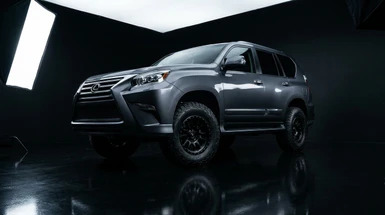
This is where most serious GX460 builds land, and for good reason — a 35 fills the arches, transforms the rig's off-road ability, and still lives comfortably as a daily driver if you support it properly. The honest requirements: expect to add a lift (a modest one is typically enough, but the exact height depends on trim, spring rates, and whether you've got a bumper or armor loading the front), choose a wheel offset that pushes the tire out enough to clear the upper control arm and frame, and plan on trimming. On most GX460s that means addressing the front bumper corners, the pinch weld, and sometimes a bit of the inner liner. None of this is exotic, but it's real work, and anyone promising a guaranteed rub-free 35 fit without seeing your truck is guessing.
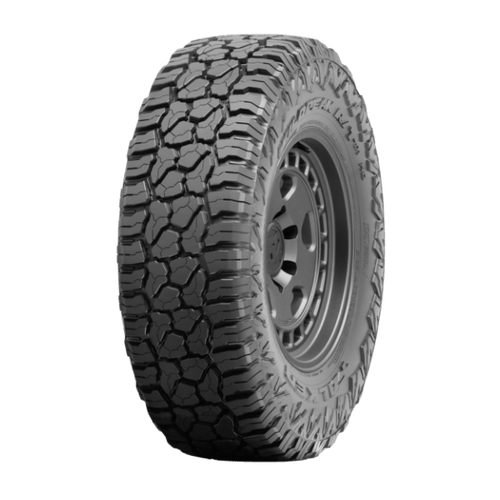
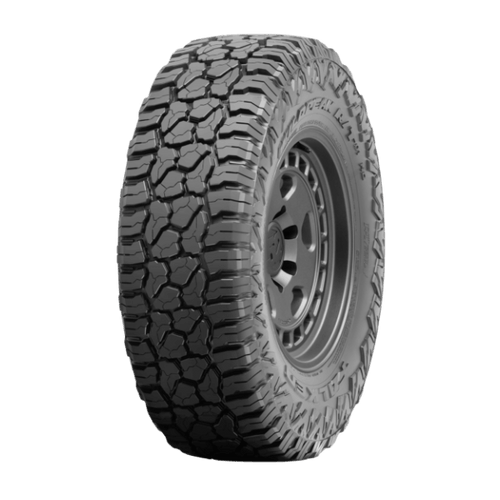
For sizing, a 315/70R17 measures about 34.4 inches and is a smart "almost-35" that's a touch easier on clearance and gearing while still looking the part. If you want the genuine 35.0-inch tire, the 35X12.50R17 is the enthusiast favorite because the 17-inch rim leaves generous sidewall for airing down on the trail. There's also a 35X12.50R18 for those who want to keep the factory wheel diameter, and a 35X12.50R20 for a street-biased look. In terms of specific rubber we keep in stock, the 17-inch class is well covered — the Toyo Open Country R/T Pro in 35X12.50R17 is a great hybrid all-terrain/mud choice, the Falken Wildpeak R/T01 splits the difference between grip and road noise, and the load-range-12 Nokian Outpost nAT is a strong pick for a heavily built rig. On the 18-inch side you've got the Nexen Roadian ATX, the beefier Falken Wildpeak R/T01 in load range 12, and the Nokian Outpost nAT in 35X12.50R18.
Running 37s: The Committed Build
Can it be done? Yes. Should most owners do it? Only if they're building a dedicated trail rig and accept the compromises. A 37 on a GX460 is a bigger lift, more aggressive wheel offset, significant trimming (and likely body mount modifications), and a mandatory re-gear — not optional at this size. You'll also be adding meaningful unsprung and rotating weight, which the GX's V8 will feel, and you'll be stressing wheel bearings, ball joints, and CV components harder than they were designed for. The steering and braking character changes noticeably, too.
If you go this route, a 37X12.50R17 is the logical choice for the extra sidewall that big-tire trail work rewards, with a 37X12.50R18 and 37X12.50R20 available for taller-rim setups. Note that the very aggressive wheel packages that make 37s work — think wide 20- and 22-inch rims with deeply negative offsets in the -52 to -12mm range — are flagged as extreme fitment on this platform and absolutely require you to verify lift and clearance before committing. Measure twice, cut once, and don't buy the tires before you've planned the whole system.
What Actually Changes When You Fit Bigger Tires
Where They Rub and How Clearance Works
On the GX460 the trouble spots are predictable: the front bumper's lower corners and the plastic valance, the pinch weld along the rocker, the inner fender liner, and — at full compression and full steering lock — the upper control arm and frame rail. A tire that clears sitting still in the driveway can still contact when the suspension cycles or when you turn the wheel to the stops on an off-camber climb. Test through the full range of travel and steering before you call a fit good.
Offset and Backspacing, Explained Properly
Offset is the distance from the wheel's mounting face to its centerline, measured in millimeters. A high positive offset (like the factory +25) tucks the wheel inboard toward the suspension; a lower or negative offset pushes it outboard toward the fender. Backspacing describes the same relationship from the back of the wheel to the mounting face, in inches. For big tires on a GX, you generally want to move the wheel outboard from stock — a lower offset — so the tire clears the upper control arm and frame. The bolt-on wheel widths that work well on this platform run from 7 to 9 inches wide in 17-, 18-, and 19-inch diameters, typically in the +12 to +25 offset window. Push the offset too far negative and you gain fender clearance but load the wheel bearings and add steering effort; keep it too positive and the tire rubs inboard. It's a balancing act, and the right answer depends on your exact tire width and lift.
Re-Gearing and Why Drivability Depends On It
This is the single most overlooked step. Taller tires effectively make your final drive taller, so the engine has to work harder to move the same speed — acceleration softens, the transmission hunts for gears, and towing or climbing suffers. A re-gear to numerically lower (higher-ratio) differential gears restores the effective ratio the truck was engineered around. On 33s many owners live with the factory gears; on 35s a re-gear meaningfully improves everyday drivability; on 37s it's essentially mandatory. The correct ratio depends on your tire diameter and how you use the truck, so plan it with a shop that knows the platform.
Speedometer, Odometer, TPMS, and Load Range
Bigger tires travel farther per revolution, so your speedometer will read low and your odometer will under-count miles unless you correct it — this can be handled with a programmer or a dealer/shop recalibration, and it matters for both accuracy and your maintenance intervals. The GX460 uses TPMS, so if you're mounting a new set of wheels you'll want compatible sensors and a relearn so the warning light stays off. Finally, think hard about load range on a heavy rig. The GX is a substantial vehicle before you add armor, drawers, and gear, and a tire's load rating needs to carry that weight safely. Load range C is lighter and rides softer; D, E, and the heavy-duty ratings (like the load-range-10 and 12 tires noted above) carry more and resist trail punctures better at the cost of a firmer ride. Match the rating to your loaded weight, not your empty curb weight.
All-Terrain vs Mud-Terrain for the GX
Because the GX460 is so often a daily driver that occasionally goes exploring, the tire personality you choose matters as much as the size. A true all-terrain is quieter, lasts longer, gets better fuel economy, and handles rain and snow more predictably — ideal if 90 percent of your miles are pavement. A mud-terrain digs harder in slop and rock, sheds mud better, and looks meaner, but it's louder, softer-wearing, and less composed in the wet.
For most GX owners the smart middle ground is a hybrid or "rugged-terrain" tire — something like the Toyo R/T Pro or Falken R/T01 mentioned earlier — that gives you serious trail bite without the drone and wear penalty of a full mud tire. Choose a genuine A/T if comfort and longevity lead your priorities; step up to a hybrid or M/T only if your terrain truly demands it. You can browse the full range across all tires to compare tread patterns and load ratings side by side.
What to Prioritize When You Buy
Buy the system, not just the tire. Decide your target size first, then plan the wheel offset, lift, trimming, and gearing as one budget — because a set of 35s bought before you've sorted clearance and gears will disappoint. Prioritize the correct load range for your loaded weight over chasing the most aggressive tread. Favor a 17-inch rim if you value sidewall for airing down and trail impact resistance; step to 18 if you want to keep the factory look. And don't skimp on the recalibration and TPMS work — those small line items are what make a big-tire build feel finished rather than half-done. When you're ready to shop by size, the 35X12.50R17 and 315/70R17 pages are the best starting points for the popular 35-class setups.
Real Lexus GX460 builds running 35s and up
Actual owner builds — real photos.


Frequently Asked Questions
Do I need a lift to run 35s on a GX460? In nearly all cases, yes. While the exact height depends on your trim, spring condition, and how much weight you carry up front, a stock GX doesn't have the arch clearance to run a true 35 without significant rubbing. Plan on a lift plus trimming and the correct wheel offset, and verify the fit through full suspension travel and steering lock on your specific truck.
Will 35s hurt my gas mileage and acceleration? Yes, to a degree. A 35 is taller and heavier than the factory tire, which raises the effective final drive ratio and adds rotating mass, so acceleration softens and economy typically drops. Re-gearing the axles to a numerically lower ratio restores much of the lost drivability and is strongly recommended on 35s and essentially required on 37s.
What's the easiest big-tire upgrade if I don't want a full build? A 285/70R17 (about 32.7 inches) or a true 33x12.50 is the low-drama path. These sizes often work with a leveling kit and minor trimming, keep speedometer error small, and don't strictly demand a re-gear for most owners — making them ideal if you want a tougher stance and better dirt manners without committing to a lift, gears, and heavy trimming.
Do bigger tires affect my speedometer and odometer? They do. Larger tires cover more ground per revolution, so your speedometer reads slower than you're actually going and your odometer under-records mileage. You'll want to recalibrate with a programmer or through a shop so your speed reading, mileage, and maintenance intervals stay accurate.
Should I choose an all-terrain or a mud-terrain? It comes down to how you use the truck. If most of your miles are on pavement and you value quiet, long-wearing, wet-weather-friendly rubber, go all-terrain. If you regularly hit mud, deep ruts, and technical rock, a mud-terrain or a hybrid rugged-terrain tire earns its keep — just accept more noise and faster wear. Many GX owners find a hybrid tire the ideal compromise.
What load range should I run on a loaded GX460? Match it to your fully loaded weight, not the empty curb weight. A lightly used GX can be comfortable on a lighter load range, but once you add armor, a roof rack, drawers, and gear, a heavier rating (load range D, E, or the 10/12-ply-equivalent tires) carries the weight safely and resists trail punctures better, at the cost of a slightly firmer ride.
35-inch tires for the GX460 (in stock)