
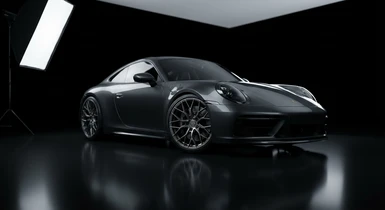
BBS Wheels: You're Paying for a Logo, Not Quality
BBS Wheels: Worth the Money or Just Hype?
Three letters, instant credibility. Say "BBS" around anyone who's spent time with German cars, Group A/Group C racing, JDM builds, or modern OEM performance trims, and you'll get a nod. The BBS RS mesh design is arguably the most recognized aftermarket wheel silhouette on the planet — copied by dozens of manufacturers and thousands of replica shops. But BBS today isn't the BBS of the 1980s. Two insolvencies, multiple ownership changes, and a catalog that spans sub-$300 cast wheels to $2,500+ forged three-piece barrels mean the badge doesn't tell you nearly as much as it used to. The real question isn't whether BBS was a great brand — it obviously was. It's whether paying BBS money in 2024 gets you meaningfully more wheel than the competition.
Quick Navigation
- Quick Answer
- Key Takeaways
- Brand Background: A Legendary Name With a Messy Ledger
- Product Lineup: Know Which BBS You're Actually Buying
- Engineering: What's Real and What's Marketing
- Motorsport and Street Credibility
- Value Comparison: BBS vs. the Competition
- Fitment and Sizing
- Replica and Authenticity Red Flags
- Who Should Actually Buy BBS
- Bottom Line
Quick Answer
It's bimodal. At the forged multi-piece flagship level — RS, RC, RM, LM, and the forged monoblocks — BBS earns its price through real engineering, certification, and repairability that stacks up against Volk Racing, HRE, and Work Wheels. At the cast and flow-formed entry level, you're largely paying for the badge; Enkei and Konig deliver comparable real-world performance for meaningfully less.
Key Takeaways
- BBS's reputation rests almost entirely on its forged multi-piece wheels, but most BBS wheels actually sold are cast or flow-formed — a different product tier entirely.
- BBS Germany has filed for insolvency twice (2011 and again around 2018–2019), and enthusiast forums report quality-consistency and customer-service complaints tied to those periods.
- Genuine forged BBS wheels carry TÜV (Europe) or JWL/VIA (Japan) certification — real independently-tested standards, not marketing badges.
- Multi-piece construction means replaceable barrels and lips — a curbed rim doesn't necessarily mean a dead wheel.
- The BBS RS look is one of the most replicated wheel designs in the industry; cast fakes with cosmetic-only bolt-on lips are a genuine safety concern.
- At the top end, cross-shop Volk Racing, HRE, and Work Wheels before committing — pricing and capability overlap heavily.
Brand Background: A Legendary Name With a Messy Ledger
BBS was founded in 1970 in Schiltach, Germany, by Heinrich Baumgartner and Klaus Brand (the name is literally their initials plus the town). The company built its reputation through the 1970s and '80s pioneering multi-piece forged wheel construction and supplying Formula 1 teams, Group C prototypes, DTM/Group A touring cars, and Le Mans entries.
The corporate history since then has been rockier than the racing pedigree suggests:
- 2011: BBS Kraftfahrzeugtechnik AG (the German parent) filed for insolvency amid financial crisis fallout and heavy debt, followed by a restructuring/sale.
- Late 2010s: A second insolvency event, followed by acquisition out of bankruptcy. Exact ownership stakes have shifted more than once since and vary by report.
- Today: BBS Germany remains a respected engineering name that has nonetheless been financially unstable for over a decade.
Complicating things further, BBS Japan is a distinct entity building forged wheels — often considered by enthusiasts to have very high, consistent quality — primarily for the JDM market and export, with its own manufacturing and design identity that sometimes diverges from the German lineup. There's also BBS of America / BBS USA/Motorsport, handling OEM programs and the US aftermarket catalog. Manufacturing has historically centered in Germany for forged and multi-piece wheels, with cast production increasingly sourced from Italy and other partner foundries, while BBS Japan builds its forged range domestically. The takeaway: not every wheel wearing the BBS logo comes off the same line or under the same quality regime.
Product Lineup: Know Which BBS You're Actually Buying
BBS's catalog splits cleanly by construction method, and that split matters more than any styling choice.
Cast monoblock (entry tier) — Models like the SR are single-piece cast aluminum wheels styled to echo the mesh look, running roughly $250–$400 per wheel. This puts them in direct competition with Enkei and Konig, not with premium forged wheels.
Flow-formed — The CH-R and its revisions start as a cast blank, then get heat-treated and spun/rolled under pressure at the barrel to refine the grain structure. Pricing runs $350–$550 per wheel, comparable to Enkei's RPF1/RPT1 and Rays' cheaper lines.
Forged monoblock — The FI-R, RE-V, and other motorsport-oriented one-piece forged wheels are lighter and stronger than cast/flow-formed equivalents, typically $500–$1,000+ per wheel.
Forged multi-piece (the halo products) — This is the BBS name in its purest form:
- RS — the classic 2-piece mesh design from the 1980s, still in production in updated form
- RC / RM — modern 2-piece designs with deeper dish and step-lip options
- LM — a more premium, sometimes 3-piece design, used as OEM fitment on the Audi R8 and Lexus LFA
Multi-piece construction bolts or rivets a forged center to a separate barrel (sometimes with its own outer lip), enabling custom offsets and replaceable hardware. Pricing spans $1,200–$2,500+ per wheel, meaning a set of four can run $5,000–$10,000+ before hardware and finish options.
Motorsport-specific — BBS continues building purpose-built forged wheels for GT3 and touring car categories, generally sold outside normal retail channels with certification tied to specific race series homologation.
The core issue for the "hype" debate: the reputation is built on the forged multi-piece line, but most enthusiasts actually buying BBS are buying cast or flow-formed wheels — products that aren't meaningfully different in engineering terms from a well-regarded Enkei or Konig at similar money.
Engineering: What's Real and What's Marketing
- Forging process: BBS's forged wheels start as a solid billet (commonly 6061-T6 or similar aerospace-grade alloy), heated and pressed into a blank that aligns the grain structure for strength, then CNC-machined to final dimensions. This is industry-standard premium wheel construction shared by HRE, Volk Racing, and Work Wheels — BBS didn't invent forging, but it was among the first mainstream European brands to popularize it for road cars.
- Flow-forming: the CH-R line's rotary forging process on a cast blank is a genuine middle ground in strength-to-weight between casting and full forging. This is accurately marketed, not hype.
- Multi-piece assembly and repairability: forged/cast centers bolt or rivet to separately manufactured barrels, sealed with butyl or gasket material. This allows custom offset building — spacing the center within the barrel — and, crucially, repair: a curbed barrel or lip can often be replaced without discarding the whole wheel, unlike a monoblock.
- Weight (approximate, size-dependent): a BBS RS-style 17×8 multi-piece wheel commonly lands around 9–10 kg (20–22 lbs); a comparably sized forged monoblock is often lighter, around 7–8 kg; a comparable cast wheel tends to run heavier, often 10–11+ kg. Always check published weights for your exact size and offset rather than trusting generic marketing figures.
- Certification: wheels for European road use typically carry TÜV certification; JDM-spec wheels often carry JWL/VIA certification. Both are independently tested standards covering impact, radial fatigue, and cornering fatigue — a genuine differentiator versus budget replicas that skip certification entirely.
- Quality control: BBS has historically used X-ray and ultrasonic inspection on forged products to check for internal voids, standard practice among top-tier makers. That said, enthusiast forums have flagged quality consistency complaints tied specifically to the post-insolvency periods — clear-coat/finish issues, longer lead times, inconsistent customer service. Treat this as anecdotal owner feedback, not an official defect record, but it's a reasonable point of skepticism.
Motorsport and Street Credibility
This is BBS's strongest argument:
- Multiple Formula 1 teams ran BBS-supplied wheels through the 1980s into the '90s
- Long-standing presence in DTM and Group A/Group C era touring and prototype racing
- Le Mans-class entries running BBS wheels across multiple decades
- OEM/homologation supply relationships with Porsche (911 GT3/GT2 variants), Audi (RS models, R8), BMW M, Mercedes-AMG, Alfa Romeo (4C), Nissan (GT-R NISMO), and the McLaren F1 road car
- Continued current-day supply into GT3 and touring car categories
On the street side, the BBS RS mesh design is one of the most referenced wheel silhouettes in car culture, showing up across JDM, European tuning, and American builds — and it's been directly imitated by dozens of budget brands, which is itself proof of cachet. Enthusiast sentiment splits cleanly: forged/multi-piece BBS gets called "the gold standard" and "buy once, cry once," while cast BBS draws a more mixed reaction — respected, but often described as "fine, but you're paying for the badge" next to a similarly specced Enkei or Konig.
Value Comparison: BBS vs. the Competition
- Volk Racing / Rays (TE37, CE28, etc.): Similar forged pedigree, similar pricing ($1,000–$2,500+ per wheel), and arguably an even stronger weight-weenie reputation — the TE37 is often the lightness benchmark. Rays is frequently cited as BBS's closest true rival in the forged space, sometimes commanding a higher resale premium in the JDM-influenced market.
- HRE Wheels: US-based forged monoblock and multi-piece specialist, priced at or above BBS's top-tier multi-piece range ($1,500–$3,000+ per wheel), known for extreme customization and a strong show/luxury build presence. Often viewed as the "no compromise" choice where BBS is the "credible heritage" choice.
- Work Wheels: Japanese forged/multi-piece manufacturer with strong JDM credibility, pricing overlapping heavily with BBS's forged range, praised for finish quality and modern fitment options.
- Vossen: More of a style/forged-and-flow-formed hybrid aimed at the show/stance market, priced similarly to BBS's mid-to-upper range but with less direct motorsport pedigree — the pick for buyers chasing looks over race history.
- Enkei / Konig (budget comparison): Enkei's RPF1 and similar flow-formed wheels are frequently cited by trackday enthusiasts as offering very similar real-world strength-to-weight to BBS's cast/flow-formed lines, at $250–$450 per wheel — significantly less money for comparable performance. This is the crux of the "hype" argument at the entry level.
The pattern: at the forged multi-piece flagship level, BBS competes on pure engineering merit with the best in the world. At the cast/flow-formed entry level, the price premium over Enkei/Konig is hard to justify on engineering grounds alone.
Fitment and Sizing
BBS spans an extensive range — from 15–16-inch cast wheels for classic/retro builds up to 20–22-inch forged options for modern performance and luxury applications. Offsets are available across a wide spread, and the multi-piece models (RS, RC, RM, LM) are specifically built for custom offset construction — the center can be positioned within the barrel to hit a specific backspacing, a major advantage for wide-body or aggressive-fitment builds where off-the-shelf offsets don't work.
Because multi-piece wheels use replaceable barrels and lips, repairability is a real practical edge over monoblock construction: a curbed lip or bent barrel section can often be swapped rather than forcing full wheel replacement, and hardware (bolts, rivets, hardware kits) is serviceable. This is where specialists become relevant — companies like ThreePiece.us source, rebuild, and customize multi-piece wheels including BBS RS/RC/RM/LM barrels and lips, offering custom widths, offsets, and finishes not available directly from BBS retail, and rebuilding worn or damaged used sets. For buyers eyeing the used market, this rebuild path is often the most affordable route to genuine BBS ownership — buying worn centers and having barrels rebuilt or widened rather than paying new retail.
Replica and Authenticity Red Flags
The BBS RS look is so iconic it's also one of the most heavily replicated wheel designs in the industry. Watch for:
- Weight and casting quality: replicas are almost always cast, not forged — meaningfully heavier, with rougher casting lines, uneven spoke thickness, or poor machining around the lug seats.
- Certification stamps: genuine BBS wheels carry manufacturing stamps (load ratings, DOT/TÜV or JWL/VIA marks, date codes) machined or stamped into the wheel; replicas frequently omit these or fake them poorly.
- Hardware quality: genuine multi-piece BBS wheels use proper structural bolts/rivets and correct barrel-to-center sealing; replicas often bolt cosmetic hardware onto what's actually a one-piece cast wheel for looks only — a genuine safety concern, not just an authenticity issue.
- Documentation: current-production forged BBS wheels generally come with authentication paperwork; when buying used, ask for original documentation and match part/date codes. A reputable specialist can often verify authenticity from stamped codes.
- Used-market condition traps: corrosion between center and barrel on old multi-piece sets, over-torqued or stripped hardware, previously repaired cracks (especially on track-used sets), and structural fatigue of unknown history. Collector demand for specific vintage BBS RS sizes and finishes — gold or step-lip configs from the '80s/'90s especially — has pushed clean original sets well above their functional value as used parts. Some of that premium is nostalgia, not engineering superiority over a modern equivalent.
Who Should Actually Buy BBS
- Track/motorsport-focused buyers: forged monoblock and multi-piece BBS wheels are legitimately excellent, backed by real engineering, certification, and repairability — worth it new or through a trusted rebuild specialist.
- Show/collector builds: genuine vintage BBS RS sets, especially period-correct sizes and finishes, carry real cultural cachet. Buyers here knowingly pay for heritage, and that's a reasonable purchase as long as authenticity checks out.
- Daily driver enthusiasts on a budget: the cast/flow-formed lines are good wheels, but Enkei, Konig, or similar brands deliver comparable real-world performance for meaningfully less — this is where "hype" criticism holds up best.
- Collectors chasing rare designs/finishes: worth it, understanding the price is driven by scarcity and desirability, not raw engineering superiority.
- Buyers wanting maximum customization at the top end: cross-shop HRE and Work Wheels alongside BBS multi-piece before committing — pricing and capability overlap heavily.
Bottom Line
BBS isn't hype, but it isn't uniformly "worth it" either — the honest verdict is bimodal. At the forged and multi-piece flagship level (RS, RC, RM, LM, and the forged monoblocks), the price premium is backed by documented engineering pedigree, motorsport history, certification, and repairability that legitimately competes with the best wheel manufacturers in the world. That tier is worth the money, provided you buy through legitimate channels or a trusted rebuild specialist.
At the cast and flow-formed entry level, BBS is trading on brand reputation earned by its forged and motorsport heritage, while the actual product sits in the same performance tier as budget rivals costing considerably less — this is where "just hype" holds up.
Factor in a decade-plus of financial instability, two insolvency events, and enthusiast-reported inconsistency in recent quality control, and the picture is clear: the badge still carries genuine motorsport-earned weight, but every specific model needs to be evaluated on its own construction and certification merits rather than assumed superior on name alone. Worth the money at the top, hype-adjacent at the bottom, buyer-dependent everywhere in between.