
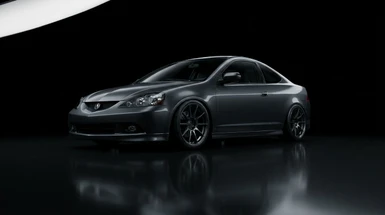
Acura RSX Type S Mods Ranked Best to Worst
Ranking Every Acura RSX Type S Mod From Best to Worst
The DC5 RSX Type S arrived with Honda's K20 engine and a platform so thoroughly documented across two decades of forum threads, dyno sessions, and track days that the community has essentially solved the mod sequence. That clarity is the point of this guide. The K20A2 and K20Z1 are high-compression engines that respond to modifications in specific, predictable ways — and they punish poor sequencing just as predictably. Here is every meaningful mod ranked, with the reasoning behind each placement.
---

Quick Navigation
- Quick Answer
- Key Takeaways
- S-Tier: The Mods That Actually Move the Needle
- A-Tier: Strong Upgrades With Conditions Attached
- B-Tier: Worthwhile for the Right Build
- C-Tier: Low Priority or Primarily Aesthetic
- D and F-Tier: Avoid These
- Build Stage Roadmap
- Complete Ranking Table
- Bottom Line
Quick Answer
Tune first, suspension second, intake manifold third. The Hondata FlashPro is the single highest-value modification on the platform. Coilovers transform the car more completely than any other single part. Everything else builds from those two. Avoid lowering springs without damper upgrades, no-name headers, and any turbo kit targeting over 250 whp on stock internals.
---
Key Takeaways
- The K20A2 (2002–2004) and K20Z1 (2005–2006) share most bolt-on compatibility but require different tune calibrations.
- Stock bottom-end K20 internals are safe to approximately 250 whp. Beyond that, the engine needs to be built.
- Naturally aspirated bolt-ons on a tuned car realistically produce 185–210 whp at the wheels. Know the ceiling before spending money.
- A header without a tune will trigger a CEL, lose low-end torque, and deliver minimal gains. The tune is not optional.
- The DC5 market has appreciated significantly — clean examples were trading at $12,000–$18,000 in 2023–2024. Reversible mods protect that value.
---
S-Tier: The Mods That Actually Move the Needle
Hondata FlashPro + Professional Tune
Cost: $695–$750 (unit) + $150–$300 (calibration) Dyno gain: 8–15 whp stock; 25+ whp with supporting mods
Nothing else on this list comes close in performance-per-dollar. The FlashPro plugs into the OBD-II port and allows full reflashing of the factory ECU — fuel maps, ignition timing, VTEC engagement point, rev limiter, idle parameters. On a stock car running 91 octane, a professional tune yields 8–12 whp and noticeably sharper throttle response across the entire rev range.
More importantly, the tune is the safety net for every other modification. Intake and exhaust gains are incomplete and potentially harmful without it. The FlashPro unit is transferable and resaleable, so it does not permanently alter the car. Use a tuner with documented K20 experience and dyno verification — a bad tune on an 11.0:1 compression engine causes detonation and piston damage.
Coilover Suspension
Cost: $800–$2,200 Recommended: Fortune Auto 500 Series (~$1,600), Tein Flex Z (~$900), KW Variant 3 (~$2,100), BC Racing BR Series (~$800)
The factory suspension is comfort-biased for the North American market. Springs are soft, dampers are non-adjustable, and ride height sits at approximately 14.4 inches front and 14.2 inches rear. A quality coilover drops the center of gravity 1.0–1.5 inches, reduces body roll, sharpens turn-in, and gives you adjustable damping for street-to-track flexibility.
- Fortune Auto 500 Series:** Best value for track use. Monotube design, 16-way compression adjustment, customer-specified spring rates. Street/track builds typically run 8K front / 6K rear.
- BC Racing BR Series:** Budget entry point. Softer spring rates suit street and show builds. Quality control has been inconsistent per forum reports.
- KW Variant 3:** Premium daily-driver choice with independent compression and rebound adjustment. Street ride quality is noticeably better than budget options.
Alignment is required after installation. Add camber plates — Ingalls or Skunk2 units run $150–$200 — to hit -1.5° to -2.5° front camber for track use.
Skunk2 Intake Manifold (Pro Series or Ultra Series)
Cost: Pro Series ~$350; Ultra Series ~$550 Dyno gain: 6–12 whp (tuned)
The factory K20A2 plenum is adequate but not optimized. Skunk2's manifolds feature larger plenum volume and runner lengths tuned for high-RPM output. The Ultra Series consistently adds 8–12 whp above 6,500 RPM on tuned cars but trades 5–8 lb-ft of torque below 4,000 RPM — a real penalty in daily traffic. The Pro Series splits the difference and is the correct choice for dual-purpose street/track use. Without a tune, gains drop to 4–6 whp and the low-RPM deficit is more pronounced.
---
A-Tier: Strong Upgrades With Conditions Attached
Cold Air Intake
Cost: AEM Cold Air Intake ~$250–$280; Injen SP Short Ram ~$180–$220; K&N FIPK ~$250 Dyno gain: 3–8 whp (tuned); 1–4 whp (untuned)
The AEM Cold Air Intake is the most documented intake for the DC5 and the correct choice for tuned builds — relocating the filter away from engine heat produces realistic gains of 5–8 whp when properly calibrated. Untuned, you are looking at 2–4 whp with potential lean conditions at high RPM. The short ram intake avoids the hydrolocking risk of a cold air in standing water but gives up power due to warmer intake air temperatures. Owner consensus: it sounds better than it performs, but the gains are real when paired with a tune.
Header (Exhaust Manifold Upgrade)
Cost: DC Sports 4-2-1 ~$300–$350; Skunk2 Alpha Series ~$450–$550 Dyno gain: 6–14 whp (tuned); negative to +3 whp (untuned)
A 4-2-1 equal-length header replaces the factory cast iron manifold and is one of the most effective bolt-on power adders on the K20 platform. The Skunk2 Alpha Series leads the category at 10–14 whp on tuned K20A2 cars. The DC Sports 4-2-1 delivers 6–9 whp at a lower price point.
Installing a header without a tune will trigger a P0420 or related oxygen sensor code, reduce low-end torque, and deliver minimal gains. Most aftermarket headers delete the pre-cat, which requires either a high-flow catalytic converter or an O2 sensor simulator depending on your jurisdiction.
Brake Upgrade: Pads, Rotors, and Fluid
Cost: Hawk HPS or HP Plus pads ~$80–$120/axle; Brembo or StopTech slotted rotors ~$150–$250/axle; Motul RBF600 fluid ~$20
The factory 11.8-inch front vented rotors and single-piston calipers fade noticeably on track. Hawk HP Plus pads are the correct choice for track use; Hawk HPS for street. The single most overlooked upgrade on this platform is brake fluid — the factory DOT 3 has a dry boiling point of approximately 401°F. Motul RBF600 raises that to 593°F, effectively eliminating fade on track days. Twenty dollars. Do it first.
Cat-Back Exhaust
Cost: Skunk2 MegaPower R ~$400–$500; HKS Hi-Power ~$500–$650; Invidia N1/Q300 ~$450–$600 Dyno gain: 3–7 whp (tuned)
Gains are real but modest. The subjective improvement in exhaust character is more significant than the power number. Highway drone is a legitimate concern — the Invidia Q300 is consistently rated the least droning option for the DC5. The Skunk2 MegaPower R is louder and more aggressive, appropriate for track use but fatiguing on long drives.
---
B-Tier: Worthwhile for the Right Build
Short Shifter (Skunk2 linkage ~$150–$200; Buddy Club ~$180–$250): The factory 6-speed has a long, vague throw. A short shifter reduces it 20–40% and improves mechanical feel. Becomes A-tier for any autocross or track-focused build.
Lightweight Flywheel (ACT Streetlite ~$350–$400; Fidanza Aluminum ~$300–$350): The factory flywheel weighs approximately 14 lbs. Aftermarket units run 8–12 lbs. Throttle response and rev speed improve noticeably. Tradeoff: the engine is more prone to stalling at low RPM and requires more clutch modulation in traffic. Requires transmission removal — install difficulty 4/5.
Upgraded Clutch (Exedy Stage 1 ~$200–$250; ACT Street ~$250–$300; Clutchmasters FX300 ~$280–$350): If the flywheel is coming out, replace the clutch. The factory unit begins showing wear around 80,000–100,000 miles. For power levels under 220 whp, Exedy Stage 1 or ACT Street provides adequate clamping without harsh engagement. Turbocharged builds require at minimum Exedy Stage 2 or ACT Heavy Duty.
Strut Bars (Skunk2 front ~$80–$120; Cusco rear ~$150–$200): On a 20-year-old unibody, chassis flex is real. Strut bars do not produce dramatic lap time improvements but consistently improve steering feel and front-end response. The rear unit requires removing interior trim but is a straightforward install.
---
C-Tier: Low Priority or Primarily Aesthetic
Body Kit and Aero: Aerodynamic downforce requires speeds above 80–100 mph to generate measurable grip. At street speeds, body kit components are aesthetic. Most aftermarket wings sold for the DC5 are not wind-tunnel validated. The Mugen-style front lip is the community's most respected aesthetic addition — subtle, factory-appearing, and reversible. Aggressive body kits reduce resale value among enthusiast buyers who prefer clean cars.
Cosmetic Wheels: Lightweight wheels are A-tier for track builds where unsprung weight reduction produces measurable gains. As a cosmetic-only upgrade with no weight reduction, they are C-tier.
---
D and F-Tier: Avoid These
| Mod | Why It Fails |
|---|---|
| Lowering springs without damper upgrade | Stock dampers operating outside designed travel range wear rapidly and handle poorly. Coilovers are a better investment at every price point. |
| No-name headers and exhaust | Weld quality failures produce exhaust leaks within 12–18 months. Cracked primaries near the firewall are a documented fire risk on Club RSX forums. |
| Aggressive cams without valvetrain rebuild | Skunk2 Stage 2+ and Brian Crower cams require upgraded valve springs and retainers. Installing on a stock valvetrain risks valve float and piston contact at high RPM. |
| Oversized turbo kit on stock internals | Stock K20 bottom end is safe to approximately 250 whp. Kits targeting 300+ whp on stock rods and pistons have a high probability of catastrophic failure. |
| Tune from unverified remote tuner | A poorly written tune on an 11.0:1 compression engine causes detonation and piston damage. Use a tuner with documented K20 dyno experience. |
---
Build Stage Roadmap
First $1,500
- Hondata FlashPro + professional tune (~$900): Establishes the baseline and makes every subsequent mod safer and more effective.
- AEM Cold Air Intake (~$260): Feeds the tune with better airflow; gains are now properly realized.
- Hawk HPS pads + Motul RBF600 fluid (~$120): Safety and confidence before pushing the car harder.
Best $3,000 Street Build
- Hondata FlashPro + tune: $900
- Coilovers (BC Racing BR or Tein Flex Z): $800–$900
- Skunk2 Pro Series intake manifold: $350
- AEM Cold Air Intake: $260
- DC Sports 4-2-1 header: $320
- Alignment with camber adjustment: $150–$200
- Hawk HP Plus pads: $120
Expected result: 195–205 whp, significantly improved handling, daily-driveable.
Best Track Path
- Hondata FlashPro + tune
- Fortune Auto 500 Series coilovers (8K/6K spring rates)
- Camber plates (Ingalls or Skunk2)
- Skunk2 Ultra Series intake manifold
- Skunk2 Alpha Series header + high-flow cat
- Invidia N1 cat-back
- Hawk HP Plus or DTC-60 brake pads
- Motul RBF600 brake fluid
- Lightweight wheels (Enkei RPF01 or Volk TE37)
- Buddy Club short shifter
- ACT Streetlite flywheel + Exedy Stage 1 clutch
Expected result: 205–215 whp, competitive autocross and HPDE setup.
---
Complete Ranking Table
| Rank | Mod | Tier |
|---|---|---|
| 1 | Hondata FlashPro + Professional Tune | S |
| 2 | Coilover Suspension | S |
| 3 | Skunk2 Intake Manifold (Pro or Ultra) | S |
| 4 | Cold Air Intake (AEM / Injen) | A |
| 5 | Header (Skunk2 Alpha / DC Sports 4-2-1) | A |
| 6 | Brake Upgrade (Pads / Rotors / Fluid) | A |
| 7 | Cat-Back Exhaust (Invidia Q300 / Skunk2 MegaPower R) | A |
| 8 | Short Shifter | B |
| 9 | Lightweight Flywheel | B |
| 10 | Upgraded Clutch | B |
| 11 | Strut Bars (Front/Rear) | B |
| 12 | Lightweight Wheels (Enkei RPF01 / Volk TE37) | B/A |
| 13 | Body Kit / Aero | C |
| 14 | Lowering Springs Only | D |
| 15 | No-Name Headers/Exhaust | F |
| 16 | Aggressive Cams Without Valvetrain Rebuild | F |
| 17 | Oversized Turbo on Stock Internals | F |
| 18 | Tune from Unverified Remote Tuner | F |
---
Bottom Line
The RSX Type S rewards disciplined sequencing and punishes shortcuts. Tune first — everything else is more effective and safer with a calibrated ECU. Coilovers second, because the handling transformation is more complete than any power modification. Then build the intake and exhaust together so the tune can account for both simultaneously. The K20 platform has a well-defined naturally aspirated ceiling around 210–215 whp at the wheels. Know where you want to land before you start spending, and the path to get there is clear.