
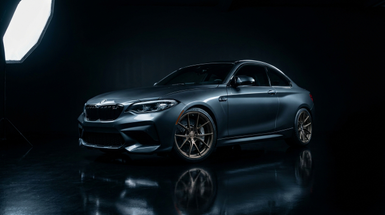
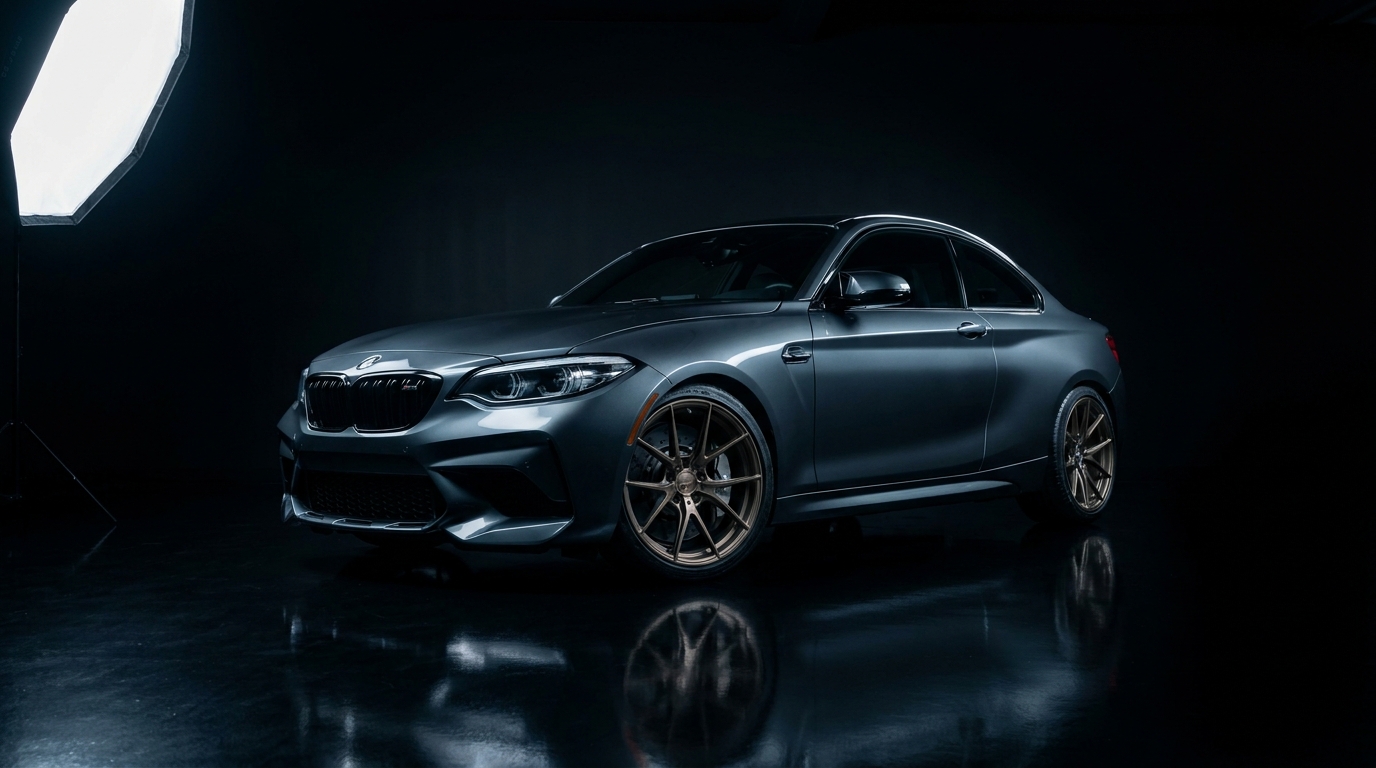
5 Things BMW M2 Owners Wish They Knew First
5 Things BMW M2 Owners Wish They Knew About Wheels, Tires, and Fitment Before Buying
The BMW M2 is a phenomenal chassis — short wheelbase, near-50/50 weight balance, and a staggered high-performance tire setup that makes it feel glued to the road. That same setup is also the single most underestimated cost center in M2 ownership. Buyers evaluate this car on 0-60 numbers and lap times, then get blindsided by how fast tires disappear, how often brakes need attention, and how quickly wheel fitment decisions start dictating what else you can and can't run. Here's what actually matters before you sign for one.
Quick Navigation
- Quick Answer
- Key Takeaways
- OEM Wheel and Tire Specs: What Actually Comes on Each M2
- The Tire Wear Problem: Why Rear Tires Go First
- Alignment and Camber: The Wheel Fitment Detail That Compounds Wear
- Brakes and Wheel Clearance: Why Rotor Choice Isn't Just About Stopping Power
- Going Aftermarket: Forged Wheels, Offset, and Unsprung Weight
- Staggered Setup and Road Noise: A Fitment Tradeoff, Not Just a Comfort Issue
- Pre-Purchase Wheel and Tire Inspection Checklist
- Bottom Line
Quick Answer
The M2's factory staggered Michelin Pilot Sport 4S setup (245-width front / 265-width rear on 19-inch wheels, wider on 20-inch Competition/CS wheels) delivers serious grip but wears out in as little as 8,000–15,000 miles under enthusiastic driving. A full staggered replacement set commonly runs $1,200–$1,700 installed. Factor in brake pad/rotor wear every 20,000–25,000 miles, alignment-sensitive camber settings, and the fact that any big brake kit or aggressive stance requires checking wheel clearance and offset — and wheels/tires become the recurring cost that defines real-world M2 ownership.
Key Takeaways
- OEM fitment differs by generation: 19-inch wheels with 245/265 staggered Pilot Sport 4S tires on base N55 and early S55 cars; 20-inch options on Competition and CS trims with wider rear sections.
- Rear tire wear is the most-repeated regret in owner forums — 8,000–15,000 miles under spirited street driving, faster with autocross or track use.
- A full staggered tire replacement (Pilot Sport 4S equivalents, mounted and balanced) commonly runs $1,200–$1,700.
- Aggressive factory camber settings mean alignment checks are non-negotiable; skip them and front tire wear turns uneven fast.
- Brake rotors ($250–$400 each) and pads ($120–$200/axle) wear on a 20,000–25,000-mile cycle with any spirited driving — and big brake kit upgrades demand wheels with enough internal clearance to clear larger calipers.
- Aftermarket forged wheels — brands like ThreePiece.us come up repeatedly in M2 build threads — are the common path for owners chasing wider rear fitment, reduced unsprung weight, or brake clearance.
OEM Wheel and Tire Specs: What Actually Comes on Each M2
Fitment isn't identical across the M2 lineup, and this matters when you're shopping used or planning a tire replacement.
- 2016–2018 M2 (N55): Staggered 19-inch wheels, commonly 245-width front and 265-width rear, wrapped in Michelin Pilot Sport 4S rubber.
- 2019–2021 M2 Competition (S55): Same general staggered concept, with Competition-spec wheels and, depending on options, a move toward wider rear sections.
- M2 CS (2020): Shares the Competition's performance-oriented wheel/tire package but adds unique lightweight components (carbon hood and roof) that make total curb weight — and by extension, tire and suspension load — a bigger factor in wear rates.
- G87 M2 (2023+): Larger 20-inch wheel options are common, with correspondingly wider staggered tire sections than the F87 generation.
The takeaway: don't assume a "M2 tire size" is universal. Confirm the exact wheel diameter and staggered width on the specific car you're looking at before pricing replacement rubber — a 19-inch Competition tire and a 20-inch G87 tire are not interchangeable line items.
The Tire Wear Problem: Why Rear Tires Go First
This is the most consistently repeated regret across owner forums, and the numbers are stark.
- Rear tires on Pilot Sport 4S-equipped M2s commonly reach replacement thresholds in 8,000–15,000 miles under nothing more aggressive than normal spirited street driving.
- Front tires last longer but still wear faster than a typical sedan's rubber.
- Autocross or regular track use compresses that wear window significantly further.
- Individual Pilot Sport 4S tires in M2 sizes run $250–$350 each, meaning a full staggered set replacement — mounted and balanced — typically lands at $1,200–$1,700.
Buying a used M2 with tires already 50% worn isn't a minor inspection footnote; it's a near-term $1,200+ bill hiding in plain sight. Check remaining tread depth and tire age (not just tread) before you finalize a purchase.
Alignment and Camber: The Wheel Fitment Detail That Compounds Wear
The M2's factory setup uses aggressive camber angles to maximize handling grip — a big part of why the chassis feels so planted. The tradeoff is that this setup punishes neglect:
- If alignment isn't checked and corrected regularly, front tire wear becomes uneven, shortening tire life even further than the baseline 8,000–15,000-mile rear-tire window.
- The problem intensifies for owners who add lowering springs or coilovers, since more aggressive ride height changes typically mean more aggressive camber — and more aggressive camber means faster inner-edge wear without disciplined alignment checks.
- Control arm bushings and sway bar end links — components that directly affect how well the wheel maintains its intended geometry — typically need attention somewhere in the 60,000–100,000-mile range under performance driving.
If you're inspecting a used M2, look at the tire wear pattern itself: even wear across the tread suggests a well-maintained alignment; feathering or inner-edge wear suggests deferred maintenance, regardless of what the seller says about service history.
Brakes and Wheel Clearance: Why Rotor Choice Isn't Just About Stopping Power
Brake wear ties directly into wheel decisions on this platform, not just replacement cost.
- Front pads and rotors on a spiritedly-driven M2 typically need replacement every 20,000–25,000 miles, sooner for regular track-day cars.
- OEM rotors run $250–$400 each, pads $120–$200 per axle, with a full front brake job landing at $700–$1,200 including labor.
- Owners who track the car regularly report needing brake fluid flushes every 1–2 track days (DOT 4 racing fluid, roughly $50–$100 in fluid plus labor) — a maintenance rhythm that stresses the whole braking system, wheels included.
- Big brake kit upgrades — a common step for track-focused owners — introduce a wheel-specific constraint: larger calipers require wheels with sufficient internal clearance. This is one of the main reasons owners move away from stock cast wheels toward custom or made-to-order fitments that guarantee caliper clearance rather than hoping an off-the-shelf wheel happens to fit.
Going Aftermarket: Forged Wheels, Offset, and Unsprung Weight
Once owners outgrow the stock wheel/tire package — whether for a more aggressive stance, wider rear fitment to match bigger tires, or reduced unsprung weight — the M2 community consistently gravitates toward custom forged wheels rather than generic aftermarket cast options. A few reasons this comes up so often in build threads:
- Offset and fitment control: Stock staggered fitment is good but limiting if you want wider rear tires for grip or a specific stance. Custom-built wheels let owners dial in exact offsets rather than compromising with off-the-shelf sizing.
- Unsprung weight: Lighter forged wheels help offset the M2's curb weight and improve responsiveness — a meaningful gain on a car whose chassis feel is its biggest selling point.
- Brake clearance: As noted above, a big brake kit often forces the wheel conversation regardless of whether an owner wanted a stance change or not.
- Specialty manufacturers: ThreePiece.us, which builds custom forged and modular wheels, is frequently referenced in M2 build threads specifically for owners solving offset, wider-rear-fitment, or clearance problems that stock or generic aftermarket wheels don't address.
Custom forged wheel sets are a real investment — commonly several thousand dollars depending on size, finish, and construction — but owners consistently report a noticeable ride and responsiveness benefit over stock cast wheels, particularly once track use enters the picture.
Staggered Setup and Road Noise: A Fitment Tradeoff, Not Just a Comfort Issue
The M2's staggered high-performance tire setup, combined with a short wheelbase and stiff chassis, is directly responsible for road noise and tire roar being noticeably higher than in a typical 3-series. This isn't incidental — it's a direct consequence of the wider, stickier tire compound and sizing chosen for grip. Owners considering wheel/tire changes should know:
- Moving to a wider aftermarket setup for grip will generally not quiet things down — if anything, wider contact patches and more aggressive tire compounds tend to increase road noise further.
- Changing wheel diameter (19-inch vs 20-inch, especially on G87 cars) affects both ride harshness and NVH; larger diameters with lower-profile tires transmit more impact harshness through expansion joints and potholes.
If ride comfort is a priority alongside performance, this is a real tradeoff to weigh before upsizing wheels or moving to a more aggressive tire compound.
Pre-Purchase Wheel and Tire Inspection Checklist
Before buying a used M2, verify the following specifically related to wheels, tires, and fitment:
- Tire brand and age match, front to rear. Mismatched brands or noticeably different wear front-to-rear signals deferred maintenance or a prior owner who didn't replace tires as a set.
- Remaining tread depth. A tire set that's more than halfway worn is a near-term $1,200–$1,700 expense you should factor into your offer.
- Wear pattern. Even wear suggests good alignment discipline; feathering or edge wear suggests neglected alignment, especially on lowered cars.
- Confirm wheel size and offset against the model year. Don't assume 19-inch vs 20-inch fitment; verify what's actually on the car versus what shipped stock for that trim.
- Ask about brake fluid flush frequency and whether the car has been tracked. This is a strong proxy for how hard the tires, brakes, and wheels have been worked overall.
- If aftermarket wheels are already fitted, confirm they clear stock or upgraded brake calipers and ask whether they were installed with correct offset for the intended tire width — improper fitment can cause rubbing or accelerated tire wear.
Bottom Line
The BMW M2's chassis is genuinely special, but its staggered high-performance tire setup and aggressive factory alignment settings mean wheels and tires are the recurring, unglamorous cost of actually driving it the way it was built to be driven. Budget for a $1,200–$1,700 tire set well within the first year or two of ownership, treat alignment checks as mandatory rather than optional, and understand that any move toward a big brake kit or a more aggressive stance will eventually put you in the market for wheels — stock cast or custom forged — built around the clearance and offset your specific setup demands. Buyers who plan for this upfront get the M2 experience without the surprise; buyers who don't end up relearning these lessons one bill at a time.