
Posted by THREEPIECE.US on Mar 30th 2026
Why 350WHP Civics Feel Slower Than 260WHP Miatas: Street Dyno Truth
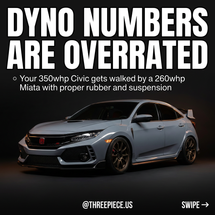
Your 350whp Civic Si getting gapped by a 260whp Miata on canyon roads tells the whole story about why peak dyno numbers are overrated for street builds. Power-to-weight is just the beginning — a car that makes less peak power but has proper tires, suspension, and power delivery will absolutely demolish something with big dyno bragging rights but terrible power characteristics.
Quick links
- The Instagram Horsepower Obsession
- Why Less Power Can Be More
- What Actually Matters for Street Performance
- Building for Real-World Driving
The Instagram Horsepower Obsession
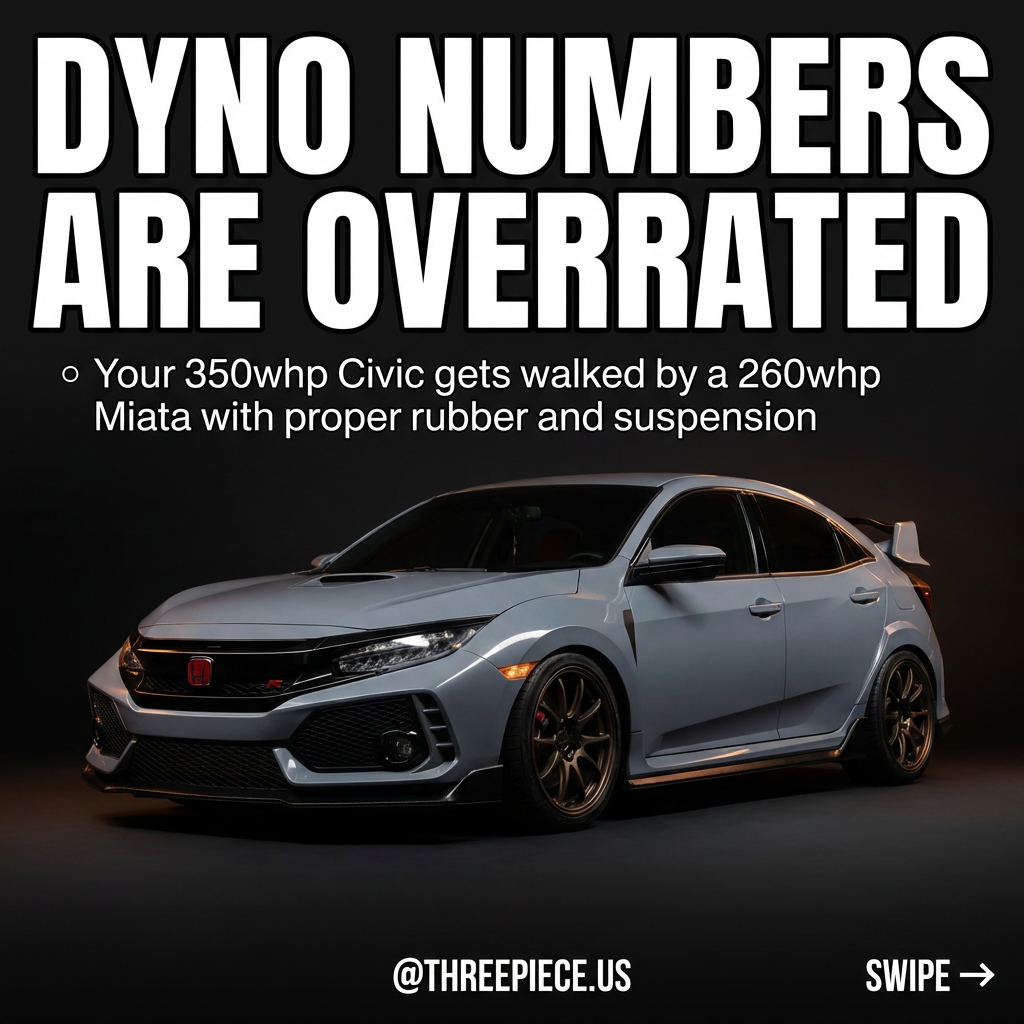
Instagram builds chase peak numbers because 400whp looks better than "drives amazing" in the caption. But dyno queens make power at 7500rpm — completely useless for street pulls from 3000rpm where you actually drive. Big turbo lag means you're slow until boost hits, and most street racing happens below peak power anyway.
This is exactly why our 9th Gen Civic Si build guide focuses on mid-range torque over peak numbers. The reality check? Most 400HP Civics are slow because they're built for dyno sheets, not street performance. Even our K24 high compression turbo builds prioritize reliability and usable power over peak dyno numbers.
Why Less Power Can Be More
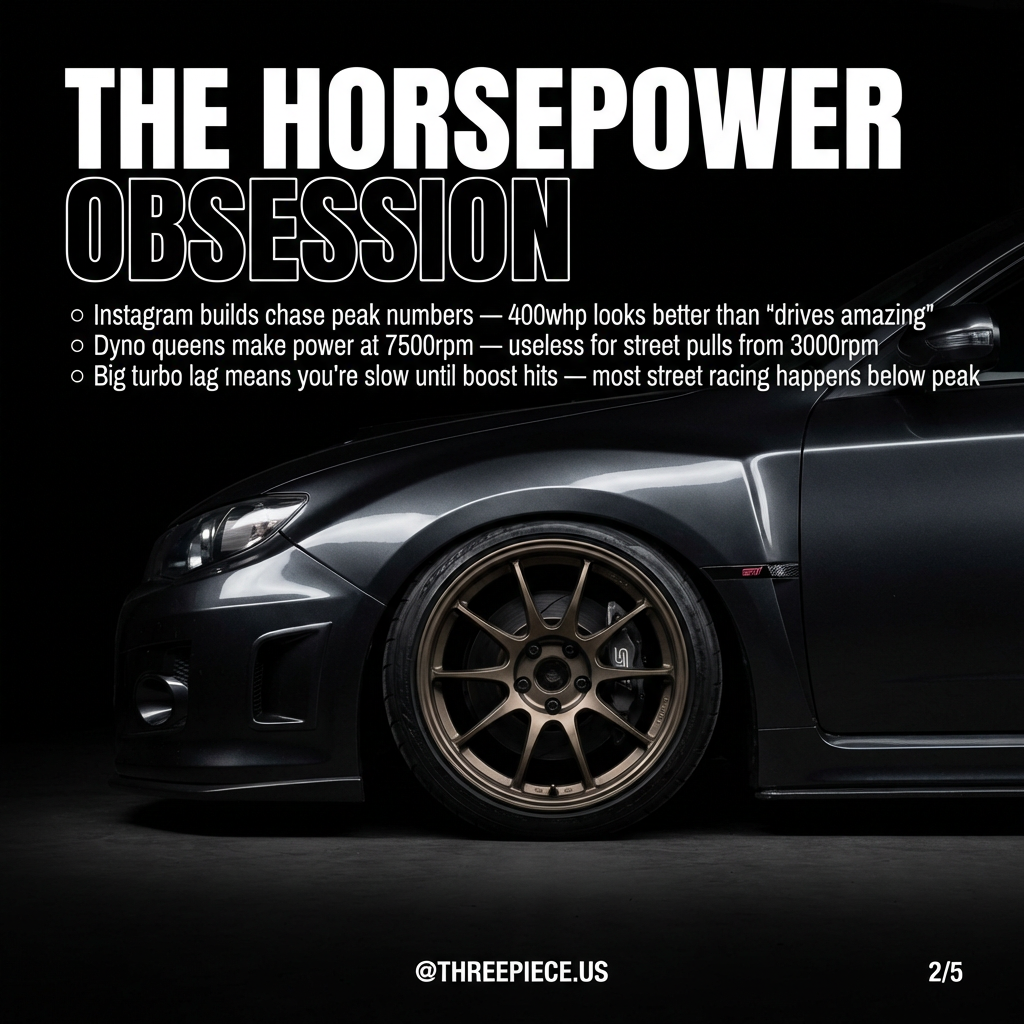
200tw tires turn 260hp into traction — all-seasons waste 350hp spinning wheels. Proper suspension puts power down better than raw horsepower, and coilovers beat horsepower for lap times every single time. Linear power delivery beats peak numbers because torque curve matters more than peak.
This is why our tire mod priority guide puts rubber first. The F2 Function & Form Honda Accord coilovers will transform your car's handling more than any power mod. Even budget suspension like the Energy Suspension Integra motor mount at $88 makes a bigger difference than chasing peak power.
What Actually Matters for Street Performance
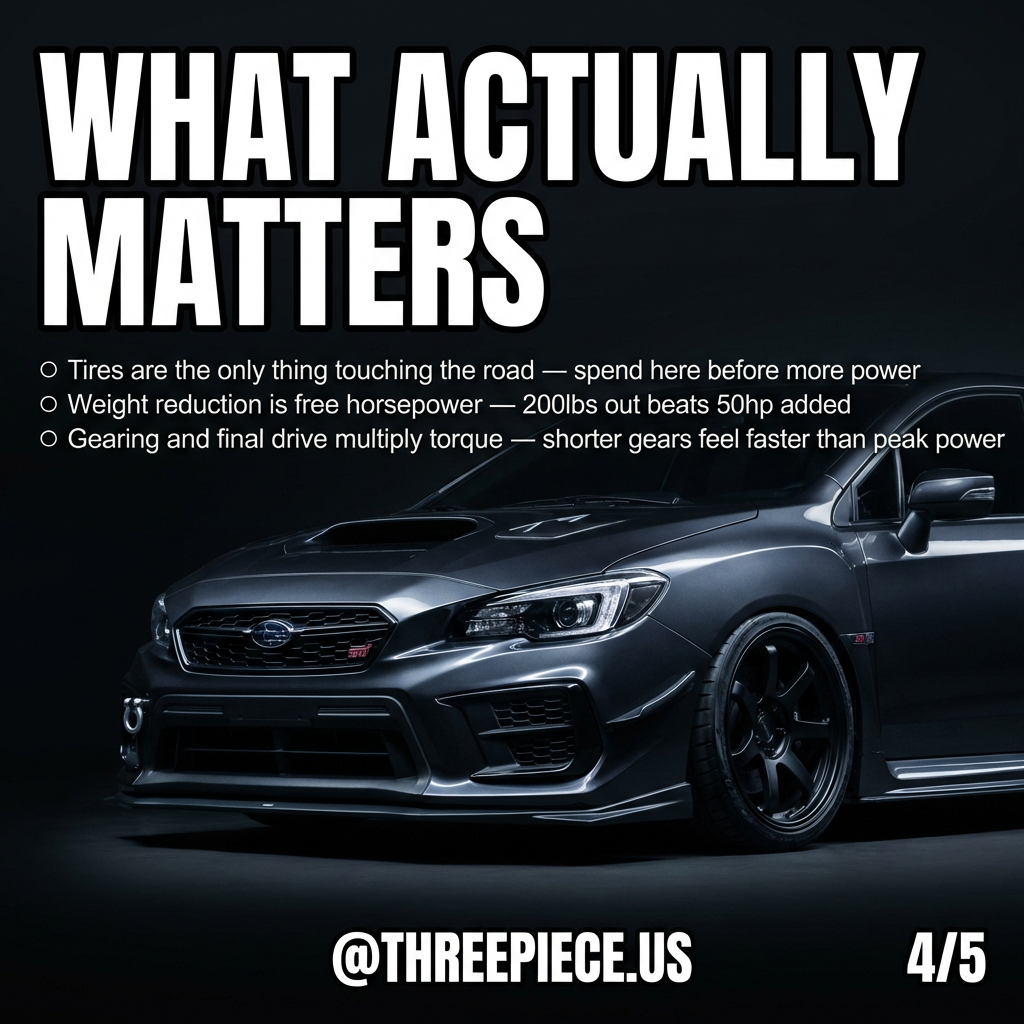
Tires are the only thing touching the road — spend here before more power. Weight reduction is free horsepower where 200lbs out beats 50hp added. Gearing and final drive multiply torque, making shorter gears feel faster than peak power ever will.
Our wheel alignment guide shows how proper setup multiplies tire performance. Quality 90 degree valve stems at $3.80 and proper wheel accessories matter more than you think. Even something as basic as M7 wheel assembly nuts at $3.80 can affect wheel security and performance.
The big brake kit reality check applies here too — proper brake pads and fluid beat expensive BBKs for street use. Focus on the fundamentals before chasing Instagram-worthy modifications.
Building for Real-World Driving
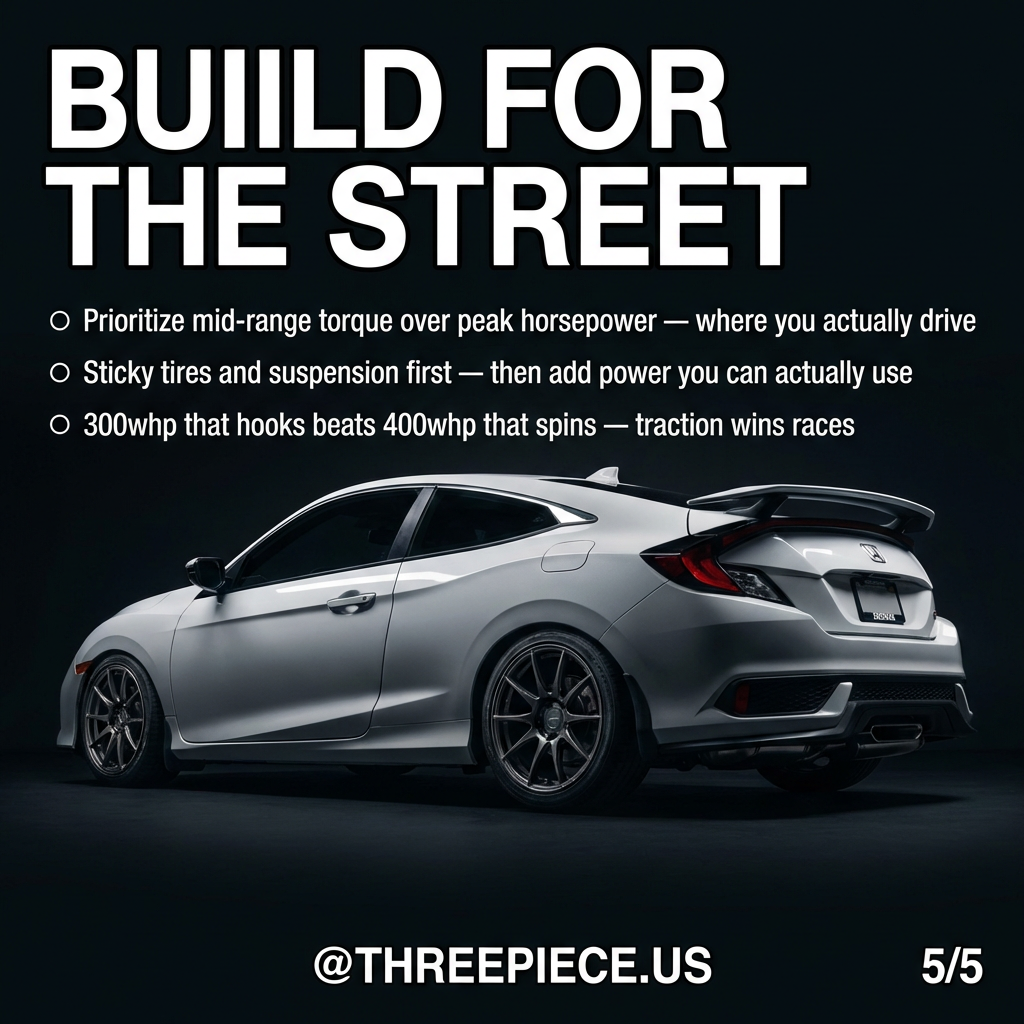
Prioritize mid-range torque over peak horsepower — that's where you actually drive. Sticky tires and suspension first, then add power you can actually use. 300whp that hooks beats 400whp that spins because traction wins races, not dyno sheets.
Our GR86/BRZ turbo swap analysis proves this point perfectly. Even the supercharged GR86 build focuses on linear power delivery over peak numbers. The Honda S2000 AP2 build guide shows how suspension and tires transform a car more than power mods.
Quality Work Wheels with proper offset beat heavy wheels every time. The Work Emotion series offers lightweight options that reduce unsprung weight — free performance that dyno sheets can't measure. Finish your build with Work VS reproduction center caps at $50 for the authentic look.
Check out our vehicle gallery for real-world examples of properly built street cars that prioritize usable performance over dyno bragging rights. Your lap times and wallet will thank you for building smart instead of chasing peak numbers.