
Every Audi B9 S4 Common Failure (and How to Fix Them)
Every Audi B9 S4 Common Failure (and How to Fix Them)
The B9 S4 is one of the most capable sport sedans you can buy used right now. It's also one that will punish you for buying blind. The 3.0L EA839 TFSI, ZF 8HP75 transmission, and Quattro drivetrain are all genuinely strong platforms — but each has a documented failure pattern that shows up at predictable mileages and costs real money when ignored. This guide covers every significant failure mode, what it costs to fix, and how to prioritize repairs so you're not writing a $10,000 check six months after purchase.
---
Quick Navigation
- Quick Answer
- Key Takeaways
- Engine Failures: The EA839 3.0 TFSI
- Transmission and Drivetrain
- Cooling System and Gasket Leaks
- Suspension and Brakes
- Electrical and Interior Failures
- Year-by-Year Buying Guide
- Pre-Purchase Inspection Checklist
- Fix-It Priority List
- Bottom Line
Quick Answer
The B9 S4's most expensive failures are timing chain tensioner wear (up to $3,700 to repair), water pump failure (up to $1,400), and PCV/valve cover failure (up to $1,300). All three are preventable or manageable with early detection. Buy a 2020–2021 with documented service history and under 60,000 miles. Avoid 2018s with unknown maintenance records.
---
Key Takeaways
- The 2018 model year carries the highest risk: timing chain tensioner rattles, MMI bugs, and Virtual Cockpit failures are disproportionately concentrated there
- "Lifetime fill" transmission fluid is a marketing claim, not a maintenance schedule — service the ZF 8HP75 every 40,000–50,000 miles
- The rear of the engine valley is where most oil and coolant leaks originate; inspect it with a flashlight before buying
- Cold-start timing chain rattle is a non-negotiable red flag — ask sellers not to warm the engine before your inspection
- Walnut blasting intake valves every 40,000–60,000 miles is mandatory on any direct-injection engine, including this one
- 2020–2021 examples are the community consensus sweet spot; 2022 adds no new failure modes but commands a price premium
---
Engine Failures: The EA839 3.0 TFSI
PCV System and Oil Consumption
The EA839's positive crankcase ventilation diaphragm membrane, integrated into the valve cover, cracks or hardens with age. When it fails, elevated crankcase pressure pushes oil past seals and into the intake tract. Owners report adding half a quart to a full quart every 3,000–5,000 miles.
Symptoms: Blue smoke on cold startup or hard acceleration, oily residue inside the intake pipe near the throttle body, faster-than-expected oil level drop.
Diagnostic: At idle, pull the oil cap — a rag held over the opening shouldn't be pushed away. Check the intercooler-to-throttle-body pipe for oily film. A smoke test confirms it definitively.
Fix: Valve cover replacement (the PCV membrane is integrated). Parts run $400–$600 OEM; Rein Automotive offers aftermarket alternatives. Labor adds $400–$700 at an independent specialist. Total: $800–$1,300.
Mileage window: Most commonly 40,000–80,000 miles.
Oil spec: VW 504.00/507.00 full synthetic (typically 5W-30 or 5W-40). Don't stretch oil changes beyond 7,500 miles on a car driven hard.
---
Timing Chain Tensioner
This is the failure that generates the most forum anxiety, and it deserves the attention. A subset of early-production engines — primarily 2018 and some early 2019 cars — developed premature timing chain tensioner wear. The tensioner loses hydraulic pressure at cold start, allowing momentary chain slack.
Symptoms: A metallic, diesel-like rattle from the front of the engine at cold start, lasting 1–5 seconds before oil pressure builds and it clears. More pronounced in cold weather. If the rattle persists beyond 10 seconds or grows louder over time, treat it as urgent.
Mileage window: As early as 20,000 miles on high-mileage lease returns; more commonly 40,000–70,000 miles.
Fix: Tensioner replacement first; full chain and guides if the problem has advanced. Parts for a complete chain job: $600–$1,200. Labor requires front-of-engine access, often involving subframe drop or engine-forward positioning: $1,500–$2,500 at an independent shop. Total worst case: $3,700.
Audi issued a TSB covering cold-start rattles on the EA839. Cars within five years of original sale may qualify for goodwill repairs — always check before paying out of pocket.
Reality check: Many B9 S4s with 80,000–100,000+ miles show no chain issues. The problem correlates strongly with infrequent oil changes and cold-climate short-trip driving. It's real, not universal.
---
Water Pump Failure
The EA839 runs a belt-driven mechanical water pump as the primary cooling circuit and an electric auxiliary pump for turbocharger cooling. Both fail.
The mechanical pump uses a plastic impeller that can separate from the shaft — a known failure across multiple Audi/VW V6 applications. When it goes, coolant circulation stops and the engine overheats fast.
The auxiliary electric pump fails more quietly: turbocharger heat soak after shutdown, potential turbo bearing damage over time, and a fault code for the auxiliary coolant pump circuit.
Mileage windows: Mechanical pump: 60,000–90,000 miles. Electric auxiliary pump: 40,000–60,000 miles.
Fix costs:
- Mechanical pump (OEM, Pierburg, or Graf): $300–$500 parts, $500–$900 labor
- Auxiliary electric pump: $150–$250 parts, $200–$400 labor
- Replace both simultaneously — the labor overlap makes it cost-effective
---
Carbon Buildup on Intake Valves
Direct injection means fuel never washes the intake valves. Carbon accumulates on the valve faces and ports over time. The B9 S4 has no secondary port injection system to mitigate this.
Symptoms: Rough idle, misfires, hesitation under load, reduced power — typically noticeable after 60,000–80,000 miles.
Fix: Walnut blasting (crushed walnut shell media blasting) with the intake manifold removed. Cost at a specialist: $400–$800. DIY with a rented blaster kit runs $150–$250 in media and supplies.
Service interval: Every 40,000–60,000 miles is the community consensus for proactive cleaning.
---
Transmission and Drivetrain
ZF 8HP75 — Fluid Service and Mechatronic Failure
The ZF 8-speed is an excellent transmission. Audi's "lifetime fill" claim on the fluid is not. Degraded fluid causes harsh 1-2 upshifts when cold, delayed Park-to-Drive engagement, low-speed torque converter shudder, and eventually mechatronic unit fault codes.
Mileage window: Shifting quality degradation commonly reported after 60,000–80,000 miles on original fluid.
Fix: Multi-stage drain-and-fill using ZF Lifeguard 8 or Ravenol ATF 8HP fluid. Do not perform a full flush — it can dislodge debris into the valve body. Cost: $250–$450 at a specialist. If the mechatronic unit has already failed: $1,500–$3,000 in parts plus $500–$1,000 labor.
Service interval: Drain-and-fill every 40,000–50,000 miles.
Rear differential: Requires fluid changes every 30,000–40,000 miles. Neglect causes whining and bearing failure. Parts and labor: $150–$300. Cars with the optional sport differential add another fluid service at the same interval — the sport diff is robust but costs $2,000–$4,000 to rebuild if neglected.
---
Driveshaft Center Support Bearing
The two-piece driveshaft center support bearing wears on higher-mileage examples, producing vibration through the floorboard at 60–80 mph.
Mileage window: 70,000–100,000+ miles.
Fix: Center support bearing replacement: $200–$400 parts, $300–$600 labor. If the driveshaft shows additional wear, a remanufactured unit runs $600–$1,000.
---
Cooling System and Gasket Leaks
Coolant Flange and Thermostat
The plastic coolant distribution manifold running along the rear of the engine valley cracks and weeps coolant. Early signs are a sweet smell from the HVAC or a small drip after a heat cycle. Because it sits deep in the valley, the leak is easy to miss until it worsens.
Fix: OEM coolant flange: $100–$200. Labor: $400–$700 due to access difficulty. Do this proactively during any other rear-of-engine work — paying the labor twice is avoidable.
Oil Filter Housing Gasket
The oil filter housing gasket seeps oil onto the block and, if left alone, drips onto exhaust components. Burning oil smell after a drive is the tell.
Fix: Gasket kit: $30–$80. Labor: $300–$500. Access is the challenge, not the repair.
High-Pressure Fuel Pump
Cam-lobe driven HPFP failures are documented but not epidemic — more common on tuned cars or those exposed to poor-quality fuel.
Symptoms: Rough idle, hard starting, reduced power, fuel pressure fault codes.
Fix: OEM HPFP: $400–$700 parts, $400–$600 labor. Upgraded aftermarket HPFPs from EQT (Eurodyne) are available for tuned applications at $600–$900.
---
Suspension and Brakes
Front Control Arm Bushings and Ball Joints
The rear (trailing) bushing on the front lower control arm softens with age, causing steering wander, front-end pull, clunking over bumps, and inner-edge tire wear.
Mileage window: 50,000–80,000 miles for bushing wear.
Fix: Audi sells the control arm as an assembly. OEM front lower control arms: $200–$350 each. Lemforder and Meyle are community-accepted alternatives at $150–$250 per arm. Labor for both sides including alignment: $400–$700. Always follow with a four-wheel alignment — budget $100–$200. The B9 S4 is sensitive to alignment spec; small deviations cause accelerated tire wear.
Rear Subframe Bushings
Worn rear subframe bushings produce rear-end looseness and an unsettled feel over expansion joints on higher-mileage examples.
Fix: $300–$600 parts, $500–$900 labor. SuperPro and Powerflex polyurethane bushing kits are popular alternatives that improve handling at comparable or lower cost.
Brakes
The standard Brembo-style brakes handle street use well but glaze and warp quickly under track or aggressive mountain driving without appropriate pads and rotors.
- OEM rotors: $150–$300 per axle; pads: $100–$200 per axle
- Performance upgrade: ECS Tuning, StopTech, and Hawk all offer slotted rotor and performance pad kits for the B9 S4 at $400–$800 for a full axle set
- Most warping complaints on forums trace back to skipping the bed-in procedure, not rotor quality
---
Electrical and Interior Failures
MMI System Freezes
The MIB2 infotainment platform freezes, goes black, and reboots at random — a documented issue across all B9-generation Audi products (A4, A5, Q5 share the same system). Navigation, backup camera, and climate display are all affected during freeze events.
Fix: Audi released multiple software updates via ODIS at the dealer. Many owners resolve it with a reboot: hold the volume knob and top-left menu button simultaneously for approximately 10 seconds. If the unit itself has failed: $500–$1,200 for the MMI control unit plus programming fees.
Virtual Cockpit Display Failure
Dim display, dead pixels, or complete blackout — more common on 2018–2019 examples.
Fix: Display unit replacement: $800–$1,500 plus $300–$500 programming. Cars within the 4-year/50,000-mile bumper-to-bumper warranty period have seen dealer goodwill replacements.
Sunroof Drain Blockage
The panoramic sunroof drain channels clog with leaves, pine needles, and debris. Water overflows into the headliner, A-pillar, and footwells. In severe cases it reaches the amplifier (under the rear seat on some configurations) and the central electronic module under the dashboard.
Prevention: Clear sunroof drains every 6–12 months with compressed air or a flexible drain snake. This is a free DIY task that prevents a $2,000–$5,000 water damage repair.
---
Year-by-Year Buying Guide
| Model Year | Risk Level | Notes |
|---|---|---|
| 2018 | Highest | Timing chain tensioner, MMI bugs, Virtual Cockpit failures most prevalent; verify all software updates applied |
| 2019 | Moderate | Software improved, PCV refined, tensioner issue reduced but not eliminated |
| 2020–2021 | Lowest | Community consensus sweet spot; most issues resolved, mileage still manageable |
| 2022 | Low | No new failure modes vs. 2020–2021; commands price premium |
Trim notes:
- Prestige adds Driver Assistance Package radar and camera hardware — more components requiring calibration after any front or rear repair work
- Sport Differential (optional): robust but requires fluid service every 30,000–40,000 miles; $2,000–$4,000 rebuild if neglected
- Black Optic Package: cosmetic only, no mechanical implications
Always run the VIN through the NHTSA recall database and request a dealer TSB history printout. Audi issued TSBs covering cold-start timing chain rattle, MMI software, and transmission shift quality on the B9 platform.
---
Pre-Purchase Inspection Checklist
Before the test drive:
- [ ] Run VIN through NHTSA recall database and CarFax/AutoCheck
- [ ] Request TSB application history from the dealer
- [ ] Check oil — should be amber, not black; no milky residue
- [ ] Check coolant reservoir — should be pink/purple G13, not brown or rusty
- [ ] Inspect oil cap underside for white sludge
- [ ] Flashlight inspection of the rear engine valley for oil or coolant weep at the coolant flange and oil filter housing
- [ ] Check all four tire wear patterns — inner edge wear signals control arm bushing failure or alignment neglect
- [ ] Inspect brake rotor faces for deep grooves
Cold start — the most important part:
- [ ] Engine must be cold — non-negotiable; ask the seller not to warm it up
- [ ] Listen for metallic rattle from the front of the engine in the first 5 seconds
- [ ] Watch for blue smoke from the exhaust
- [ ] Confirm temperature gauge reaches normal range within 5–8 minutes of driving
Scan tool check (VCDS, OBD11, or dealer ODIS):
- [ ] Stored fault codes in engine, transmission, ABS, and airbag modules
- [ ] Long-term fuel trim — beyond ±10% suggests intake or PCV issues
- [ ] Mileage stored in instrument cluster module vs. odometer
Test drive:
- [ ] Cold 1-2 upshift — smooth, not harsh or delayed
- [ ] 60–80 mph — any vibration through the floorboard indicates driveshaft bearing wear
- [ ] Firm brake from 50 mph — no pull, no pulsation
- [ ] MMI responsiveness — lag or freeze is a flag
- [ ] Sunroof operation — no grinding or hesitation
---
Fix-It Priority List
Fix Immediately
- Timing chain tensioner rattle — Cascade failure destroys the engine
- Coolant system leaks (water pump, coolant flange) — Overheating is terminal
- Brake wear — Safety, no negotiation
- Sunroof drain clearing — Prevents catastrophic electrical water damage
Fix Within 3 Months
- PCV/valve cover if oil consumption symptoms are present — Gets worse, not better
- Transmission fluid service if over 50,000 miles with no service record
- Control arm bushings if wear is confirmed — Tire wear and alignment costs compound
Fix Within 6–12 Months
- Walnut blast intake valves if over 60,000 miles with no prior cleaning record
- Differential fluid service — rear diff and sport diff if equipped
- Coolant flush if fluid is discolored or over three years old
Combine These Jobs to Save Labor
- Replace auxiliary water pump when doing the mechanical pump
- Replace oil filter housing gasket and coolant flange together — both require rear-of-engine access
- Upgrade to performance brake pads when replacing rotors — marginal cost difference, meaningful benefit
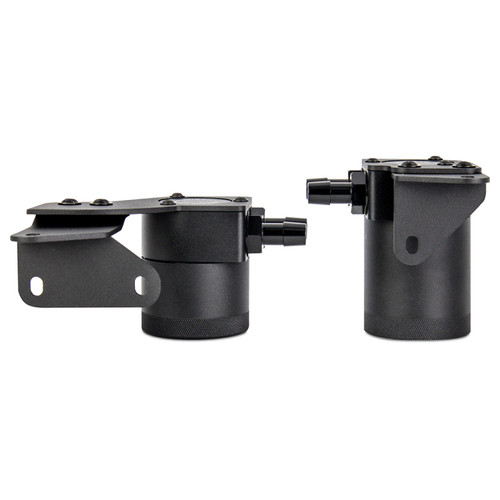
- Install an oil catch can on the intake side — reduces carbon buildup rate on intake valves and is a well-established B9 community modification
---
Bottom Line
The B9 S4 rewards owners who stay ahead of maintenance and punishes those who don't. Deferred oil changes, ignored fluid services, and dismissed cold-start noises that a Toyota might forgive will compound into serious repair bills here.
Buy it if: You can budget $1,500–$2,500 per year for proactive maintenance, you'll use an independent Audi specialist rather than relying on dealer pricing alone, and you're targeting a 2020–2021 example with documented service history under 60,000 miles.
Be cautious if: You want a set-and-forget car, you're considering a 2018 with unknown service history over 60,000 miles, or you plan to tune the car without budgeting for supporting hardware — upgraded HPFP, intercooler, and transmission service are not optional on a tuned EA839.
Current market: Clean 2020–2021 examples trade at $38,000–$50,000 depending on mileage and trim. A 2018 with 70,000+ miles can be found at $28,000–$35,000 — budget $2,000–$3,000 for deferred maintenance as a baseline assumption before you negotiate.
Buy the service history, not just the car. A B9 S4 with receipts is a fundamentally different ownership proposition than one without them.