Can You Run 35s on a Jeep Wrangler? (Fitment Guide)
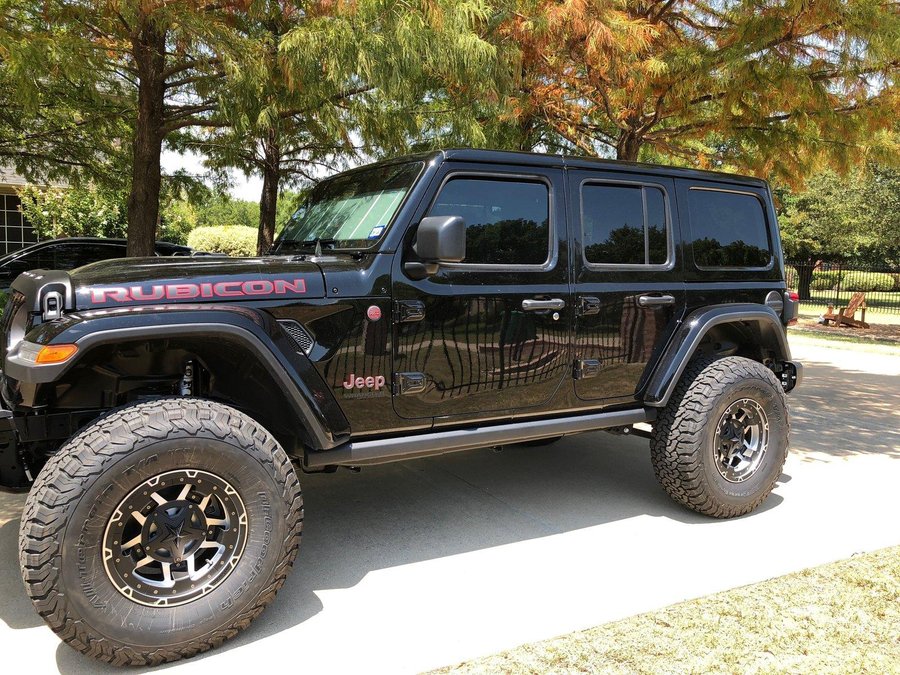
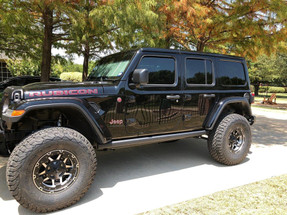
The short version: yes, you can run 35s on a Wrangler — but it isn't quite a bolt-on for most trucks. A 2018-2026 JL rolls off the line comfortable on 33s, and the Rubicon can practically swallow them stock. Step up to a 35-inch tire and you're generally looking at a modest lift (commonly around 2 to 2.5 inches, though the exact number depends on trim, wheel offset, and how hard you wheel), the right backspacing so the tire clears your control arms and fenders, and — if you want the Jeep to still drive like a Jeep — a set of lower gears in the axles. Here's how it all fits together, honestly, without the hype.
How big can you realistically go?
The current Wrangler is one of the most tire-friendly platforms Jeep has ever built, but there's real spread between trims. A base Sport or Sahara on its factory 17- or 18-inch wheels lives happily on a 33. The Rubicon, with its extra fender clearance and taller factory ride height, will clear 33s with room to spare and can often be nudged onto 35s with just a leveling spacer or a small lift — again, verify for your specific rig, because ride height varies with options, bumpers, and how tired your springs are.
Generation matters too. If you're on an older JK, the fender geometry is different and the same tire tends to need a touch more lift and more attention to the front lower control-arm and sway-bar clearance. The principles below apply across the board; the exact lift height and trimming do not. Treat any number you read online — including here — as a starting point to confirm on your own truck, at full stuff and full steering lock, not gospel.
The honest 33 / 35 / 37 breakdown
33s: the easy, livable upgrade
Thirty-threes are the sweet spot for a daily-driven Wrangler that still sees dirt on the weekend. On a Rubicon they're often a straight swap; on a Sport or Sahara a small level or 1.5-2 inch lift clears them cleanly and keeps the stance right. In practical numbers, a 285/70R17 measures right around 32.7 inches tall, and a true flotation 33X12.50R17 is a genuine 33 inches. You can also step the same tire up to 18s with 33X12.50R18 or 20s with 33X12.50R20 if you prefer a larger wheel. The trade-offs are minimal: a small speedometer error, a slight dip in acceleration, and usually no re-gear required — though if you tow or live somewhere hilly, dropping a gear ratio still sharpens things up.
35s: the do-everything build
This is the size most people picture when they build a Wrangler, and for good reason. A 35 fills the fenders, clears bigger rocks, and still behaves on the highway. Expect to add a lift — commonly in the 2 to 2.5-inch range, though that depends on trim and how much flex you want — and to pay attention to where the tire contacts the front lower control arm, the pinch seam behind the front fender, and the rear inner fender at full compression. Many owners trim the plastic fender liners or add a bump-stop spacer to tame the rub. Metric shoppers can look at a 315/70R17, which comes in around 34.4 inches, while a true 35X12.50R17 is a full 35. The same size is available on 18s as 35X12.50R18 and on 20s as 35X12.50R20. Honestly, this is where re-gearing stops being optional if you care about drivability — more on that below.
37s: committed territory
Thirty-sevens transform a Wrangler, but they're a build, not a bolt-on. You're into a taller lift, almost always fender trimming or high-clearance flares, frequently re-gearing to numerically deep ratios, and often heavier-duty steering and axle components to survive the extra leverage a 37 puts on everything. A 37X12.50R17 stands a true 37 inches; the same tire is offered on 18s as 37X12.50R18 and 20s as 37X12.50R20. On the factory Rubicon axles some folks run 37s, but at this size the whole drivetrain is working harder, so plan the supporting mods rather than just bolting on rubber and hoping.
What actually changes when the tires get bigger
Where they rub, and clearance
Bigger tires rub in predictable places: the front pinch seam and lower control arm when you turn the wheel, the front and rear inner fender liners when the suspension compresses, and sometimes the sway-bar end links. A lift lifts the body away from the tire, but geometry — where the tire sits in the well — is just as important as height. That brings us to wheels.
Offset and backspacing, explained properly
Your Wrangler comes with 7.5x17 wheels at roughly +44 offset on a 5x127 bolt pattern with a 71.6 mm hub bore. Offset is how far the mounting face sits from the wheel's centerline: a high positive number (like +44) tucks the wheel inboard, toward the suspension; a lower or negative number pushes it outboard, toward the fender. Backspacing is the same idea measured from the back edge of the rim to the mounting face. When you fit a wide 12.50 tire on that high-offset factory wheel, the tire's inner shoulder crowds the control arms and springs — which is why big-tire builds run less offset (more backspacing to the outside) to move the tire outward and away from the suspension. Sensible bolt-on wheel choices for this platform include 7 and 7.5-inch-wide 17s around +5 to +44, 18s in the +18 to +44 range, and 8x17 near +15 to +40, all of which keep the tire in a friendly spot. Very aggressive negative-offset wheels — think 10- and 12-inch-wide rims in the -52 to -12 range — push the tire way out and are flagged for extreme fitment and lift requirements, and some wide 8-inch setups at negative offset call for body modification. In plain terms: the further you poke the tires out, the more you'll fight fender clearance and the more stress you put on wheel bearings and steering, so choose offset deliberately.
Re-gearing, and why it matters
This is the most misunderstood part of a tire upgrade. A taller tire is a taller final drive ratio — it makes your engine work harder to turn the same wheel, robbing low-end grunt and forcing the transmission to hunt for gears. Going from stock to 35s meaningfully changes the effective ratio, and the fix is numerically deeper axle gears (a bigger number) to restore the leverage the taller tire took away. Done right, re-gearing brings back the throttle response, tow capability, and relaxed highway RPM you had from the factory. On 35s many owners find the Jeep drivable-but-lazy without gears and genuinely happy with them; on 37s it's close to mandatory. I won't quote a specific ratio here because the right one depends on your engine, transmission, tire size, and whether you prioritize crawling or cruising — have it calculated for your combination.
Speedometer, odometer, and TPMS
Bigger tires cover more ground per revolution, so your speedometer reads slow and your odometer under-counts miles until you recalibrate. On modern Wranglers this is a straightforward programming change (a handheld tuner or a dealer/shop recalibration), and it also keeps your transmission shift points and safety systems working off accurate speed. Don't skip it. Your Wrangler also has TPMS sensors in each wheel; if you buy a new set of wheels you'll want sensors installed and registered, and after any tire change the system may need a relearn so it stops throwing a light.
Load range on a heavy rig
A Wrangler is heavy, and a loaded overland build with bumpers, a winch, and gear is heavier still. Tire load range (C, D, E) tells you how much air pressure and weight the carcass is built to handle. Heavier rigs and towing lean toward the stiffer, higher-load-range tires, while a lighter trail rig can air down more comfortably on a lower load range. Match the tire to how the truck is actually built and used rather than just chasing the toughest-sounding rating.
All-terrain or mud-terrain?
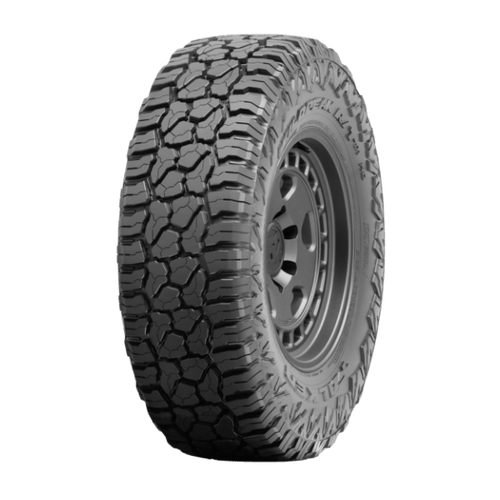
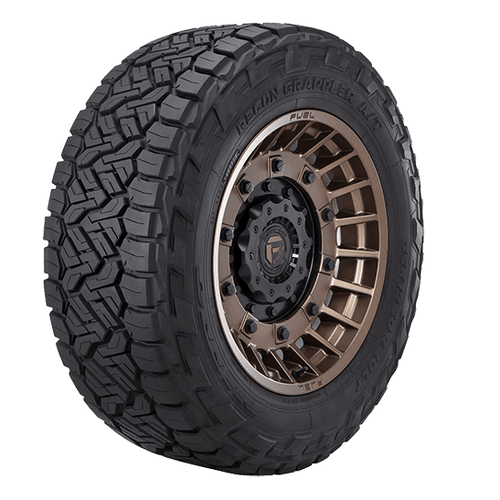
For most Wranglers, a good all-terrain is the smarter default: quieter on the highway, better in rain and snow, longer tread life, and plenty of bite for dirt roads, moderate trails, and the occasional mud hole. Something like the Nitto Recon Grappler A/T in 35X12.50R17 — also offered as a 35X12.50R18 — is a great example of a modern hybrid-leaning all-terrain that stays civil on pavement. If your Jeep lives in deep mud, sticky clay, or aggressive rock, a rugged-terrain or mud-terrain rewards you with self-cleaning tread and sidewall bite; the Toyo Open Country R/T Pro in 35X12.50R17 (or the 12-ply 35X12.50R18) and the Falken Wildpeak R/T01 in 35X12.50R17 land in that tougher, more aggressive bracket while still being tolerable daily. There's also a solid middle ground for overlanders in tires like the Nokian Outpost nAT in 35X12.50R18. Be honest about your real 90% use case — most people wheel less than they think and commute more than they admit.
What to prioritize when you buy
Start with the size that matches your build plan, not your fender-flare envy: pick 33, 35, or 37 based on the lift and gearing you're actually willing to install. Then choose a tread pattern that fits how you drive, and a load range that suits the weight of your rig. Confirm the wheel offset and width work with your tire and lift so you're not surprised by rub. And buy in complete sets — mismatched diameters upset the traction control and, on a full-time or part-time 4x4, can stress the drivetrain. You can browse the full range on the tire catalog and cross-shop the exact sizes above by clicking through to each fitment.
Real Jeep Wrangler builds running 35s and up
Actual owner builds — real photos.


Frequently Asked Questions
Do I need a lift to run 35s on a Wrangler? In most cases, yes — a modest lift (commonly around 2 to 2.5 inches, depending on trim and how you wheel) plus attention to wheel offset gives a 35 room to work. A stock Rubicon may clear 35s with just a level or small spacer, but you'll still likely want to trim the fender liners and watch clearance at full lock and full compression. Verify on your own rig before you commit.
Can I fit 35s without re-gearing? You physically can, and the Jeep will drive — just lazily. The taller tire changes your effective final drive, so acceleration, towing, and highway relaxation all suffer until you install numerically lower axle gears. On 35s re-gearing is strongly recommended; on 37s it's essentially required for a Jeep that drives like it should.
What's the difference between a 315/70R17 and a 35X12.50R17? The metric 315/70R17 measures about 34.4 inches tall, while the flotation 35X12.50R17 is a true 35 inches. They're close, but the flotation size is genuinely taller and usually a bit wider, which means slightly more clearance work. If you want an easier fit, the 315 is a nice half-step up.
Will bigger tires throw off my speedometer? Yes. Taller tires make the speedometer read slower than you're actually going and cause the odometer to under-count miles. Recalibrating with a tuner or a shop programming service fixes the readout and keeps shift points and safety systems accurate. It's a small step that's worth doing every time you change tire size.
All-terrain or mud-terrain for a daily-driven Wrangler? For a Jeep that mostly commutes and hits dirt on weekends, an all-terrain is usually the better call — quieter, better in rain and snow, and longer-wearing. Reserve mud-terrains and rugged-terrains for trucks that regularly see deep mud, clay, or serious rock, where the aggressive tread and tougher sidewalls earn their keep despite the extra road noise.
Does wheel offset really matter that much? It matters a lot. Factory Wrangler wheels sit at roughly +44 offset, which tucks a wide tire inboard toward the suspension. Running a wheel with less offset (more backspacing to the outside) pushes the tire outward for clearance, but too much poke stresses bearings and steering and fights the fenders. Aggressive negative-offset wheels are flagged for extreme fitment and often need a lift or body work, so choose offset with intent.
35-inch tires for the Wrangler (in stock)