Can You Run 35s on a GMC Canyon? (Fitment Guide)
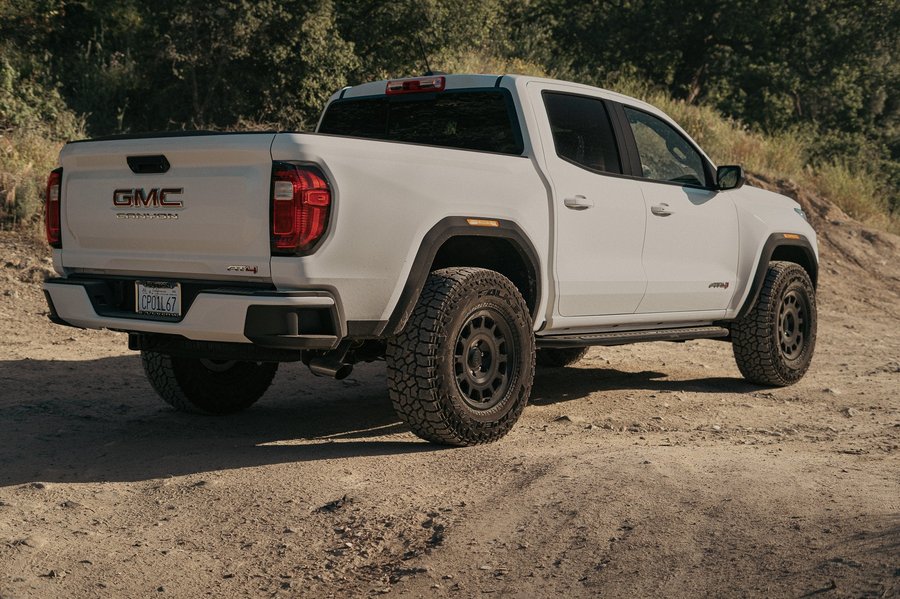
The honest bottom line: Yes, you can run 35s on a GMC Canyon, but not as a bolt-on afterthought. On the 2018-and-up trucks, a true 35-inch tire needs a lift, the right wheel offset, and some trimming to clear front to back — and to keep the thing drivable you'll almost certainly want to re-gear the axles and correct the speedometer. A 33 is the easy, high-value sweet spot for most owners; a 35 is very achievable with a proper build; and a 37 is a committed project, not a weekend swap.
That's the short version. Below is the long one — the real mechanics of stepping up in tire size on this platform, where the metal actually gets in the way, what the numbers on a wheel mean, and the exact tire sizes that fit with their true overall diameters. If you've been circling the question of whether 35s work on your Canyon, this should settle it and give you a plan.
How big can a Canyon realistically go?
Every Canyon in the 2018-2026 range rolls on a 6x139.7 bolt pattern with a 78.1 mm hub bore, and from the factory it wears an 8-inch-wide 17-inch wheel at roughly +33 mm offset. That factory offset is the number that shapes the whole conversation, because it pushes the wheel and tire inboard toward the suspension and frame. When you go wider and taller, you generally need to pull the tire back out a bit so it clears the upper control arm, spring, and inner fender — which is exactly why aftermarket fitments for this truck cluster around wider wheels at lower offsets.
How far you can go depends heavily on trim and generation. The off-road-oriented trims typically leave the factory with a touch more clearance and mildly beefier suspension geometry than a base two-wheel-drive work truck, so the same tire that tucks cleanly on one Canyon may kiss a fender liner on another. Ride height, whether you've added a leveling kit or a full suspension lift, and even how your particular truck's body panels sit all move the goalposts. Treat every diameter below as a well-established starting point, then verify the final fit for your specific rig and lift.
The 33-inch answer: the easy win
If you want the biggest visual and capability upgrade for the least drama, 33s are it. A 33-inch tire is close enough to the factory rolling diameter that many Canyons will take one with nothing more than a modest level or a small lift, sometimes with light trimming of the front lower plastic and a look at the pinch weld. The steering and braking feel stay close to stock, the gearing penalty is small, and the ride quality barely changes.
In real sizes, you're looking at a flotation 33X12.50R17 (33.0 in overall), the same 33 on an 18-inch wheel as 33X12.50R18, or the 20-inch 33X12.50R20 if you want a larger-diameter wheel look. If you'd rather stay metric and keep sidewall costs and ride comfort in check, the 285/70R17 comes in at 32.7 inches — technically a hair under a true 33 but universally called a "33" in the field, and it's the most forgiving fit on a lightly modified Canyon. For a lot of owners this is the smart stopping point: it looks purposeful, it wheels well, and it doesn't force a re-gear.
The 35-inch answer: very doable, with a real build
This is the size most people are actually asking about, and the answer is a confident yes — provided you build for it. A genuine 35-inch tire on a Canyon means committing to a suspension lift to open up the wheel wells, running a wider wheel at a lower offset to clear the inner suspension, and doing some trimming. Expect attention to the front fender liners, the lower valance, and the pinch weld, plus checking that the tire doesn't contact at full steering lock or on suspension compression. How much trimming, and how much lift, depends on the trim, the specific lift you choose, and the wheel's backspacing — so don't take any single lift height as gospel.
On wheels, the bolt-on fitments that make 35s work on this platform run 10 inches wide in diameters from 17 up to 22 or 23, typically in the +25 to +30 mm offset range. Compared with the factory +33, that lower offset and extra width push the tire outboard enough to clear the upper control arm and spring while filling the flare. The trade-off is that a lower offset increases scrub radius and puts a little more leverage on steering and bearings, so you don't want to overdo it — the +25 to +30 window is a sensible balance for a 35-inch build rather than going drastically negative.
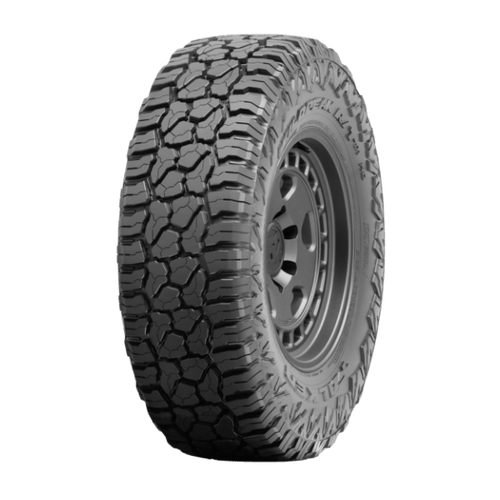
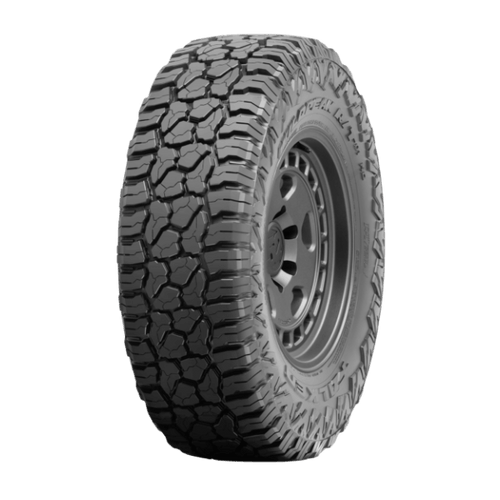
The tires themselves come in flotation 35X12.50R17, 35X12.50R18, and 35X12.50R20 — all a true 35.0 inches overall — plus the metric 315/70R17 at 34.4 inches, which drives like a 35 but shaves a bit of diameter and cost. We stock this size well across brands and constructions: on a 17, that includes the Kumho Road Venture AT52 in 35X12.50R17 for all-terrain duty, the aggressive Falken Wildpeak R/T01, and the Toyo Open Country R/T Pro if you want a rugged-terrain compromise. Prefer the 18-inch wheel? The Wildpeak R/T01 in 35X12.50R18, the touring-leaning Nokian Outpost nAT, and the Toyo R/T Pro in 35X12.50R18 are all here. Browse everything in the 35X12.50R17, 35X12.50R18, and 35X12.50R20 sizes to compare.
The 37-inch answer: a committed project
Can a Canyon wear 37s? On a purpose-built truck, sure — but be honest with yourself about the scope. A 37 is a big tire on a mid-size platform, and getting there means a taller lift, aggressive fender and body trimming, careful attention to steering and driveline angles, and almost certainly a re-gear because the stock ratios will feel badly overwhelmed. Bump-stop work, potential clearance issues at the frame and inner fender, and the added unsprung mass all become real engineering considerations rather than bolt-on choices.
If you're chasing that build, the tires exist: flotation 37X12.50R17, 37X12.50R18, and 37X12.50R20, all a true 37.0 inches overall. Just go in knowing this is a full-commitment path — plan the suspension, gearing, and trimming as a package, and verify clearances specifically for your setup rather than assuming a rub-free fit.
What actually changes when you fit bigger tires
Where they rub, and clearance
Rubbing on a Canyon shows up in a few predictable places. Up front, the tire can contact the inner fender liner, the lower plastic valance, and the pinch weld along the bottom of the door opening — especially at full steering lock and when the suspension compresses over a bump or in a corner. Out back, the concern is the fender lip and the inside of the bed structure on droop and articulation. The taller and wider you go, the more likely you'll be rolling a pinch weld, trimming liners, and adding bump stops to control how far the tire can travel into the well. None of this is exotic, but it's real work, and the exact amount varies by trim and lift.
Offset and backspacing, explained properly
Offset is the distance from the wheel's mounting face to its centerline, measured in millimeters. A higher positive offset (like the factory +33) sits the mounting face toward the outside of the wheel, tucking the tire inboard. A lower offset (+25 to +30 on the bolt-on 10-inch wheels here) moves the tire outboard, which is what buys clearance for a wider, taller tire against the inner suspension. Backspacing describes the same relationship from the other side — the distance from the mounting face to the wheel's inner lip — and it's what really determines whether your new tire clears the upper control arm and spring. When you go wider, watch backspacing as closely as offset: too much backspacing on a wide wheel puts the tire right where the suspension lives. And remember the hub bore — these use a 78.1 mm bore, so hub-centric fitment or the correct centering rings keep everything running true.
Re-gearing and why drivability depends on it
This is the step people skip and regret. A bigger tire is effectively a taller final drive ratio — it makes the engine work harder to turn the wheel, blunting acceleration, hurting fuel economy, and forcing the transmission to hunt for gears, especially with a load or on grades. Moving from stock to 33s is a modest hit; 35s make re-gearing strongly advisable for anyone who tows or drives loaded; and 37s essentially require it to restore usable power and protect the drivetrain. The right ratio brings your effective gearing back toward where the factory engineered it, so the truck feels normal again. The specific ratio depends on your engine, transmission, and how you use the truck, so spec it with your builder rather than copying someone else's number.
Speedometer, odometer, and TPMS
A taller tire covers more ground per revolution, so your speedometer will read slower than you're actually going and your odometer will under-count miles — which also skews trip data and service intervals. Plan on a speedometer recalibration to match the new rolling diameter; on modern trucks this is typically a tuner or dealer-level programming task. Don't forget the tire-pressure monitoring system, either: keep functioning sensors in the new wheels and have the system relearned so it reads correctly at your new operating pressures.
Load range on a heavy rig
The Canyon is a substantial truck, and bigger flotation tires often come in stiffer load ranges (C, D, E) for a reason. A higher load range gives you the carcass strength to carry gear, tow, and resist pinch flats off-road, but it also rides firmer and needs correct inflation to avoid a harsh, over-sprung feel. Match the load range to how you actually use the truck — a daily driver that occasionally sees dirt doesn't need the same stiffness as a loaded overland rig — and always run pressures appropriate to the tire and your loaded weight.
All-terrain or mud-terrain for this truck?
For most Canyon owners, a quality all-terrain is the right call. A/Ts stay quiet on the highway, wear evenly, shed water well, and handle dirt roads, gravel, sand, and moderate trails without complaint — which describes how the vast majority of these trucks get used. Something like the Kumho AT52 mentioned above is a good example of the breed: capable off-pavement without punishing you on the daily commute.
Step up to a rugged-terrain or mud-terrain when your trail diet is genuinely rough — deep mud, sharp rock, sustained slop — and you'll accept more road noise, faster wear, and a bit more fuel use in exchange for bite and sidewall toughness. The rugged-terrain category, like the Falken Wildpeak R/T01 and Toyo Open Country R/T Pro, splits the difference nicely: it looks and grips more aggressively than an A/T while staying more livable than a full mud tire. Choose based on your worst regular condition, not your most dramatic once-a-year trip.
What to prioritize as a buyer
Start with the diameter that matches your build, not your ego. If you're not lifting and re-gearing, a 33 will make you happier than an under-supported 35. Once you've picked a size, get the wheel offset and backspacing right for the clearance you need — that's what prevents rubbing far more than raw lift height does. Then match load range to your real-world weight and towing, pick A/T versus R/T based on your actual terrain, and budget for the supporting work: recalibration, TPMS relearn, an alignment after any suspension change, and re-gearing if you're at 35s and towing or anywhere near 37s. Spend where it makes the truck livable, and the tire upgrade will feel like an improvement every day rather than a compromise. When you're ready to compare rubber across sizes and constructions, the full tire selection is the place to start.
Real GMC Canyon builds running 35s and up
Actual owner builds — real photos.


Frequently Asked Questions
Do I need a lift to run 35s on a Canyon? In practical terms, yes. A true 35-inch tire needs the extra wheel-well room a lift provides, along with a wider wheel at a lower offset and some trimming of the liners, valance, and pinch weld. How much lift depends on your trim and the specific kit, so plan the suspension and wheel fitment together and verify clearance for your rig rather than assuming a set height will clear.
Will 33s fit without much modification? Often, yes — that's why they're the value pick. Many Canyons take a 33, such as a 285/70R17 (32.7 in) or a true 33X12.50R17, with a modest level or small lift and perhaps light trimming. The gearing and braking penalty is small, so it's the least disruptive way to get a real upgrade. Confirm the exact fit for your trim and ride height.
What offset should I run for bigger tires? The bolt-on wheels that work on this platform are typically 10 inches wide at around +25 to +30 mm offset, versus the factory +33 on an 8-inch wheel. That lower offset and extra width pull the tire outboard for suspension clearance. Watch backspacing just as closely, and keep the 78.1 mm hub centered with hub-centric wheels or the correct rings.
Do I really have to re-gear? For 33s, it's optional for most drivers. For 35s it becomes strongly advisable, especially if you tow or carry loads, because the taller tire acts like taller gearing and saps acceleration and economy. For 37s it's effectively required to restore drivability and protect the drivetrain. The correct ratio depends on your engine, transmission, and use, so spec it with your builder.
What about my speedometer and TPMS after going bigger? A taller tire makes the speedometer read low and the odometer under-count, so plan on a recalibration to match the new diameter — usually a tuner or dealer programming task on modern trucks. Keep working TPMS sensors in the new wheels and have the system relearned so pressures read correctly at your new operating levels.
All-terrain or mud-terrain for a daily-driven Canyon? If the truck sees mostly pavement with occasional dirt, an all-terrain is the better all-around choice — quieter, longer-wearing, and comfortable. If your regular trails involve deep mud or sharp rock, a rugged-terrain or mud-terrain adds grip and toughness at the cost of noise, wear, and some fuel economy. Pick based on your worst routine condition, not a rare adventure.
35-inch tires for the Canyon (in stock)