Can You Run 35s on a Chevrolet Silverado 2500 HD? (Fitment Guide)
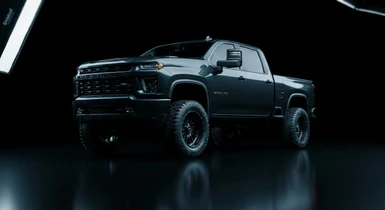
The honest bottom line: yes, you can run 35s on a Silverado 2500 HD, and on many trims a 35-inch tire (something like a 35X12.50R17 or the metric 315/70R17) will clear with modest wheel and offset changes, sometimes a leveling kit, and a little trimming or fender-liner massaging at full lock. The heavy-duty three-quarter-ton chassis already sits taller and has more room than a half-ton Silverado 1500, which is why 35s are one of the most popular upgrades on this truck. What it actually takes depends on your trim, the wheel you pick, and how you drive it, so let's walk through the whole picture honestly.
This guide covers where the truck sits from the factory, how far you can realistically push tire size, and everything that changes underneath when you go bigger — offset and backspacing, re-gearing, speedometer correction, TPMS, and load range on a rig that already weighs a ton. We'll also point you toward the exact sizes that fit and the ones worth shopping across our full tire selection.
How big can you realistically go?
The 2018–2026 Silverado 2500 HD ships on a 17x7.5 wheel with a fairly aggressive +50mm offset, an 8x180 bolt pattern, and a large 124mm hub bore. That factory setup is tuned for towing stability and load capacity, not maximum tire clearance — which is why bumping tire size usually goes hand in hand with a wheel that pulls the tire outboard a bit.
In broad strokes: 33s are an easy, near-bolt-on upgrade on most 2500 HDs. 35s are the sweet spot and very achievable with the right wheel and often a level. 37s are absolutely doable on this platform but cross into real modification territory — lift, trimming, and usually re-gearing. Trim and generation matter here: a Z71 or High Country with the factory skid and slightly different plastics may clear differently than a base WT, and the newer refreshed trucks tightened up some sheet metal. Treat every figure below as a starting point and verify clearance for your specific rig before you commit.
33s: the easy win
A 33-inch tire is the closest thing to a free lunch on the 2500 HD. In flotation terms that's a 33X12.50R17, 33X12.50R18, or 33X12.50R20; in metric, a 285/70R17 comes in right around 32.7 inches tall, which most owners round up and call a 33. On the stock suspension and a sensible wheel, this size typically clears with little or no drama — you're adding maybe an inch of diameter over many factory setups, so the geometry barely changes.
The appeal is that a 33 keeps your gearing, braking feel, and speedometer error minimal while giving you a meaningfully more aggressive stance and a bit more sidewall for airing down. If you tow heavy and want a modest bump in traction and looks without touching the drivetrain, the 285/70R17 or a 33X12.50R17 is the smart, low-risk choice. It's also the size we stock most deeply, so options are broad.
35s: the sweet spot for this truck
This is the size most 2500 HD owners really want, and it's where the platform shines. A true 35 — 35X12.50R17, 35X12.50R18, or 35X12.50R20 — fills the wheel wells beautifully and gives you serious sidewall for off-road work. The metric 315/70R17 lands at about 34.4 inches, a touch shorter but often easier to clear and lighter, which is a nice compromise if you want most of the look with less rubbing risk.
Here's the honest part on fitment: 35s on a 2500 HD usually want a leveling kit or small lift to eliminate rubbing at full steering lock, plus a wheel with a little less offset than stock to pull the tire out of the frame and control-arm area. Depending on trim and how much you turn the wheel, you may still need to trim the front of the wheel-liner or a lower air-dam section. Some owners run 35s with just a level and careful wheel choice; others trim. Because outcomes vary with ride height and offset, plan for the possibility of minor trimming and verify at full lock and full compression before you call it done. When you're ready to shop the size, the 35X12.50R17, 35X12.50R18, and 35X12.50R20 options give you a rim diameter for every look and ride preference, and the narrower 315/70R17 is worth a look if easy clearance is the priority.
37s: serious business
Yes, a 2500 HD can wear 37s — 37X12.50R17, 37X12.50R18, or 37X12.50R20 — and they look enormous on the truck, but this is a build, not a bolt-on. Expect a real lift kit to create the vertical room, meaningful trimming of the fender liners and possibly pinch welds and bumper end caps, and a wheel with aggressive backspacing to clear the steering and suspension. On a heavy diesel especially, 37s add a lot of rotating mass, and you'll almost certainly want to re-gear the axles to bring back the acceleration, towing manners, and transmission behavior the taller tire steals.
If your priority is a capable, drivable truck rather than a show stance, be realistic about the cost and the drivability trade-offs before jumping from 35s to 37s. Many owners find the 35 gives them 90% of the capability with a fraction of the compromise. That said, if you're committed, the 37-inch flotation sizes are available and the build is well-trodden territory on this chassis.
What actually changes when you go bigger
Where they rub, and clearance
On the 2500 HD, the first contact points are almost always up front: the back of the wheel well and the plastic liner at full steering lock, and the lower control arm or frame area if the wheel offset is too high (too far inboard). Rear rubbing is rarer but can happen at the bed-side liner when the suspension is fully stuffed. More tire diameter is only half the story — the tire's width and how far it sits in or out determines whether it kisses the frame or the fender.
Offset and backspacing, explained
Offset is the distance from the wheel's mounting face to its centerline, in millimeters. The factory +50mm offset tucks the wheel well inboard, which is great for load stability but leaves little room for a wide tire before it hits suspension components. Dropping to a lower offset — the bolt-on data shows options in the +45 to +20 range across 17-, 18-, and 20-inch widths — pushes the tire outboard, away from the frame and control arms, and helps a 35 clear. Go too far negative, though, and you invite fender rubbing, more steering effort, and accelerated wheel-bearing wear. Backspacing measures the same relationship from the back of the wheel to the mounting face; less backspacing equals a more outboard tire. Some very aggressive setups (think 10-inch-wide wheels with strongly negative offset) are flagged for clearance issues and extreme fitment — those genuinely require a lift and careful checking, so don't treat them as plug-and-play.
Re-gearing and drivability
Taller tires effectively raise your gearing — the engine turns fewer revolutions per mile — which dulls acceleration, hurts towing, and can make the transmission hunt for gears. On a gas 2500 HD the effect is more noticeable than on the torque-rich diesel, but both benefit from correcting the axle ratio when you jump to 37s, and sometimes with heavy 35s if you tow. The right ratio restores the feel you had from the factory and keeps the trans out of a constant shift cycle. There's no single 'correct' number — it depends on your tire diameter, engine, and how you use the truck — so have a driveline shop calculate it rather than guessing.
Speedometer and odometer correction
Bigger tires travel farther per revolution, so your speedometer will read slow and your odometer will under-count miles. A 35 versus a stock-height tire can put you several miles per hour off. On these trucks the fix is a programmer or a dealer/shop recalibration that tells the computer the new tire size. Correcting it also restores accurate transmission shift points and, on some rigs, proper cruise and safety-system behavior.
TPMS and load range
Your 2500 HD uses tire-pressure sensors, and when you buy new wheels you'll want sensors transferred or new ones installed and relearned to the truck. Load range is the big one on a three-quarter-ton: this truck is heavy and rated to tow and haul, so choose a tire with a load range and load index that matches or exceeds your needs — many of the right sizes come in load range E, and some are offered in higher-ply options like the load range F/12-ply builds. Don't downgrade to a lighter-duty flotation tire just to save weight if you actually tow; the tire has to carry the rig.
All-terrain or mud-terrain?
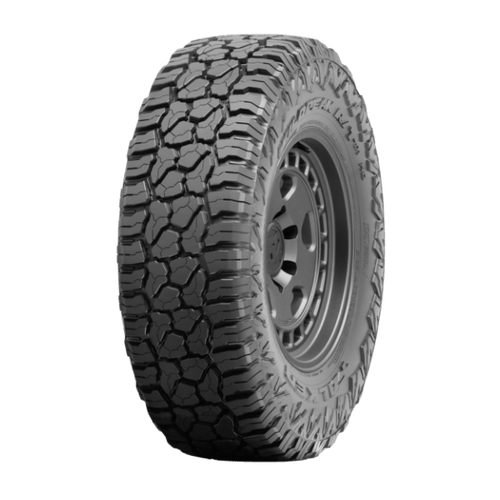
For most 2500 HD owners, a good all-terrain is the right call. It's quieter on the highway, wears more evenly under heavy loads, sheds less fuel economy, and still handles dirt, gravel, and light mud with ease. If you spend serious time in deep mud, rock, or soft terrain and don't mind more road noise and faster wear, a mud-terrain or the increasingly popular rugged-terrain hybrid buys you bite and sidewall protection. On a truck that tows, lean toward the AT or a hybrid unless your use case genuinely demands the aggressive tread. The middle-ground rugged-terrain pattern has become a favorite exactly because it splits the difference — think tires like the Toyo Open Country R/T Pro in 35X12.50R17 or the Falken Wildpeak R/T01, which give you a mud-tire look with more civilized road manners.
The sizes that fit, and what we carry
To put real numbers to it: for 33s, look at the 33X12.50R17, 33X12.50R18, and 33X12.50R20 (all right at 33 inches tall) or the metric 285/70R17 at about 32.7 inches. For 35s, the 35X12.50R17, 35X12.50R18, and 35X12.50R20 all measure a true 35 inches, while the 315/70R17 comes in around 34.4. For 37s, the 37X12.50R17, 37X12.50R18, and 37X12.50R20 all sit at 37 inches.
In the popular 35-inch class we stock a strong spread across rim sizes, including load-range options built for a heavy hauler: the workhorse Nokian Outpost nAT in 35X12.50R17 and its 18-inch counterpart are burly 12-ply choices, while the Nexen Roadian ATX 35X12.50R18 and the load-range-F Falken Wildpeak R/T01 in 35X12.50R18 round out the on/off-road spectrum. Browse everything by size from the 17-inch, 18-inch, and 20-inch pages, and step up to 37X12.50R17 if you're going big.
What to prioritize as a buyer
Start with load rating, not looks. On a 2500 HD, the tire has to carry and tow, so match load range and load index to your real-world weights first. Second, pick your rim diameter with ride quality in mind — a 17-inch wheel under a 35 gives you the most sidewall for airing down and soaking up trail impacts, while 20s look sharp but ride firmer and are more vulnerable to bends off-road. Third, choose the tire family (AT, rugged, or MT) based on where you actually drive, not the internet's opinion. Finally, plan the supporting pieces before you buy: the right wheel offset, a level or lift if you're going 35 or bigger, a speedometer recalibration, TPMS sensors, and re-gearing if you're jumping to 37s or towing heavy on tall rubber. Get those in order and a 35 on your 2500 HD will look and drive right.
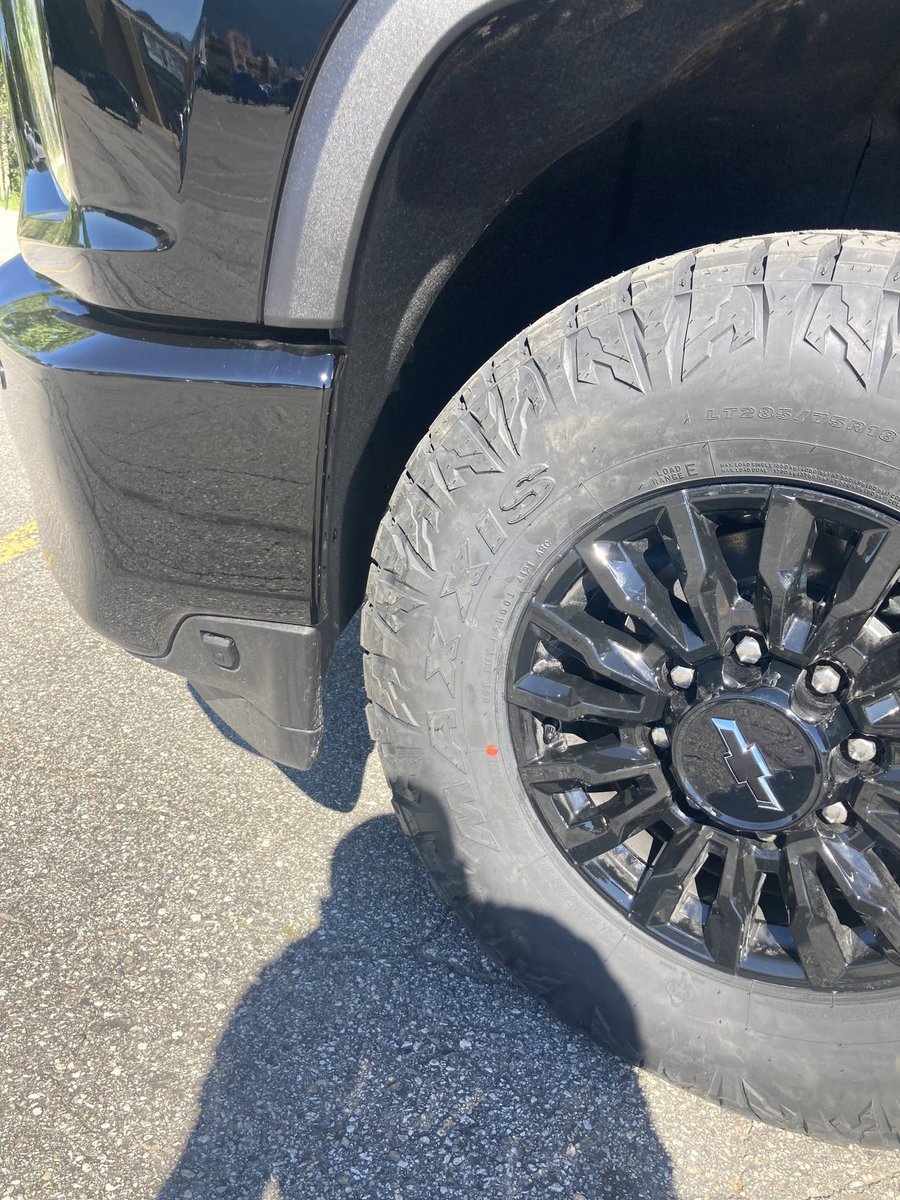
Real Chevrolet Silverado 2500 HD builds running 35s and up
Actual owner builds — real photos.


Frequently Asked Questions
Do I need a lift to run 35s on a Silverado 2500 HD?
Not always a full lift, but usually at least a leveling kit plus a wheel with less offset than stock. The heavy-duty chassis has more room than a half-ton, so some owners clear 35s with a level and careful wheel choice, while others still trim the front liner to kill rubbing at full steering lock. Because ride height, offset, and trim all affect the outcome, check clearance at full lock and full suspension compression on your specific truck before assuming it's rub-free.
Will 35s hurt my towing and acceleration?
They can, because a taller tire effectively raises your gearing and adds rotating weight. On the diesel the torque hides most of it; on a gas truck it's more noticeable, especially loaded. If you tow heavy, consider re-gearing the axles to restore the factory feel, and always recalibrate the speedometer so the transmission shifts correctly.
What offset should I run for 35s?
Something less aggressive than the factory +50mm — the bolt-on-friendly range tends to fall around +45 down to +20 depending on wheel width. That pulls the tire outboard to clear the frame and control arms without throwing it so far out that it rubs the fender or strains the wheel bearings. Very negative offsets are flagged as extreme fitment and typically demand a lift, so verify for your setup.
Are 37s worth it over 35s on this truck?
Only if you truly need the extra diameter and are ready for the build. 37s require a lift, significant trimming, aggressive wheels, and almost always re-gearing to stay drivable, especially on a heavy diesel. Many owners find 35s deliver most of the capability with far less compromise, so weigh your real use before making the jump.
All-terrain or mud-terrain for a 2500 HD?
For most owners, an all-terrain or a rugged-terrain hybrid is the better all-around choice — quieter, longer-wearing, and easier on fuel while still handling dirt and light mud. Go full mud-terrain only if you regularly face deep mud, rock, or soft terrain and accept the noise and faster wear. On a truck that tows, the AT or hybrid is usually the smarter fit.
Do I need new TPMS sensors and a load-range check?
If you're buying new wheels, plan to transfer or install TPMS sensors and have them relearned to the truck. And yes, mind the load range — a three-quarter-ton is heavy and rated to haul, so pick a tire with a load range and load index that meets or exceeds your needs rather than a lighter-duty flotation tire.
35-inch tires for the Silverado 2500 HD (in stock)