
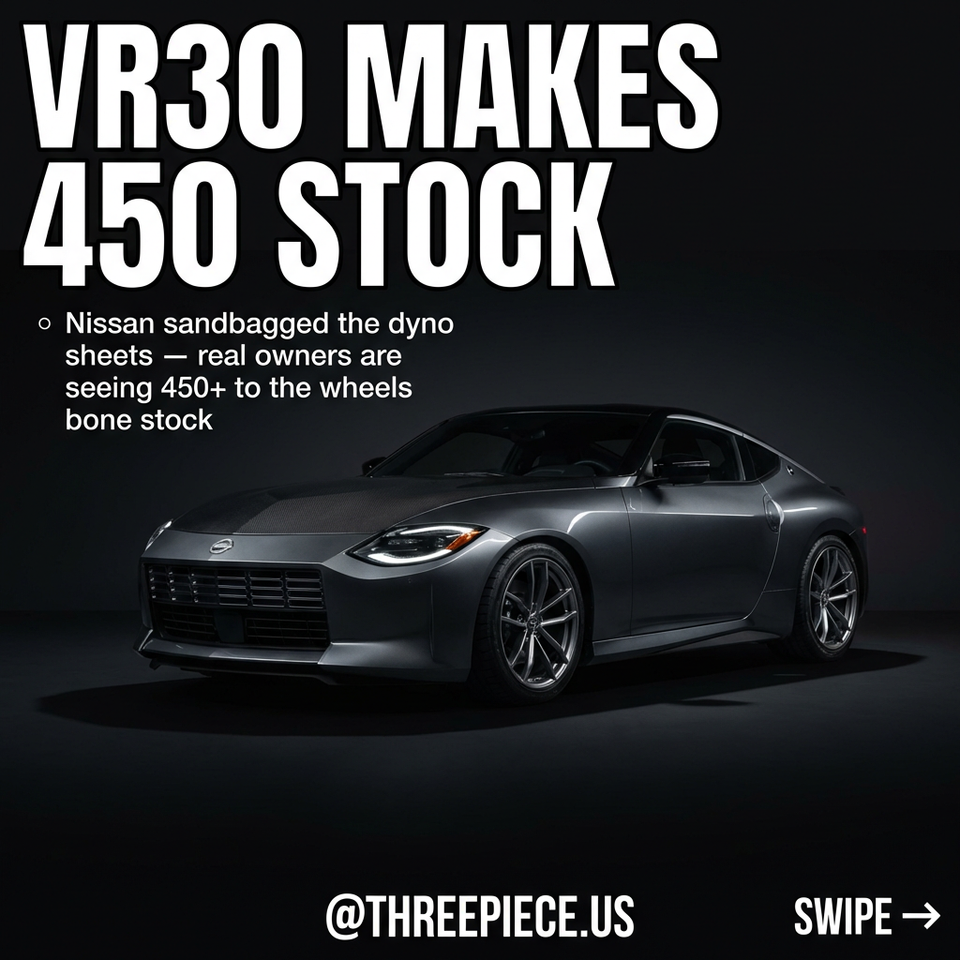
The 2023+ Nissan Z makes 450 horsepower to the wheels stock, not the 400 Nissan claims. Real dyno sheets show the VR30DDTT was seriously underrated from the factory. But which trim level gives you the best foundation for building a 600+ hp monster? After analyzing all three specs and talking to early adopters, the answer isn't what you'd expect.
Quick links
VR30 Twin Turbo Potential
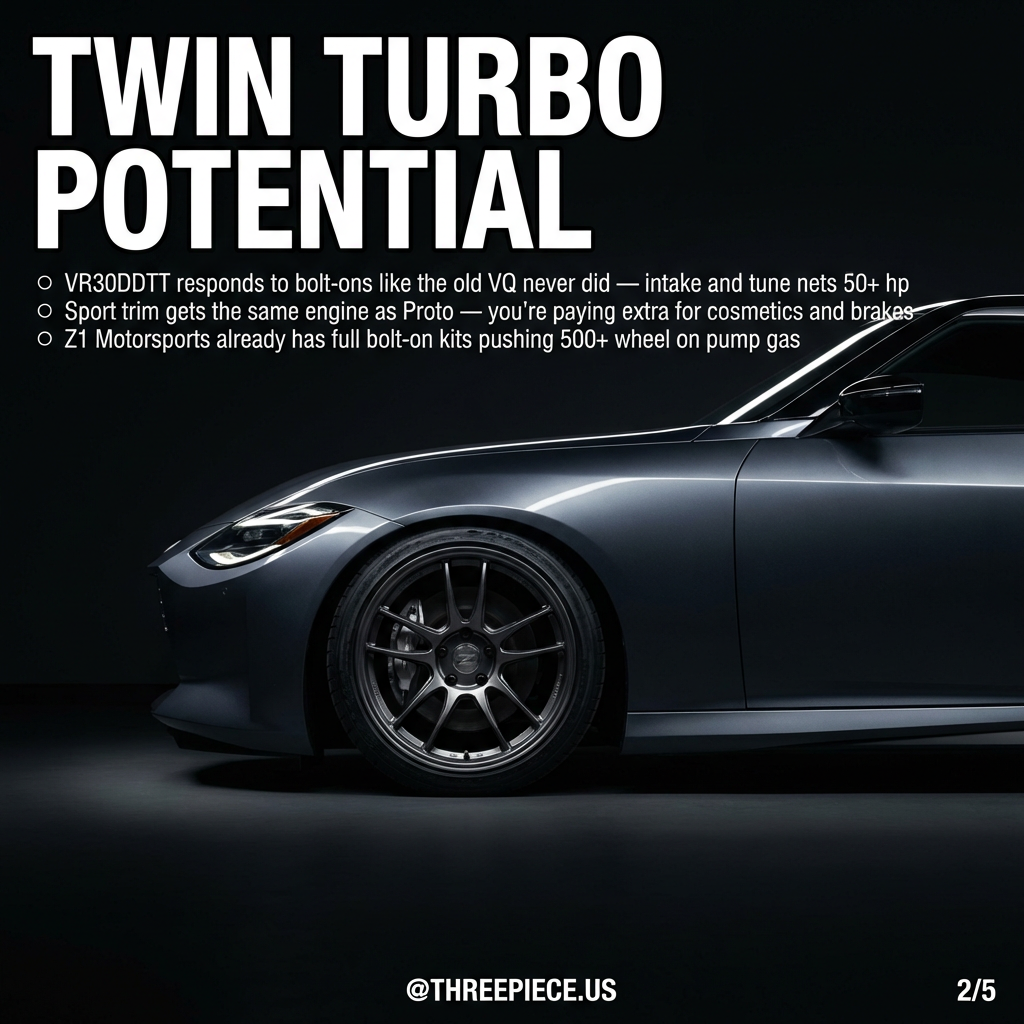
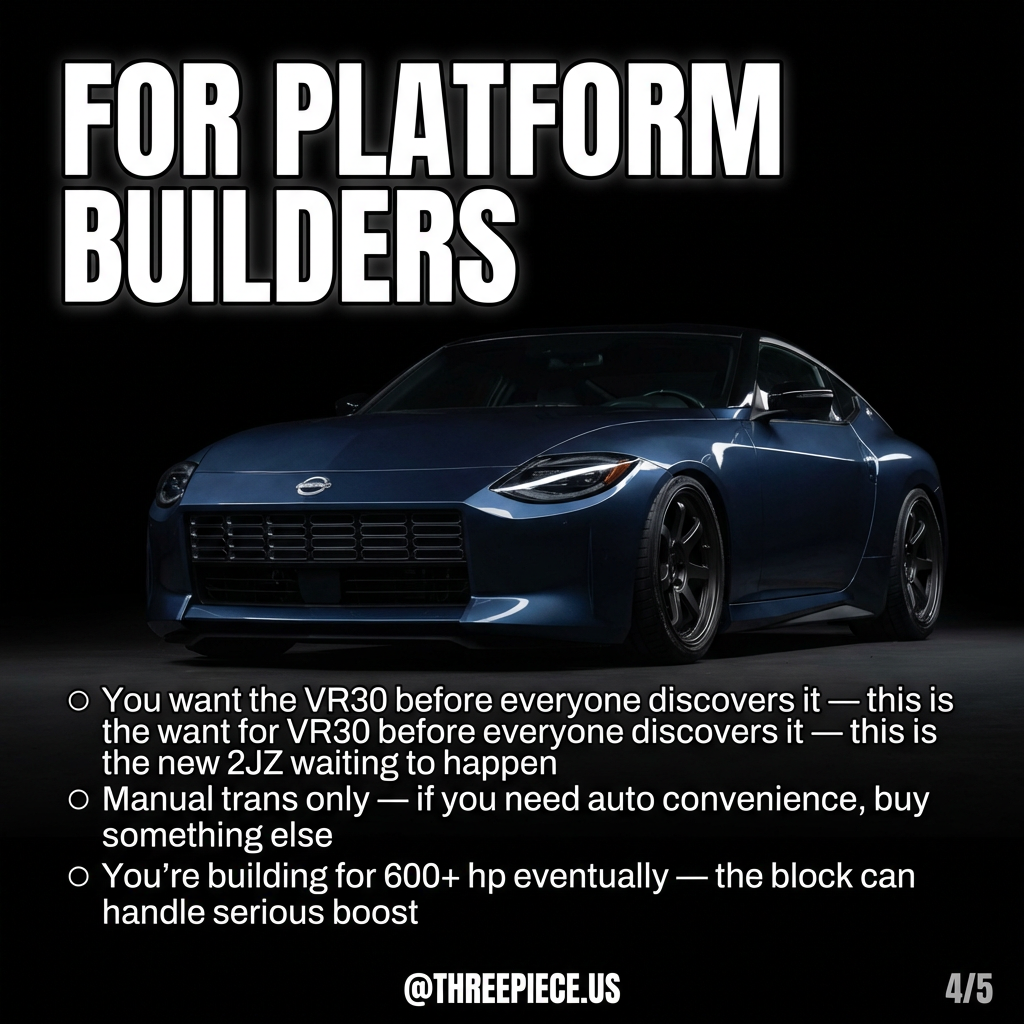
Nissan sandbagged the dyno sheets hard. Independent testing shows bone stock Z cars putting down 450+ wheel horsepower, not the advertised 400. The VR30DDTT responds to bolt-ons like the old VQ never did — intake and tune nets 50+ hp gains that actually stick. Z1 Motorsports already has full bolt-on kits pushing 500+ wheel on pump gas.
This is the new 2JZ waiting to happen. The block can handle serious boost, and tuning infrastructure is developing fast. The aFe SCORCHER GT Module at $464 is already available for safe power gains. Unlike the naturally aspirated VQ engines that needed forced induction to make real power, this twin turbo setup has headroom built in.
Sport vs Performance vs Proto
Here's where Nissan's pricing strategy punishes you for options. Sport trim gets the same VR30DDTT engine as Proto — you're paying $8k+ extra for cosmetics and brakes. Performance trim adds the mechanical LSD and bigger brakes but costs $5k more than Sport. Proto spec throws in visual upgrades that most builders replace anyway.
The mechanical differences that actually matter for building: Sport gets the 6-speed manual (CVT overheats under sustained load), limited-slip differential on Performance/Proto only, and Akebono brakes on Performance/Proto. Everything else is appearance packages. If you're planning serious modifications, the aftermarket brake options will outperform the factory Akebonos anyway.
Quality Control Issues
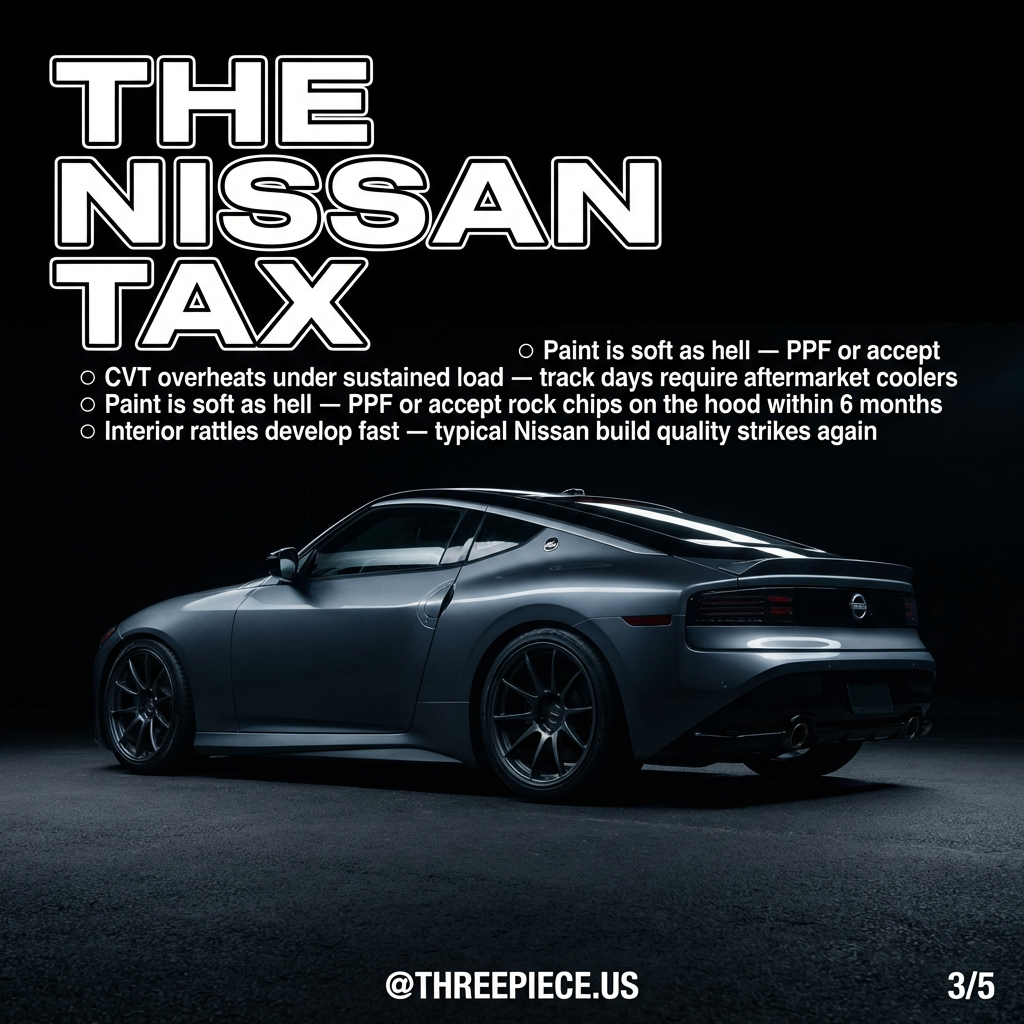
Typical Nissan build quality strikes again. Paint is soft as hell — expect rock chips on the hood within 6 months without PPF. The Seibon Carbon Fiber Cooling Plate at $471 not only protects the radiator but adds functional cooling for track use.
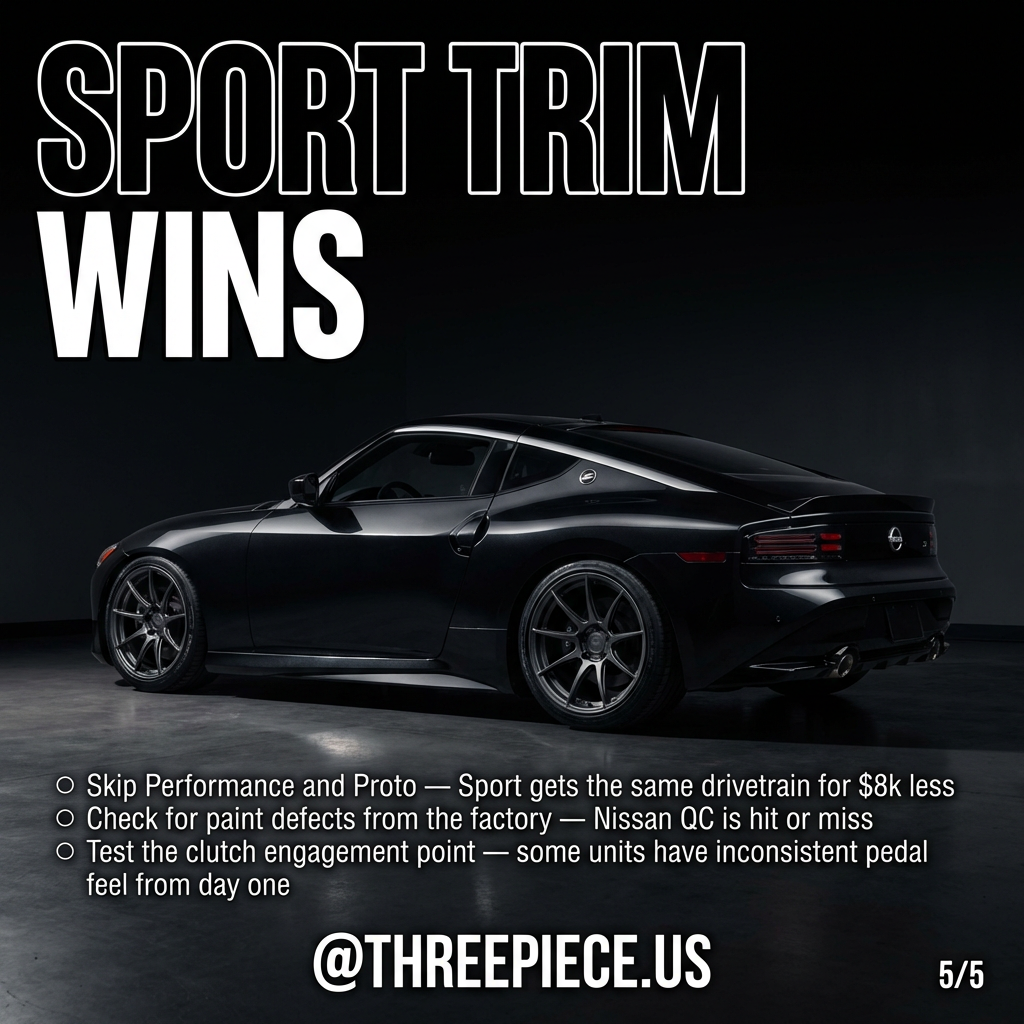
Interior rattles develop fast, and some units have inconsistent clutch engagement points from day one. Test drive multiple cars before buying — Nissan QC is hit or miss. CVT models overheat under sustained load, requiring aftermarket coolers for any serious driving. Manual transmission only if you're building for performance. Check our 350Z buying guide for inspection tips that apply to the new Z as well.
Why Sport Trim Wins
Skip Performance and Proto — Sport gets the same drivetrain for $8k less. You want the VR30 before everyone discovers it. This engine has 600+ hp potential with the right supporting mods, and you're building for that eventual power level anyway.
Use the money saved on the higher trims for real performance upgrades. The Tein Flex Z Coilover Kit at $981 transforms the chassis dynamics far more than factory Akebono brakes ever will. For wheels, the Z uses 5x114.3 bolt pattern — browse 19-inch wheels in 5x114.3 for proper sizing options.
Manual transmission only — if you need auto convenience, buy something else. This platform is for builders who understand that the VR30 is about to become the next legendary tuner engine. Get in now while prices are reasonable and selection is good. The underrated Japanese sports cars from the 2000s all started this way — overlooked by the masses until builders proved their potential.
Check for paint defects from the factory before taking delivery. Test the clutch engagement point thoroughly. And remember — you're buying the platform, not the factory configuration. The vehicle gallery shows what's possible when you build it right. The VR30 twin turbo setup is the real deal, and Sport trim gives you the cleanest foundation to work with.