
Posted by THREEPIECE.US on Apr 20th 2026
Stage 1 vs Stage 2 Tune Results: Real Dyno Numbers Revealed
Stage 1 vs Stage 2 Tune Results: Real Dyno Numbers Revealed
The Audi RS3 8V isn't just another hot hatch – it's a four-door missile with a rally-bred heart that delivers supercar acceleration in an everyday package. Beneath its subtle exterior lies a mighty 2.5-liter five-cylinder turbo engine that routinely hits 60 mph in the low 3-second range, embarrassing dedicated sports cars off the line while maintaining daily-driving comfort.
What makes this compact performance sedan truly special is its incredible tuning potential. The EA855 EVO engine is strongly built and underrated from the factory, ready to unleash significantly more power with just software and bolt-ons. We're talking gains of 25–50% over stock output in the first couple stages of tuning.
Quick Navigation
- Quick Answer
- Key Takeaways
- Understanding the RS3's Foundation
- Stage 1 Tuning: The Gateway Drug
- Stage 2: Unleashing the Beast
- Popular Tuner Options
- Supporting Modifications That Matter
- What the Engine Can Handle
- Real-World Ownership Considerations
- Who Should Buy One
- When to Skip It
- Final Verdict
Quick Answer
Stage 1 tunes deliver approximately 480-500 hp and 450-480 lb·ft (up from 400 hp stock) with just an ECU remap on 93 octane fuel. Stage 2 setups with supporting hardware like downpipes and intercoolers push 520-550 hp and 500+ lb·ft. Both stages remain reliable on stock internals, with Stage 1 dropping 0-60 times into the low 3s and Stage 2 enabling sub-3.0 second launches.
Key Takeaways
- Stock RS3s dyno around 330-350 whp; Stage 1 tunes add ~80 hp for 400+ whp
- Stage 2 requires downpipe and intercooler but delivers 450+ whp on pump gas
- The DAZA engine handles 600+ crank hp reliably on stock internals
- Popular tuners include APR, Unitronic, Integrated Engineering, and 034 Motorsport
- TCU tunes complement ECU tunes by raising torque limits and improving shift speed
- E85 fuel can add 50+ hp over pump gas on equivalent tunes
Understanding the RS3's Foundation
The heart of the RS3 is its 2.5-liter inline five-cylinder EA855 EVO engine. Early cars (2015-2016) used the iron-block CZGB engine with 362 bhp, while later models (2017-2020) received the aluminum-block DAZA producing 394 bhp and 354 lb·ft of torque.
This engine won "Engine of the Year" in its class for eight years running. It features direct fuel injection, a twin-scroll turbocharger pushing ~19-20 psi of boost stock, and a broad torque curve available from 1700 rpm to 5550 rpm. Peak power hits around 6800 rpm, just shy of the 7000 rpm redline.
The 7-speed dual-clutch S tronic (DQ500) transmission is built to handle up to 443 lb·ft as per design spec, meaning it copes well with Stage 1/2 tuned torque levels. Quattro all-wheel drive uses a Haldex-based system that can send up to 50% of torque to the rear axle when needed.
Stage 1 Tuning: The Gateway Drug
Stage 1 represents ECU software tuning only – no physical modifications required. Quality Stage 1 tunes from reputable companies typically bump the RS3 to roughly 480-500 hp and 450-480 lb·ft at the crank on 93 octane pump gas.
Real-World Results:
- Unitronic's Stage 1 tune: 476 hp / 469 lb·ft on 91 octane
- APR Stage 1 (93 octane): ~475 hp
- Many Stage 1 RS3s dyno around 400 whp on Mustang or DynoJet dynos
The power gains translate to dramatic performance improvements. Stage 1 RS3s routinely achieve:
- 0-60 mph in the low 3-second range (some hit ~3.2 seconds)
- Quarter-mile times in the high 11s to 11.5 seconds
- Massive midrange torque increase (+100 lb·ft at certain RPMs)
Stage 1 tunes remain conservative and reliable, typically keeping boost around 22-23 psi while refining fueling and ignition timing. The result transforms an already quick car into an absolute missile.
Stage 2: Unleashing the Beast
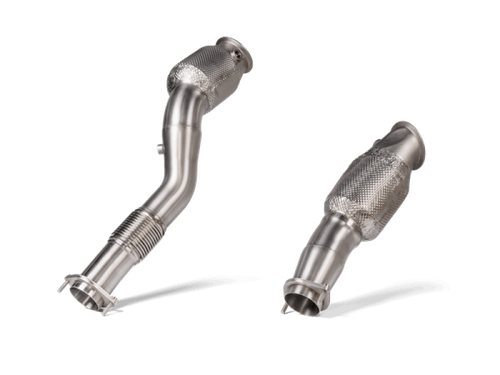
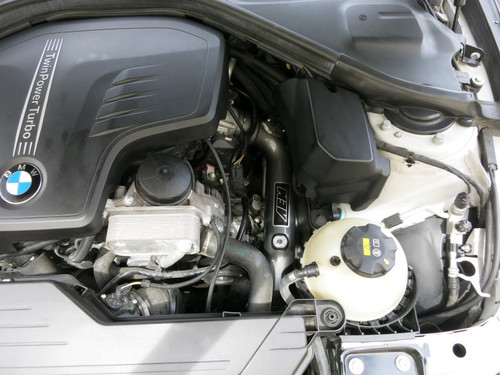
Stage 2 requires supporting hardware modifications but delivers substantially more power. The typical Stage 2 setup includes:
- High-flow downpipe (removes restrictive factory catalytic converter)
- Upgraded intercooler for consistent power delivery
- Performance intake system
- ECU and TCU tunes
Stage 2 Power Numbers:
- 520-550 hp and 500+ lb·ft on 93 octane pump gas
- Unitronic Stage 2: 554 hp / 527 lb·ft (crank)
- Real-world dyno results: ~450 whp on pump gas
- E85 fuel can push numbers to 460+ whp (~570 crank hp)
Performance becomes truly supercar-level:
- 0-60 mph just under 3.0 seconds with perfect launches
- Quarter-mile times: 10.8-11.0 seconds at 124-128 mph
- Consistent power delivery even during back-to-back pulls
Popular Tuner Options
APR: Known for OEM-like smoothness and conservative figures ensuring reliability. Stage 1 around $1,000, with extensive dealer network for flashing.
Unitronic: Offers aggressive tuning with home flashing capability via UniConnect+. Their Stage 2 numbers often exceed competitors, requiring their specific downpipe and intercooler.
Integrated Engineering (IE): Provides easy at-home flashing with excellent driveability focus. Offers specific maps for E30 fuel blends and custom features.
034 Motorsport: California-based tuner running their own RS3 drag car. Focus on smooth power delivery with support for various fuel types.
REVO: Popular in Europe with extensive testing on UK fuels. Strong track record and local support.
Supporting Modifications That Matter
Downpipes: Essential for Stage 2, high-flow catted downpipes like the APR Cast Downpipe ($1,299) or Unitronic's design ($1,149) provide significant power gains while maintaining some emission control.
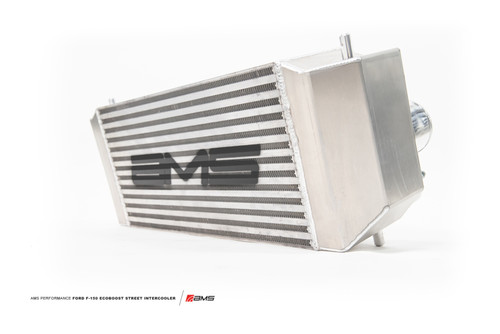
Intercoolers: Wagner Tuning EVO3 (~$1,000) or Unitronic's upgrade kit ($999) prevent heat soak during repeated pulls, maintaining consistent power output.
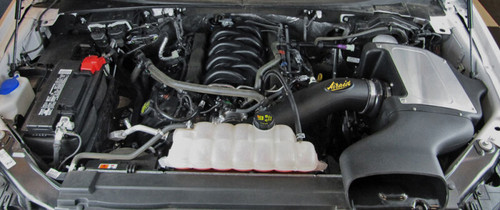
Intakes: While gains are modest (5-15 hp), options like the APR Open Carbon Fiber Intake ($499) or Eventuri%20intake)'s premium system ($1,800+) enhance turbo sound and throttle response.
TCU Tunes: Complement ECU tunes by raising torque limits, speeding shift times, and optimizing launch control. Essential for Stage 2 setups to fully exploit the available torque.
What the Engine Can Handle
The DAZA engine's strength is legendary in tuning circles. General consensus suggests:
- Up to 600 crank hp (~500 whp): Easily handled on stock internals
- Stage 2+ E85 (550-600 whp): Many run this reliably long-term
- 700+ hp (Stage 3): Possible on stock motor but reduces lifespan
The DQ500 transmission handles Stage 1/2 power levels without drama. With a proper TCU tune raising clutch clamping pressure, it manages ~600 lb·ft reliably. Beyond that, clutch pack upgrades become advisable.
Real-World Ownership Considerations
Fuel Requirements: These tunes are designed for premium fuel. Using 93 AKI (98 RON) or better is essential to avoid knock and achieve advertised power levels.
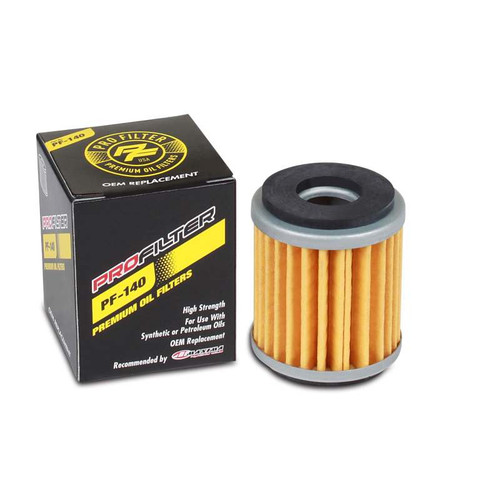
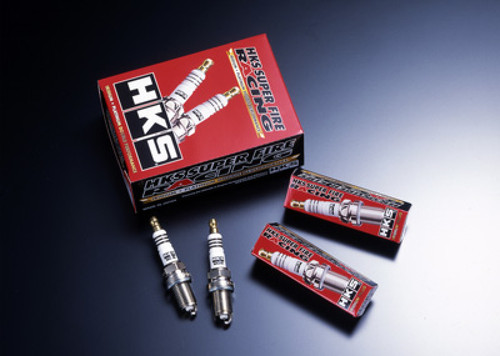
Maintenance: Tuned cars benefit from more frequent oil changes (every 5,000 miles vs 10,000), earlier spark plug replacement (every 10-15k vs 30k), and monitoring of intake air temperatures.
Reliability: Stage 1 and 2 are considered "free" power that the engine handles with ease. Proper tuning from reputable companies maintains factory-like reliability when maintenance schedules are followed.
Who Should Buy One
The RS3 makes perfect sense if you want:
- Supercar acceleration in a practical daily driver
- All-weather capability thanks to Quattro AWD
- Tuning potential to grow with your performance appetite
- Unique character from the five-cylinder engine
- Stealth performance that doesn't attract unwanted attention
The car excels as an only vehicle, handling commuting duties while delivering weekend thrills. It's particularly appealing to enthusiasts who refuse to compromise between practicality and performance.
When to Skip It
Consider alternatives if you:
- Prefer manual transmissions (RS3 is dual-clutch only)
- Want rear-wheel drive dynamics (BMW M2 offers more tail-happy fun)
- Need maximum interior space (compact dimensions limit rear seat room)
- Can't afford premium fuel and maintenance (running costs are substantial)
- Prioritize ultimate track handling over straight-line speed
Final Verdict
The Audi RS3 8V represents one of the most complete enthusiast packages available. Its combination of daily usability, explosive performance, and massive tuning potential is virtually unmatched in the compact performance segment.
Stage 1 tuning transforms an already impressive car into a genuine supercar killer, while Stage 2 setups deliver hypercar-level acceleration. The engine's proven reliability at these power levels, combined with strong aftermarket support, makes the RS3 an excellent platform for both mild and wild builds.
With limited production numbers, unique five-cylinder character, and the likelihood of being among the last pure ICE Audi Sport models, the RS3 also shows strong potential as a future collectible. For enthusiasts seeking the ultimate everyday weapon, few cars deliver the RS3's combination of speed, sound, and sophistication.
The numbers don't lie: this is a car that can run with supercars while hauling groceries, and that's a combination that never gets old.
Shop at ThreePiece.us
Shop wheels for ECU Tune vs Stock: Which Is Actually Worth Your Money? →