
Posted by THREEPIECE.US on Apr 3rd 2026
R32 Skyline GT-R Buying Guide: Reality Check on $80K Godzilla
The R32 Nissan Skyline GT-R has gone from affordable JDM legend to $80K+ collector car faster than its ATTESA system can send power to the rear. With clean examples now commanding serious money, the "budget" Godzilla dream is officially dead. But if you're still considering ownership, here's what actually matters beyond the hype.
Quick links
- The 276HP Lie and RB26 Reality
- What Actually Breaks First
- Why Most Buyers Aren't Ready
- Pre-Purchase Inspection Checklist
- Should You Buy One?
The 276HP Lie and RB26 Reality
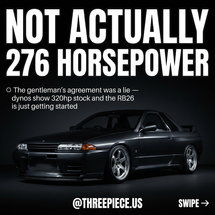
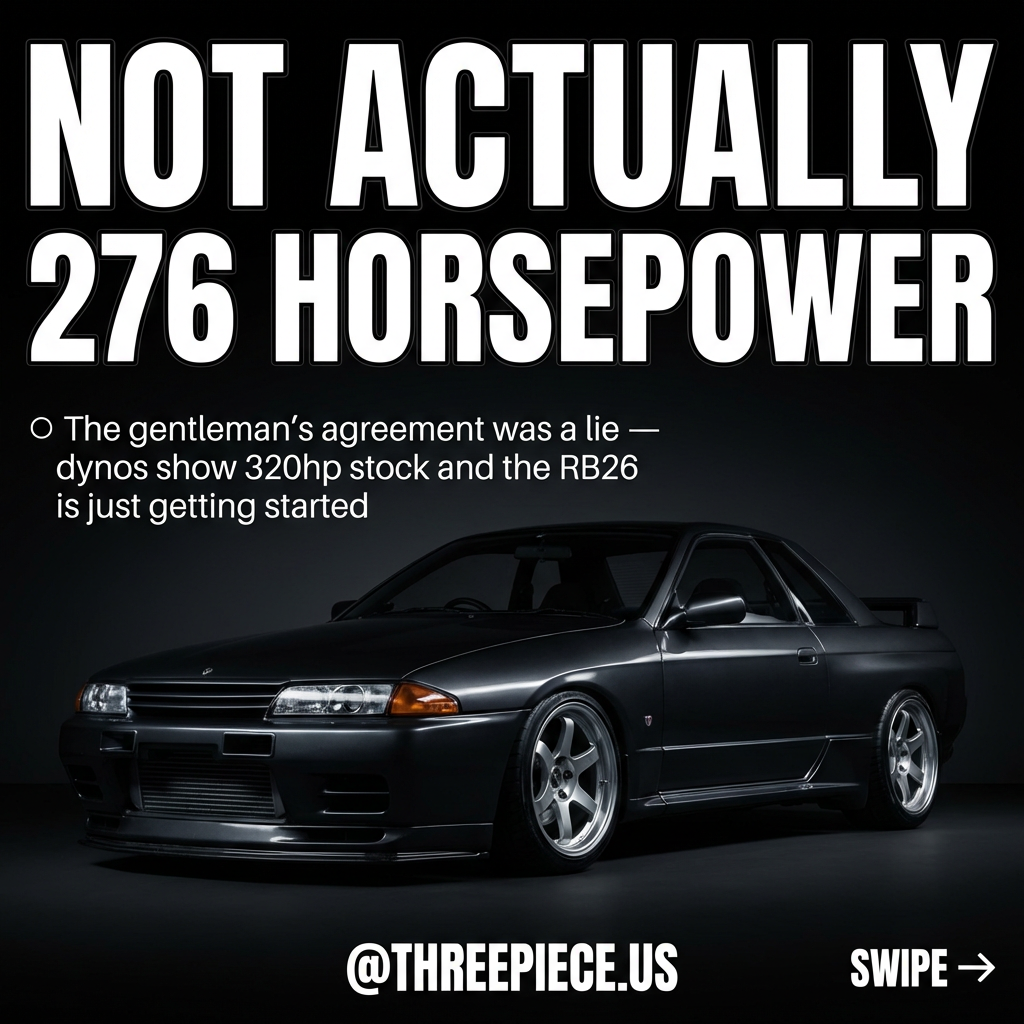
The Japanese gentleman's agreement was pure marketing theater. Dyno sheets consistently show 320+ horsepower from bone-stock R32 GT-Rs, not the advertised 276hp. The RB26DETT was sandbagging from day one, which explains why these cars felt so much faster than their paper specs suggested.
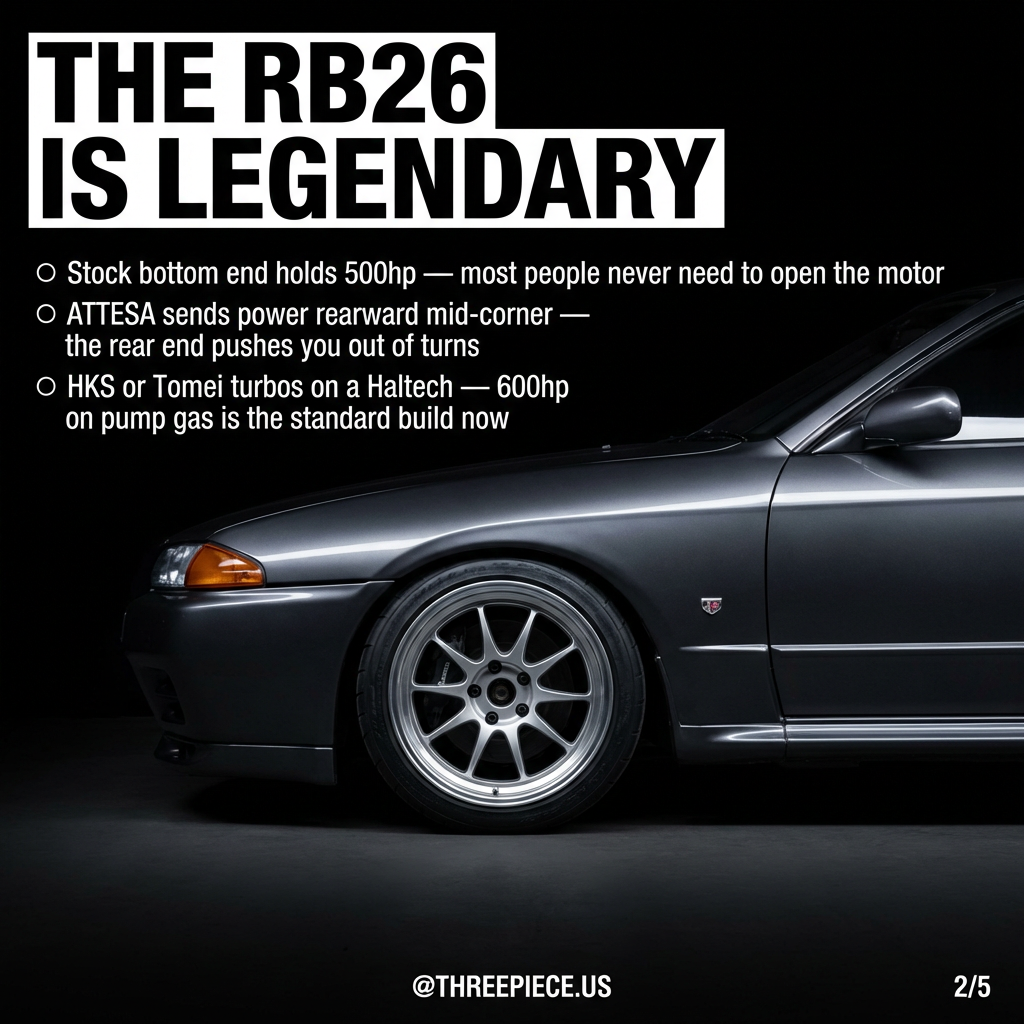
The RB26's legendary status isn't just hype. The stock bottom end reliably holds 500+ horsepower — most owners never need to crack open the motor. ATTESA's rear-biased torque split mid-corner creates that signature "rear end pushing you out of turns" feeling that made these cars famous on track.
Modern builds target 600hp on pump gas with HKS or Tomei turbos on a Haltech ECU. It's become the standard recipe because it works. For comparison, check our breakdown of how the SR20DET lost ground to newer platforms — the RB26 avoided that fate by being overbuilt from the factory.
What Actually Breaks First
Forget the internet horror stories about fragile Japanese engineering. The R32's failure points are predictable and preventable if you know what to watch for.
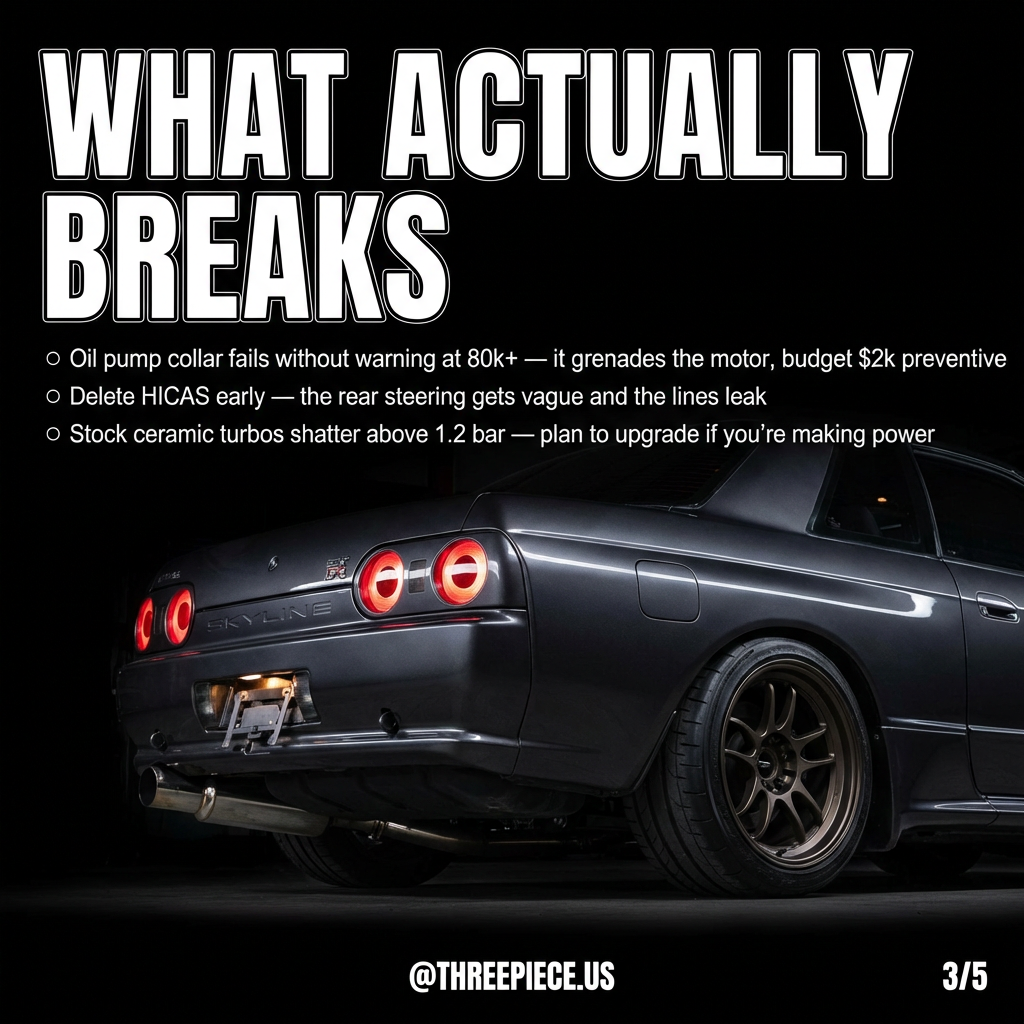
The oil pump collar fails without warning around 80,000+ miles and grenades the entire motor when it goes. Budget $2,000 for preventive replacement — it's not optional maintenance, it's survival. No receipt for this work means you're buying someone else's ticking time bomb.
Delete the HICAS rear steering system early. The hydraulic lines leak, the rack gets vague, and it adds complexity without meaningful benefit on street cars. Most track-focused builds eliminate it immediately. While you're addressing reliability concerns, read our guide on proper oil control systems — the principles apply to RB26 builds too.
Stock ceramic turbos shatter above 1.2 bar of boost. Plan to upgrade if you're making any power beyond stock. The good news? This forces you into better turbos that actually improve the powerband.
Why Most Buyers Aren't Ready
The sticker price is just the entry fee. R32 ownership requires either serious wrenching skills or a relationship with someone who specializes in these cars. This isn't a dealer-serviceable vehicle anymore.
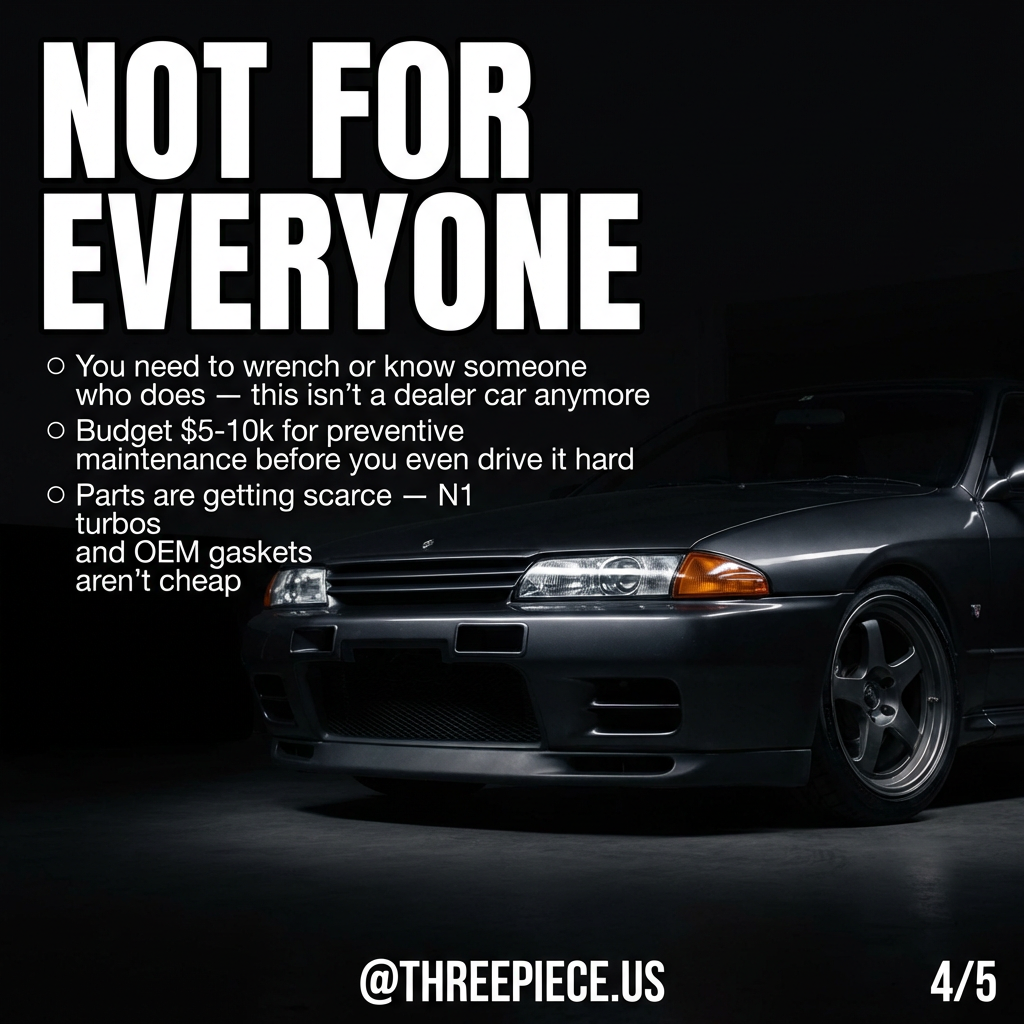
Budget $5,000-$10,000 for preventive maintenance before you even consider driving it hard. Oil pump collar, HICAS delete, turbo refresh, and addressing 30+ year old rubber and seals adds up quickly. Parts availability is becoming a real issue — genuine N1 turbos and OEM gaskets aren't getting cheaper.
For perspective on modern alternatives, our R35 GT-R reality check shows how Nissan's newer Godzilla compares on total ownership costs. Spoiler: the R35's complexity makes the R32 look simple.
Wheel fitment is straightforward at least. The R32 runs 5x114.3 bolt pattern with aggressive offsets. Browse 5x114.3 wheels for period-correct options, or check the Work Wheels catalog for authentic JDM pieces that suit the platform perfectly.
Pre-Purchase Inspection Checklist
A compression test across all six cylinders is non-negotiable. Anything below 140 PSI on any cylinder means walk away immediately — the motor needs serious work. Compression variance between cylinders shouldn't exceed 10%.
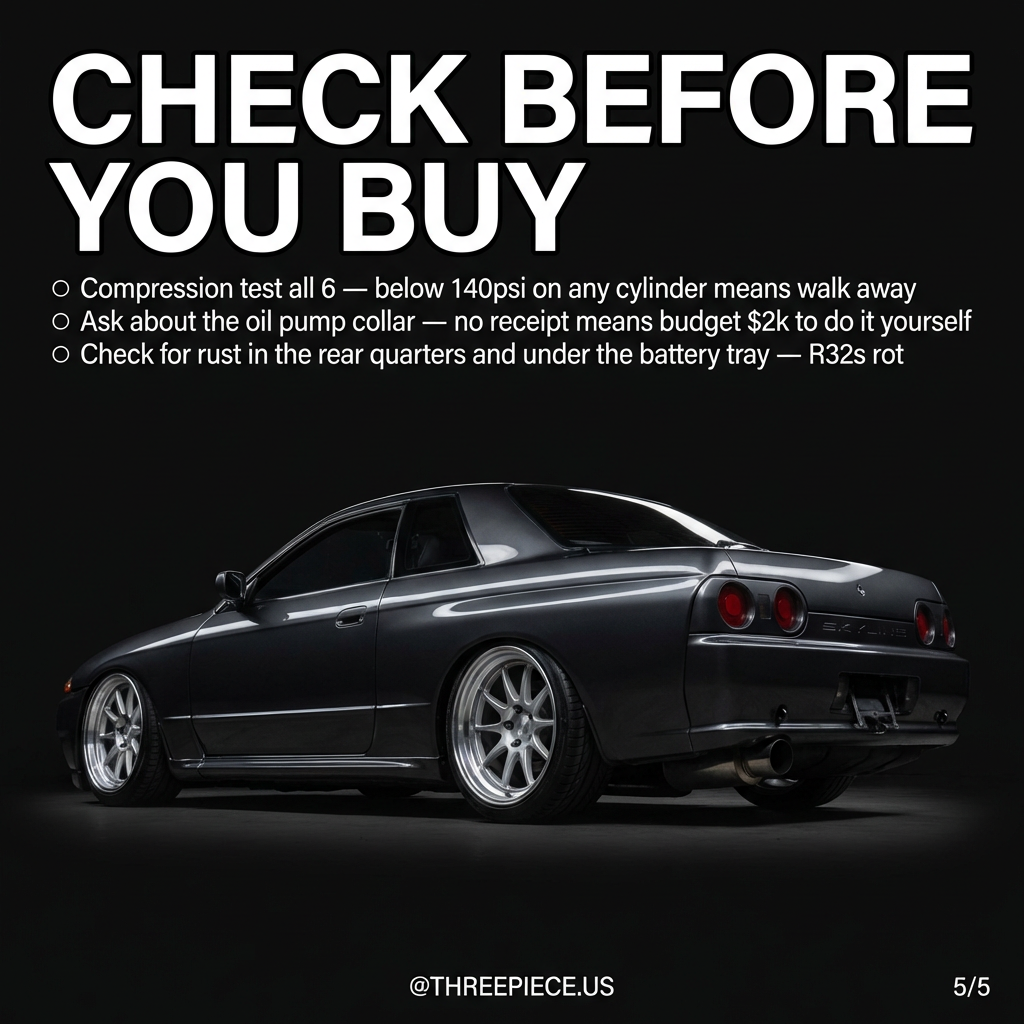
Ask specifically about oil pump collar replacement. No documentation means budget the full $2,000 to do it yourself before the motor lets go. This isn't paranoia — it's the difference between a runner and a paperweight.
Check for rust in the rear quarters and under the battery tray. R32s rot in predictable spots, and Japanese salt exposure shows up decades later. Surface rust is manageable, but structural corrosion kills values fast.
Verify the ATTESA system engages properly. The center differential should lock under acceleration and release smoothly. Grinding or hesitation indicates expensive transmission work ahead.
Should You Buy One?
At current prices, the R32 GT-R makes sense for collectors and serious enthusiasts who understand the total cost of ownership. If you need to finance the purchase price, you can't afford the maintenance reality.
The driving experience remains unmatched — ATTESA's intelligence, RB26's torque delivery, and that distinctive turbo surge create something no modern car replicates. But nostalgia costs $80,000+ now, plus the inevitable $10,000 in sorting.
For less money and similar thrills, consider our guides on Lexus IS300 2JZ builds or Infiniti G37 VQ builds. Both offer serious performance potential without the R32's price premium and parts scarcity.
If you're committed to R32 ownership, find the cleanest example possible and budget for immediate preventive work. The platform rewards proper maintenance with decades of reliable service. Complete your build with quality wheel accessories and consider browsing our vehicle gallery for inspiration on period-correct setups.