
Posted by THREEPIECE.US on Apr 3rd 2026
GTI Mk7 vs Civic Type R FK7: Track Battle After Coilovers & BBK
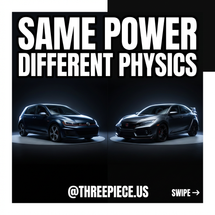
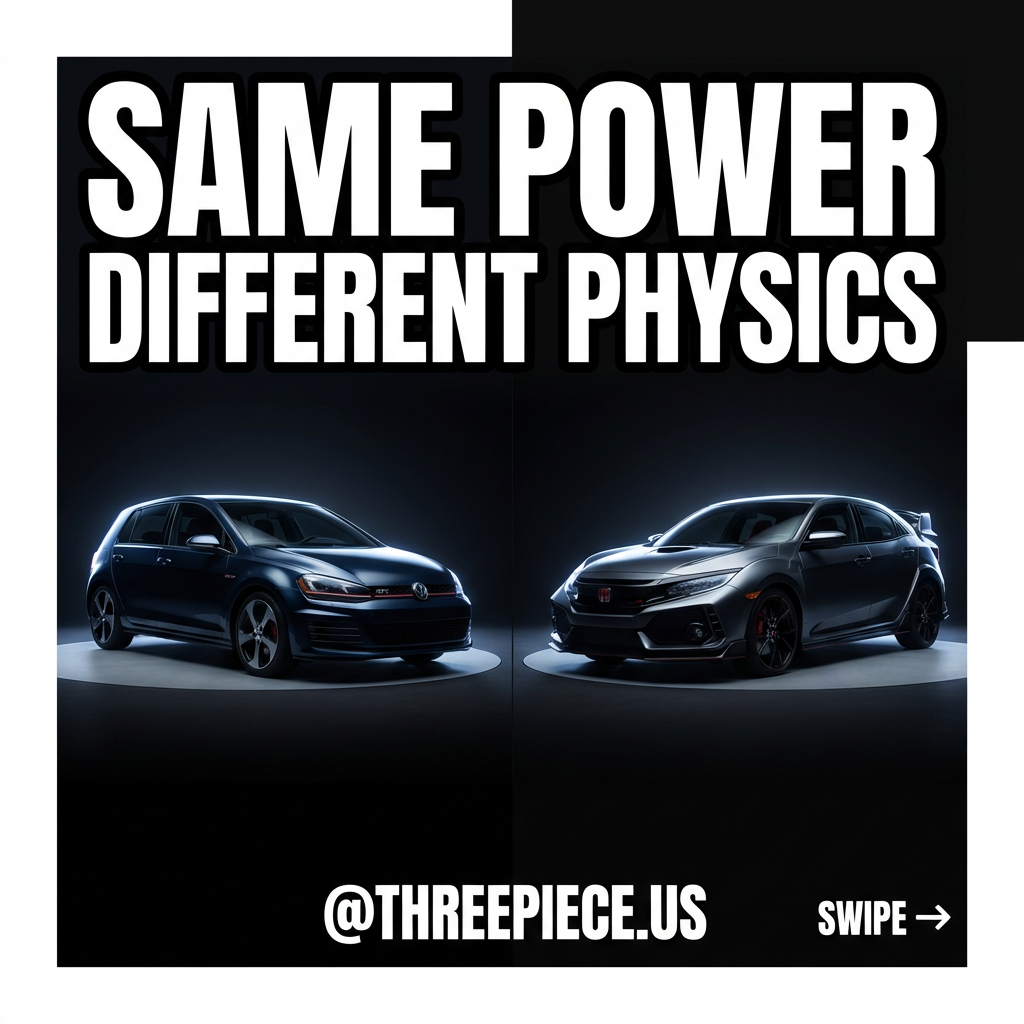
The VW GTI Mk7 versus Civic Type R FK7 debate changes completely once you throw real suspension and brakes at both cars. Both make similar power — 220HP for the GTI, 306HP for the Type R — but their chassis philosophies are fundamentally different. The GTI's been around long enough for the aftermarket to perfect it, while the Type R came aggressive from factory but fights you on modifications.
Quick links
GTI Mk7 Strengths
The GTI transforms completely with proper suspension. KW V3s or Bilstein PSS10s finally make the weight balance work — suddenly that front-heavy chassis rotates like it should have from factory. The lighter nose means Stoptech or AP Racing BBK setups handle heat better with less brake fade on track.
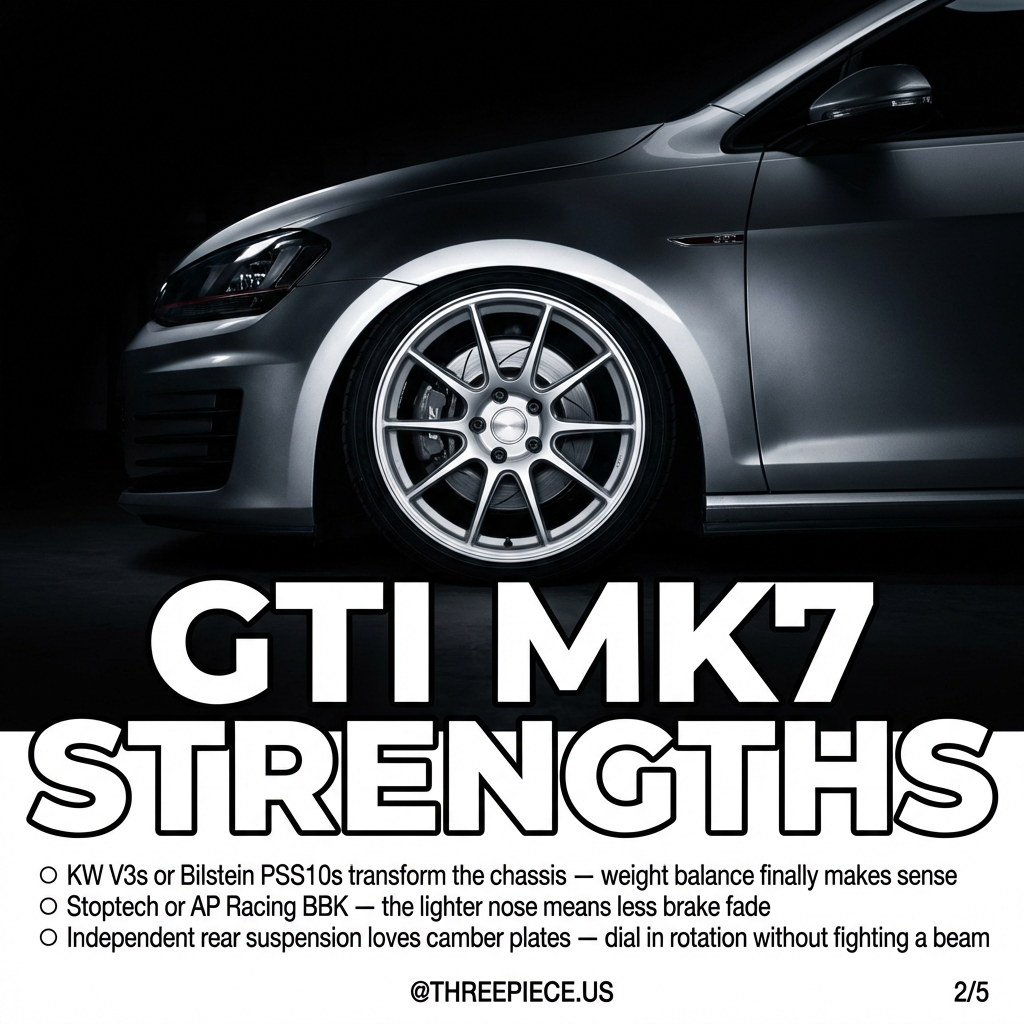
Independent rear suspension loves camber plates — you can dial in rotation without fighting a beam axle. The aftermarket figured out the MQB platform years ago. For intake upgrades, the aFe turbocharger inlet pipe at $210 is a proven mod that actually works.
Suspension options are endless. Check out the Air Lift Performance front kit for $891 if you want adjustability, or read our guide on suspension upgrades that beat coilovers for alternatives that work better on street.
Type R FK7 Strengths
The Type R came correct from factory with adaptive dampers, which means KW DDC or Ohlins Road & Track setups work perfectly with the existing electronics. The Brembo 4-pots up front already handle track abuse — just add racing fluid and pads.
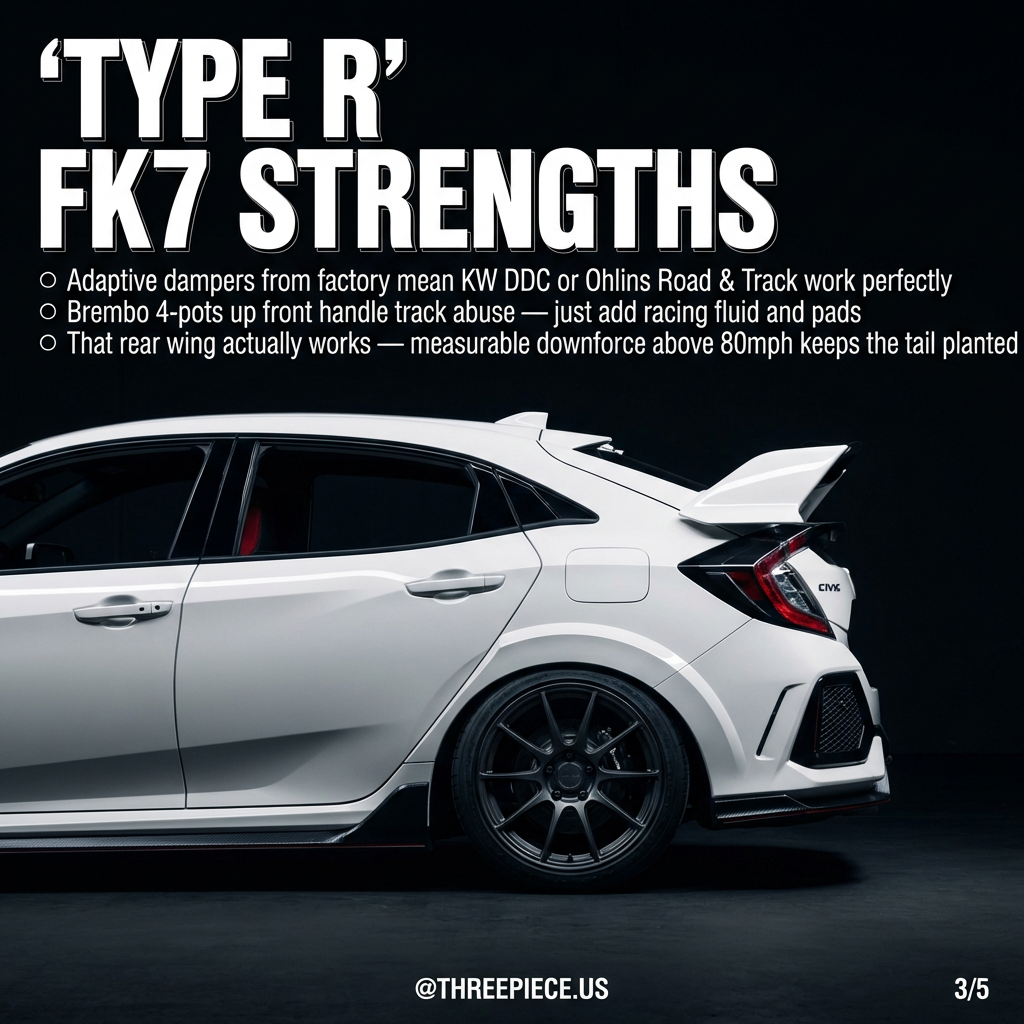
That massive rear wing actually works — measurable downforce above 80mph keeps the tail planted through high-speed sweepers. The K20C1 engine responds well to basic mods, though it's pickier about tuning than the GTI's EA888.
For big brake upgrades, the EBC Racing Apollo-4 big brake kit at $1980 shows what's possible, though the Type R's factory Brembos are already solid. Our article on whether big brake kits are overrated explains when upgrades actually matter.
Track Day Reality
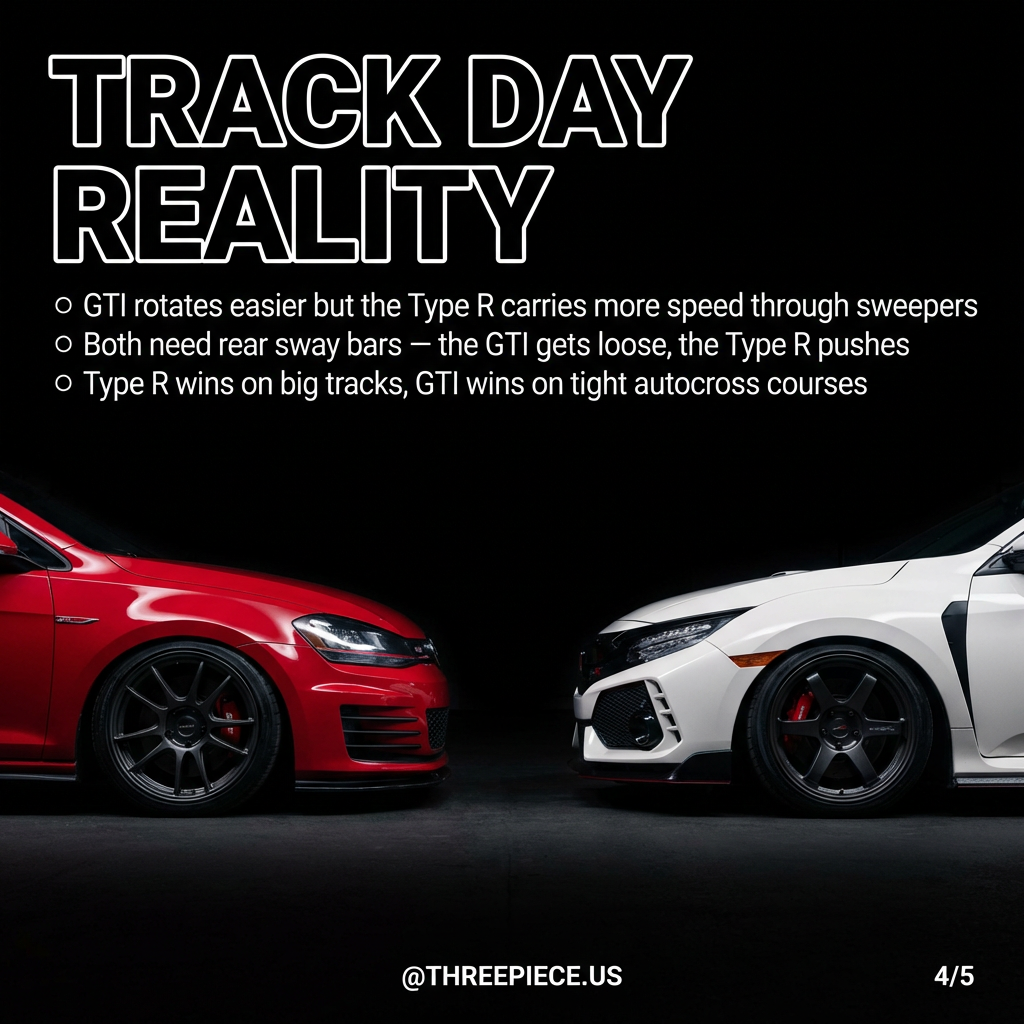
The GTI rotates easier but the Type R carries more speed through sweepers. Both need rear sway bars — the GTI gets loose under power, the Type R pushes in tight corners. Type R wins on big tracks like Road America, GTI wins on tight autocross courses.
Consumables tell the real story. The GTI's 225/40R18 tires cost less and last longer than the Type R's 245/30R20 setup. The lighter GTI is easier on brake pads too. For alignment settings that matter, read our camber, toe & caster guide.
Both platforms benefit from adjustable camber arms. The Eibach Pro-Alignment camber kit for $264 shows the type of suspension geometry fixes both cars need for serious track work.
Wheel fitment differs significantly between platforms. Browse 18x8.5 wheels in 5x112 for GTI options, or 19x9.5 wheels in 5x120 for Type R sizing. Check our wheel offset guide for why ET numbers matter more than width.
The Verdict
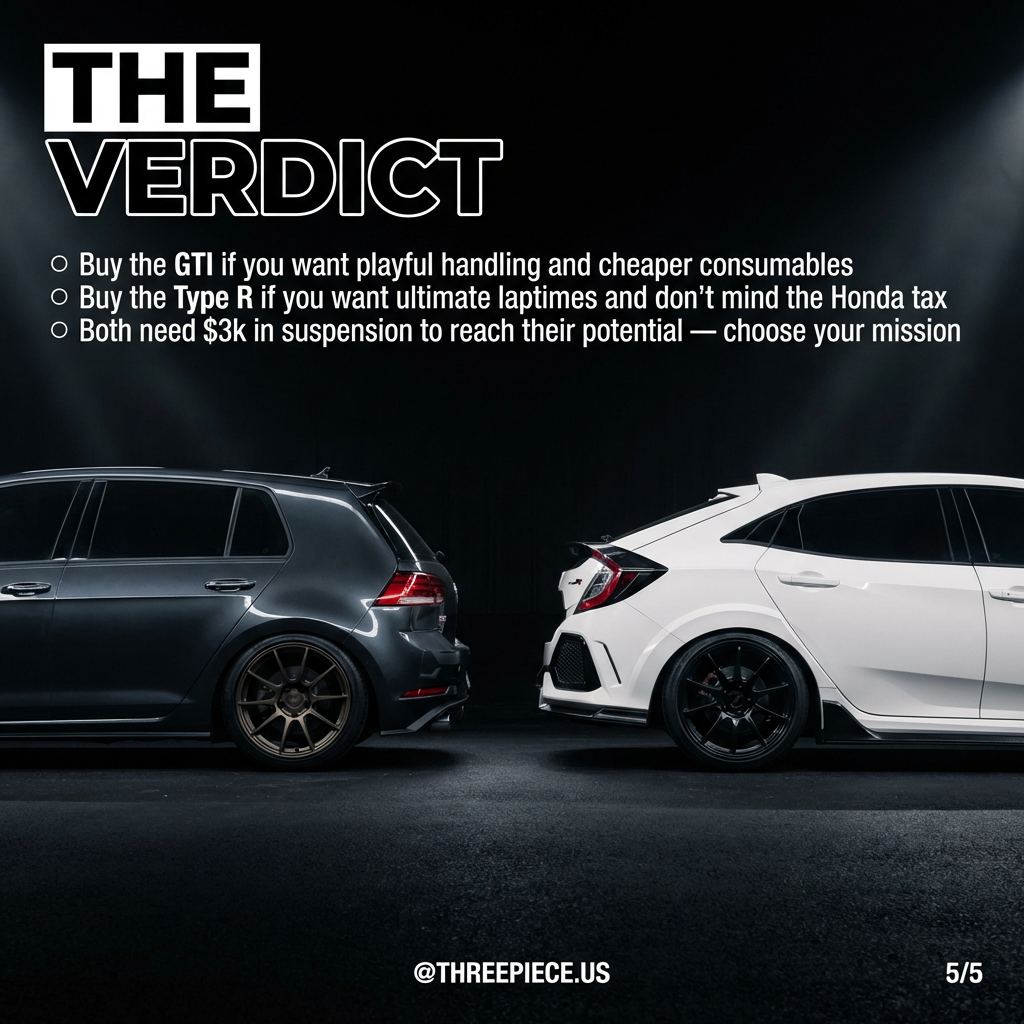
Buy the GTI if you want playful handling and cheaper consumables. Buy the Type R if you want ultimate laptimes and don't mind the Honda tax. Both need $3000 in suspension to reach their potential — choose your mission.
The GTI rewards modification more than the Type R rewards restraint. If you're building for street canyon runs, read our Civic Si build guide for a cheaper alternative that might surprise both cars.
For hot hatch comparisons, our Veloster N build guide and WRX STI vs GR Corolla comparison show what else is fighting for your garage space. Visit our vehicle gallery to see both platforms built right, then grab some wheel accessories to finish your setup properly.