
Posted by THREEPIECE.US on Mar 26th 2026
Turbo K20 vs NA VTEC: Reality Check on Boosted Honda Builds
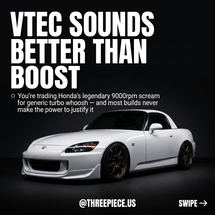
The Honda K20 makes 300+ whp with a turbo kit, but you're trading the soul-stirring 9000rpm VTEC scream for generic turbo whoosh. Most street-driven turbo Hondas never use the power they make anyway — they run out of traction before they run out of boost.
Quick links
- The Turbo Promise: Real Numbers
- What You Actually Lose
- Street Reality Check
- When Turbo Makes Sense
- The Verdict
The Turbo Promise: Real Numbers
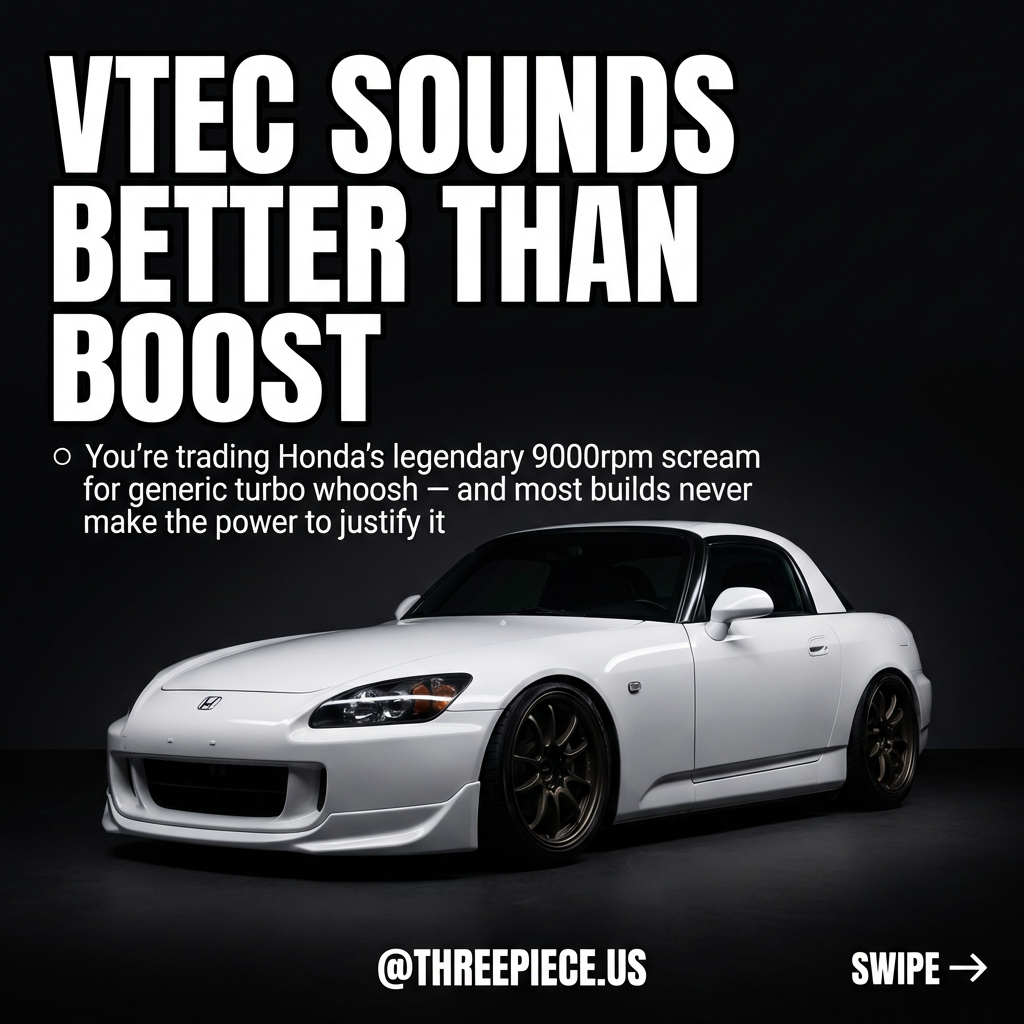
A properly tuned K20 with a Garrett GT2860RS and E85 can make 300+ whp — that's nearly double the stock output. The S2000's F20C responds well to low boost, with 280whp achievable on stock internals without grenading the motor. Most importantly, forced induction fills the torque hole that makes NA Honda engines feel weak below 5500rpm.
The numbers look compelling on paper. A turbocharged K-swap transforms a lightweight chassis into something that can hang with much more expensive machinery. But the devil is in the details, and Honda's high-revving naturally aspirated engines weren't designed with boost in mind. Check out our K20 vs SR20DET swap comparison for more context on Honda's strengths.
What You Actually Lose
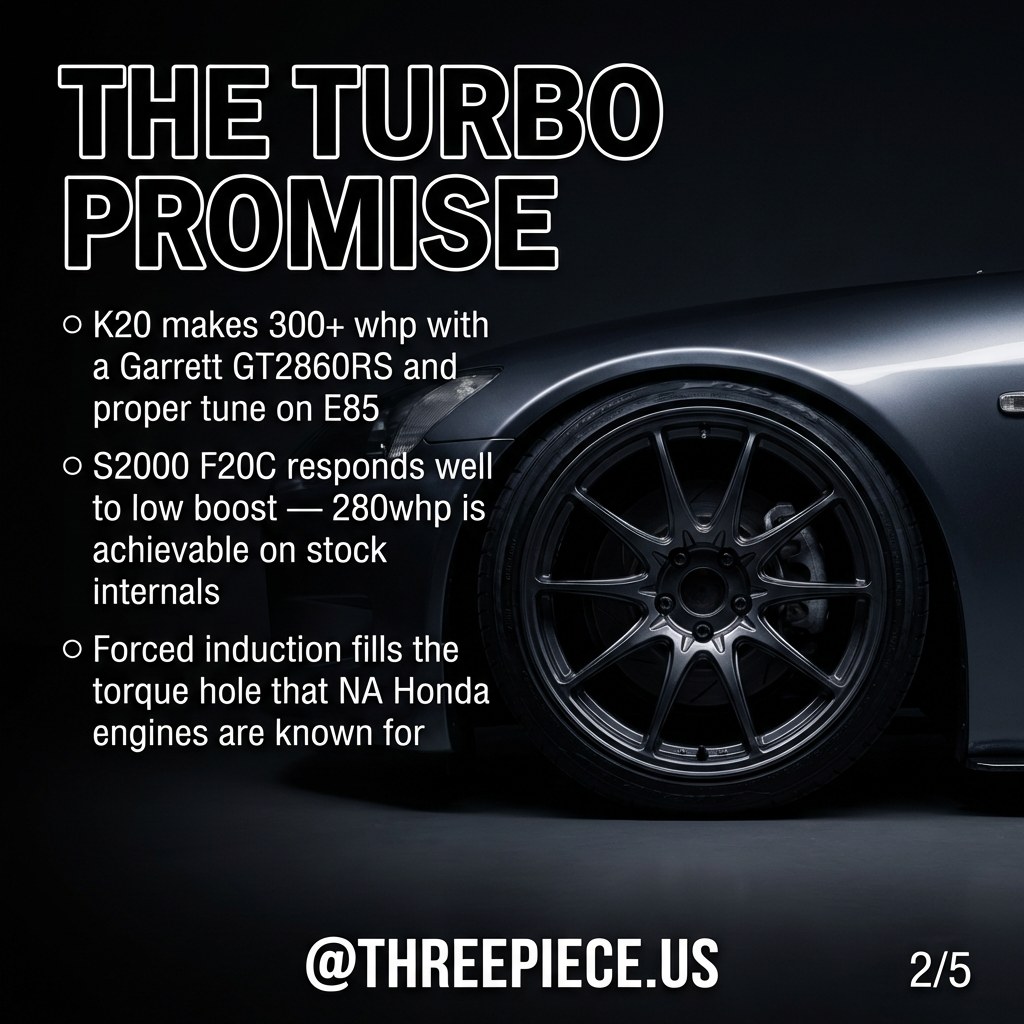
That legendary 9000rpm redline drops to 7500rpm with most turbo setups — the top-end rush that made VTEC famous is gone forever. Throttle response becomes laggy as the turbo spools while VTEC used to hit instantly at crossover. Your engine bay transforms from Honda's clean engineering into a heat nightmare with intercooler piping killing the OEM aesthetic.
The character change is dramatic. Honda spent decades perfecting high-revving NA motors that build power linearly to redline. Our VTEC tuning guide explains why Honda's variable timing system works so well naturally aspirated. Adding boost fundamentally changes how the engine breathes and responds.
For S2000 builds specifically, check our AP2 build guide that keeps the F20C naturally aspirated while maximizing its potential. Sometimes the best modification is proper suspension and wheels — browse 17-inch wheels in 5x114.3 for classic S2000 fitment.

Street Reality Check
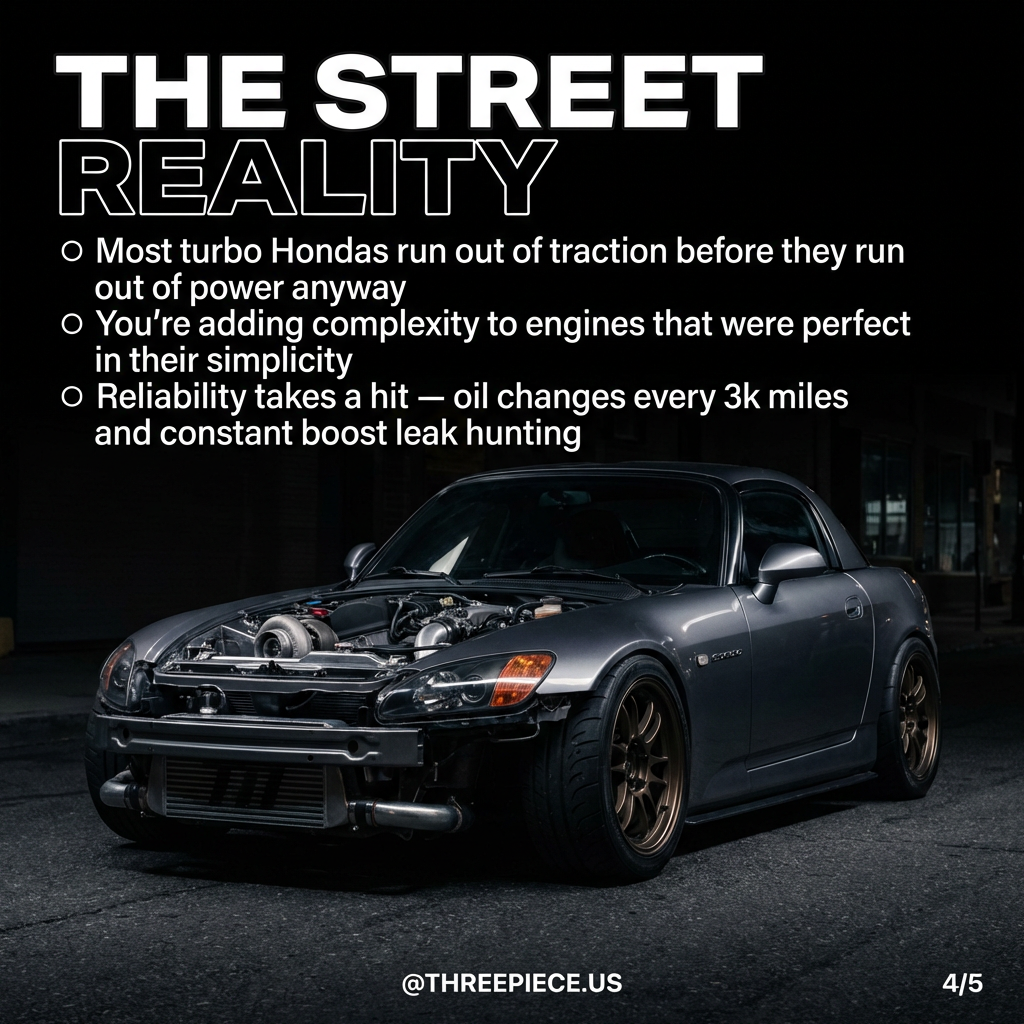
Most turbo Hondas run out of traction before they run out of power anyway. You're adding complexity to engines that were perfect in their simplicity. Reliability takes a hit — expect oil changes every 3000 miles and constant boost leak hunting becomes part of ownership.
The street driving experience changes dramatically. That instant VTEC hit at 5800rpm that made traffic light pulls addictive gets replaced by turbo lag and boost threshold management. You're also dealing with heat management issues that Honda never intended — intercooler heat soak becomes a real problem in stop-and-go traffic.
Our FK8 vs FK7 comparison shows how Honda's factory turbo approach differs from aftermarket conversions. The Type R's turbo system is engineered from the ground up, while retrofit kits are compromises by nature.
When Turbo Makes Sense
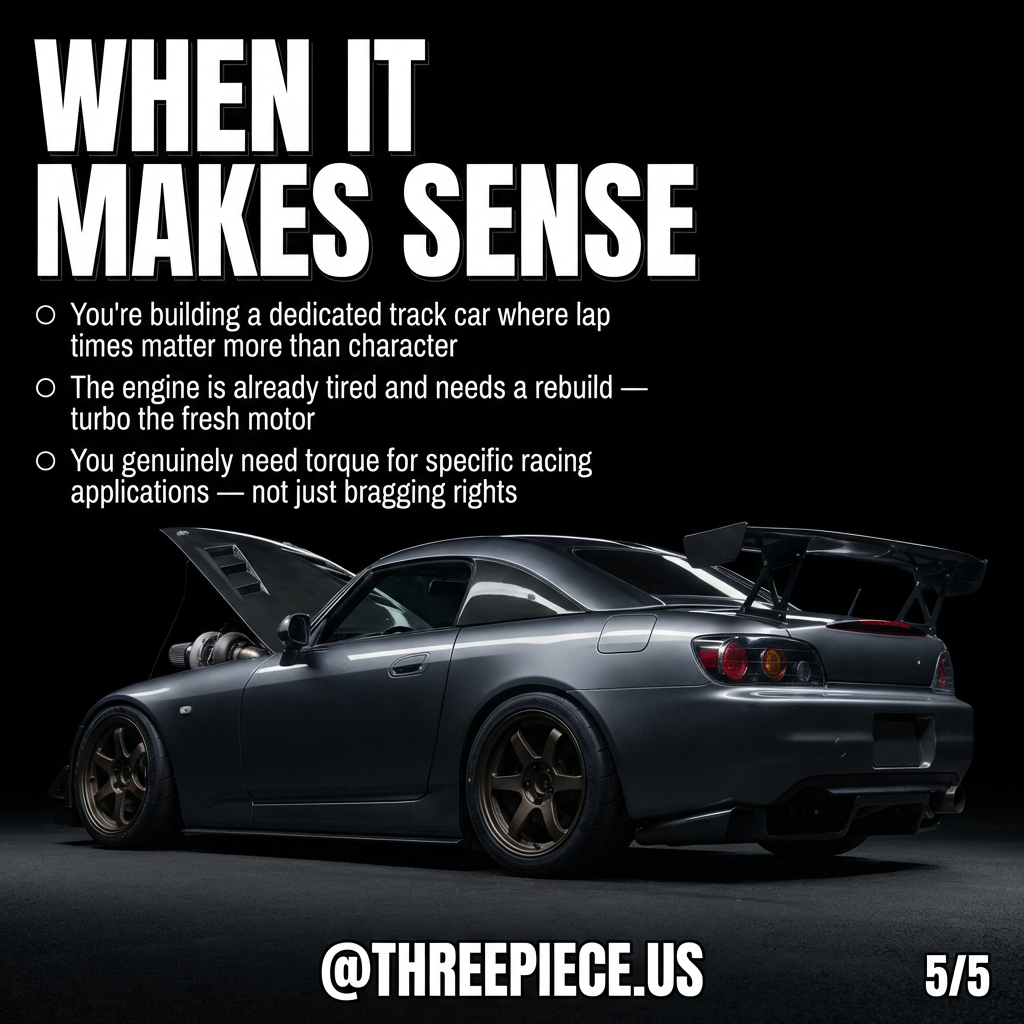
Turbo conversions make sense when you're building a dedicated track car where lap times matter more than character. If the engine is already tired and needs a rebuild, turbocharging the fresh motor can be cost-effective. You genuinely need torque for specific racing applications — not just bragging rights at car meets.
The key is honest assessment of your goals. If you're chasing numbers for social media, turbo wins. If you want the pure Honda experience that made these engines legendary, stay naturally aspirated. Track-focused builds benefit from the broader powerband, while street cars lose the magic that made VTEC special.
Consider your wheel and tire setup too — turbo power requires proper traction management. Browse 245/40R17 tires for S2000 builds or 225/45R17 tires for K-swap applications. Proper wheel fitment becomes critical with added power — check our S2000 fitment guide for sizing that works.
The Verdict
Turbo Honda builds work, but they fundamentally change what makes these engines special. The 9000rpm VTEC experience can't be replicated with boost — you're trading character for numbers. For most street applications, a well-built NA Honda with proper suspension and wheels delivers more smiles per mile than a laggy turbo conversion.
If you're committed to the turbo path, do it right with quality components and professional tuning. But don't expect the result to feel like the Honda you fell in love with — it'll be faster, but different. Sometimes different is exactly what you want, but make sure you understand what you're trading away.
Whether you go turbo or stay NA, proper wheel setup is crucial. Browse our Work Wheels collection for time-tested designs that complement Honda builds perfectly. The Work Emotion series offers classic spoke patterns that work on everything from S2000s to K-swapped builds. Complete your setup with Work center caps starting at $45 for the finishing touch your build deserves.