
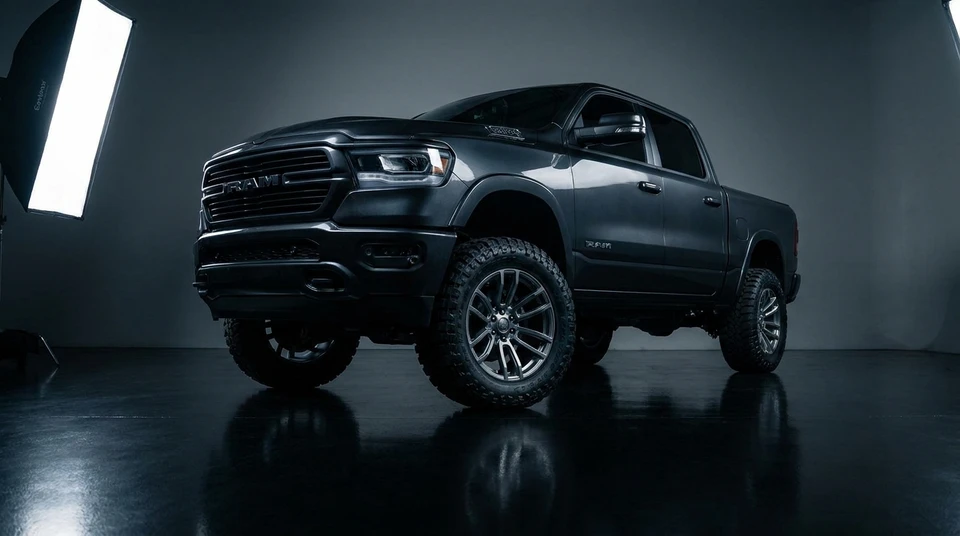

Here's the honest bottom line: yes, you can run 35s on a Ram 1500 (2018-2026), but not by bolting them straight onto a stock truck and calling it a day. A 35-inch tire on this platform generally wants a modest lift, a wheel with the right offset to push the tire out of the fender, and some fender or pinch-weld massaging depending on your trim and how aggressive you get. A 33 is close to plug-and-play with the right wheel and maybe a leveling kit; a 37 is a genuine build. Below is the real fitment picture, top to bottom, so you know exactly what each jump costs you in parts, money, and drivability.
How Big Can a Ram 1500 Really Go?
The current-body Ram 1500 rolls on a 6x139.7 bolt pattern with a 77.8 mm hub bore, and the factory wheel is a 7.5x18 carrying a fairly high +19 mm offset. That high positive offset is the key thing to understand up front: it tucks the wheel deep under the fender, which is great for ride quality and steering feel on stock rubber but works against you the moment you want a taller, wider tire. A bigger tire on a high-offset wheel sits closer to the inner fender liner, the upper control arm, and the frame — exactly where rub happens.
How far you can push depends heavily on trim and suspension. A Rebel (or an air-suspension truck at its taller ride heights) starts with more room than a base 2WD Tradesman or an air truck that squats when you park. Coil-sprung rear and the air setup both change how the tire relates to the bed and pinch weld at full compression. So treat any "it fits" claim — including the ranges here — as a starting point you verify for your specific rig, ride height, and how you drive.
33s: The Easy, Livable Upgrade
A 33-inch tire is the sweet spot for most Ram 1500 owners who want a tougher stance and real capability without turning the truck into a project. In metric terms, a 285/70R17 comes in right around 32.7 inches tall, and true 33x12.50 flotation sizes land at a genuine 33.0 inches. On many trims you can get a 33 to work with just a leveling kit to even out the factory rake, plus a wheel with less positive offset than stock so the tire clears the inner components. Expect light trimming of the front fender liner or the plastic air-dam area at full lock and full stuff — nothing structural on most setups.
The reason 33s are so popular is that they barely touch drivability. The speedometer error is small, the gearing penalty is minor, and you can often stay on the factory load-carrying setup if you buy a properly rated tire. If you want the biggest step up in looks and trail grip for the least disruption to your daily driver, a 33 is it. You can see the whole range on the tires hub, or jump straight to a 285/70R17, a 33X12.50R17, a 33X12.50R18, or a 33X12.50R20 if you're running larger wheels.
35s: The Real Answer and the Popular Build
This is the size most people are actually chasing, and the honest answer is that 35s belong to a proper lift-and-wheel combo rather than a bolt-on trick. A true 35x12.50 measures 35.0 inches tall, while a metric 315/70R17 comes in a touch shorter at about 34.4 inches — a useful option if you want a 35-class look with slightly less overall diameter and a bit less rubbing risk. Either way, you're generally looking at a lift (commonly in the two-to-three-inch range, but verify what your chosen kit and trim actually need), a wheel with reduced or negative offset to gain clearance, and more meaningful trimming than a 33 requires.
Where a 35 rubs is predictable: the front fender liner and the lower part of the fender at full steering lock, the pinch weld along the cab, and sometimes the forward edge of the bed or the sway-bar and control-arm area at full articulation. A well-chosen offset pulls the tire outboard and away from suspension components, but push it too far and you pick up rubbing on the fender flare instead, plus more stress on wheel bearings and steering. That balance is the whole game with 35s. Because a Ram 1500 is a heavy truck, pay attention to load range too — a 35 in a stouter ply rating carries the weight of the truck plus gear without the sidewall feeling vague.
We stock a healthy spread of 35s across wheel diameters, from the go-anywhere 35X12.50R17 and 35X12.50R18 up to the 20-inch 35X12.50R20 for trucks running larger wheels, plus the 315/70R17 metric option if you'd rather run a 315/70R17. On the 17-inch side, a hybrid tread like the Toyo Open Country R/T Pro in 35X12.50R17 gives you a rugged look without full mud-tire manners, while the Falken Wildpeak R/T01 35X12.50R17 and the heavier-duty Nokian Outpost nAT 35X12.50R17 cover load-range needs for people who tow or haul. Prefer 18s? The Falken Wildpeak R/T01 35X12.50R18, the Nokian Outpost nAT 35X12.50R18, and the Toyo R/T Pro 35X12.50R18 are all strong 35-class picks.
37s: A Committed Build, Not a Bolt-On
Thirty-sevens are absolutely doable on a Ram 1500, but this is where you commit to a real build. A true 37x12.50 stands 37.0 inches tall, and that extra diameter over a 35 changes everything downstream: more lift, more trimming (often into the fender and the plastic wheel-well structure), careful attention to steering geometry, and re-gearing that stops being optional and becomes necessary. Expect to spend real time — and money — getting the clearance right at both lock and full compression, and expect brake, driveline, and ABS calibration to matter more at this size.
We carry 37s in 37X12.50R17, 37X12.50R18, and 37X12.50R20. If you're comparing bolt-on data, note that the flagged wheel setups in the extreme offset ranges call for lift-kit verification — that's not a warning to scare you off, it's a reminder that 37s live in "check everything twice" territory. If your goal is a maximum-clearance trail rig, go in with a plan for gears and trimming from day one.
What Actually Changes When You Fit Bigger Tires
Offset and Backspacing — Read This Before You Buy Wheels
Offset is the distance from the wheel's mounting face to its centerline, measured in millimeters. A high positive number (like the factory +19) pulls the wheel inward toward the truck; a lower or negative number pushes it outward. Backspacing is the related measurement from the mounting face to the back edge of the wheel — more backspacing tucks the tire in, less backspacing sticks it out. The two describe the same reality from different angles.
On a Ram 1500, the practical bolt-on wheels for larger tires are wide (10 to 11 inches) and run offsets from roughly +20 down into negative territory. Wider wheels with lower offset — think 10x20 or 10x22 in the +15 to +20 range for cleaner fitment, or into negative offsets for a more aggressive stance — move the tire outboard so it clears suspension and inner-fender components. Push offset too negative and you gain fender rub, wider track, more scrub, and extra load on bearings. The right answer threads the needle for your tire size and lift, which is why the more aggressive negative-offset combinations are flagged for a clearance and lift-kit check rather than promised rub-free.
Re-Gearing: Why It Matters for Drivability
A taller tire is effectively a taller final-drive ratio — it makes the engine work harder to turn the same road speed. Go up a couple of inches in diameter and you'll feel the truck get lazy off the line, downshift more on grades, and lose a little towing punch. Re-gearing the axles (moving to a numerically higher ratio) restores the effective ratio the factory intended, bringing back throttle response, shift quality, and fuel economy that a big tire otherwise erodes. On 33s the penalty is mild and many owners live with it; by 35s it's worth a serious look, especially if you tow; by 37s it's essentially part of the build. Match the new ratio to your tire diameter and how you use the truck, and verify what your differentials and any electronic locker require.
Speedometer, Odometer, TPMS, and Load Range
Bigger tires make the speedometer read slow and the odometer under-count miles, because the vehicle still assumes the factory rolling diameter. A programmer or dealer recalibration corrects this, and it's worth doing — an uncorrected speedo throws off cruise, shift points, and your mileage records. Your TPMS sensors carry over on most builds, but if you buy a separate set of wheels you'll want sensors installed and relearned so warnings stay accurate. Finally, load range is not an afterthought on a truck this heavy: buy a tire whose load rating comfortably covers the truck plus your typical payload and tongue weight. A stiffer-ply tire feels more planted under load and resists sidewall flex on the trail, which is why several of the 35-class tires we stock come in higher load ranges.
All-Terrain vs Mud-Terrain: Choosing for a 1500
Most Ram 1500 owners are best served by an all-terrain or a rugged-terrain hybrid rather than a full mud-terrain. An A/T gives you quiet highway manners, long tread life, better wet and snow behavior, and plenty of grip for dirt, gravel, and light trails — ideal for a truck that spends most of its life on pavement. A mud-terrain trades road quietness and tread life for aggressive self-cleaning lugs and sidewall bite in deep mud and rock. The middle ground — rugged-terrain / hybrid tires like the Toyo R/T Pro and Falken R/T01 lines — has become the smart default for these trucks: they look the part, add real trail traction, and don't punish you on the daily commute. Pick a full M/T only if mud and rocks are genuinely your primary terrain.
What to Prioritize as a Buyer
Start with the tire diameter that matches your goals and appetite for modification: a 33 for an easy, livable upgrade; a 35 for the classic lifted look with a real (but manageable) build; a 37 only if you're building a dedicated trail rig. Next, choose a wheel offset that suits that tire and your lift — err toward a proven fitment rather than the most aggressive stance. Then match load range to how you actually load the truck. Finally, budget for the supporting cast: leveling or lift, alignment, gears if you're at 35 or above, and speedo calibration. Buy the whole solution, not just the tire, and the truck will drive like the factory engineered it — just taller and tougher. Browse the full range on the tires hub to compare tread patterns and load ratings side by side.
Real Ram 1500 builds running 35s and up
Actual owner builds — real photos.


Frequently Asked Questions
Can you run 35s on a 1500 without a lift? Generally no — not on a 35 that measures a true 35 inches. You can get very close to a 35-inch look with a slightly shorter metric option and an aggressive leveling setup on some trims, but a genuine 35 rubs at full lock and compression without added clearance. Plan on a modest lift plus the right wheel offset and some trimming, and verify the exact combination for your trim and ride height.
Do I have to re-gear for 35s? You don't strictly have to, and plenty of trucks run 35s on stock gears. But you'll notice the drivetrain feeling lazier, more downshifting on hills, and softer towing performance. Re-gearing restores the response and efficiency the factory intended and is strongly recommended if you tow or haul regularly at that tire size.
What's the difference between 33x12.50 and 285/70R17? They're close in height — the flotation 33x12.50 is a true 33.0 inches, while the 285/70R17 comes in around 32.7 inches — but the flotation size is typically a bit wider and squarer in profile. The metric size is a hair shorter and often a slightly easier fit on a near-stock truck. Both are excellent 33-class choices; pick based on the look and the exact clearance you have.
Will bigger tires mess up my speedometer? Yes, until you correct it. Taller tires make the speedometer read slower than you're actually going and cause the odometer to under-count miles. A recalibration via a programmer or the dealer fixes the reading and restores correct shift points and cruise behavior. It's an inexpensive step that's easy to overlook.
Should I choose 17-, 18-, or 20-inch wheels for 35s? A 17- or 18-inch wheel leaves more sidewall, which airs down better for trail traction and shrugs off impacts — great for off-road use. A 20-inch wheel gives a more filled-out, street-oriented look with a shorter sidewall. All three diameters are available in 35x12.50, so match the wheel to whether the truck leans more trail or more street.
Does tire load range really matter on a Ram 1500? Absolutely. This is a heavy truck, and a tire with too low a load rating feels vague under payload and flexes more off-road. A higher load range carries the truck plus gear with a firmer, more planted feel and better resistance to sidewall damage. Match the rating to your real-world loads rather than buying the lightest-duty option.
35-inch tires for the 1500 (in stock)

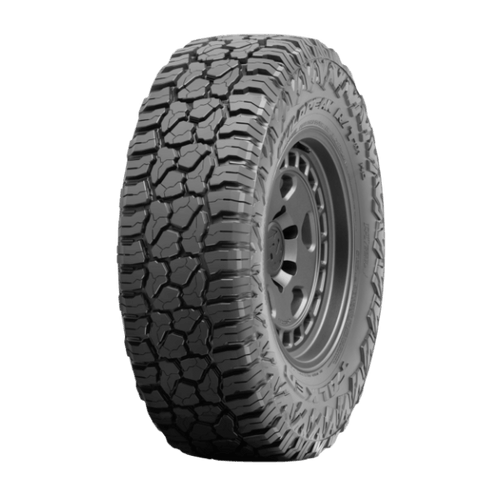



Shop 35-inch tires for the 1500 (in stock) →
Try wheels on your Ram 1500: see the Ram 1500 bolt pattern, wheel sizes by year and wheel builds in our free wheel visualizer.